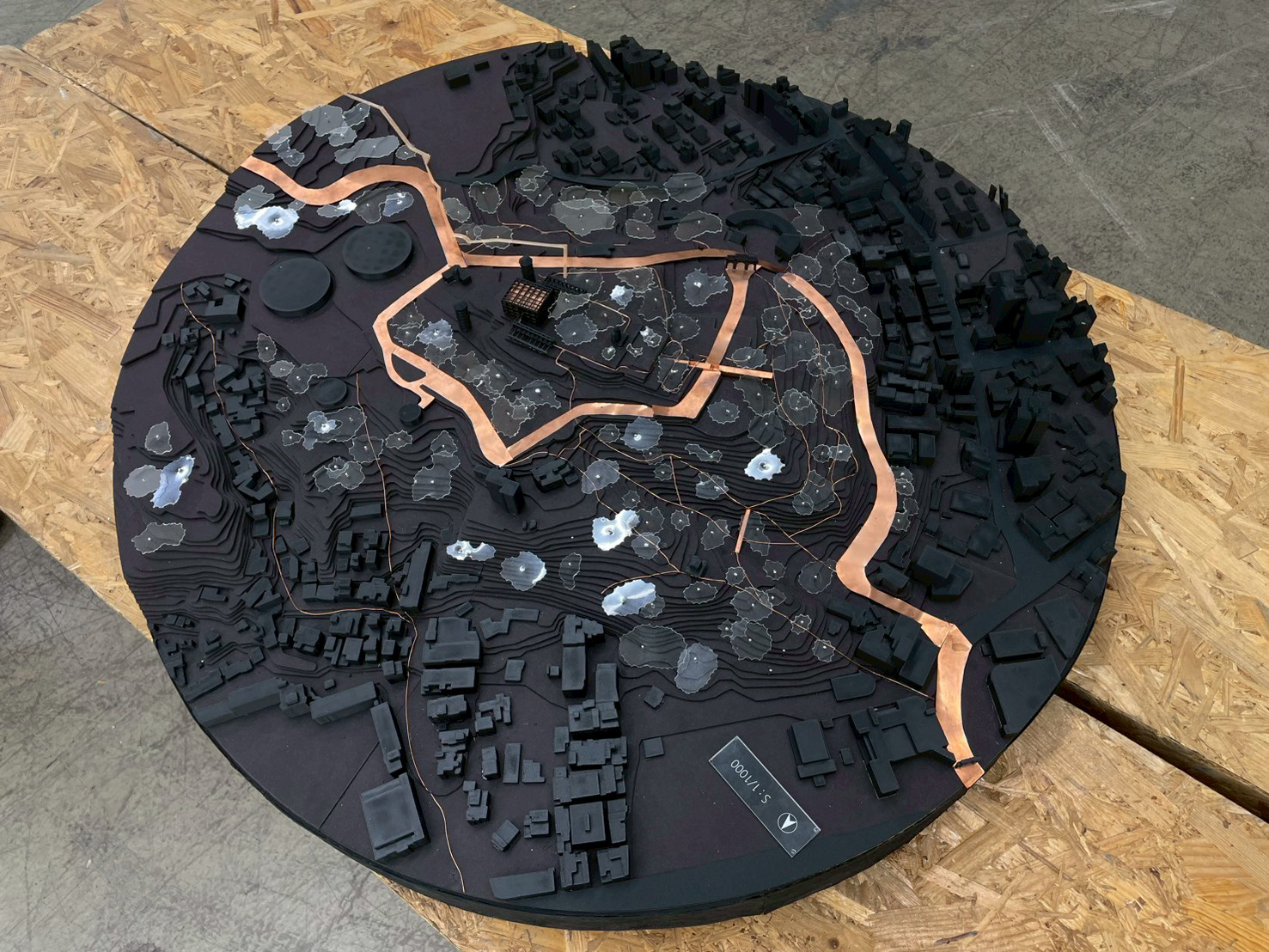
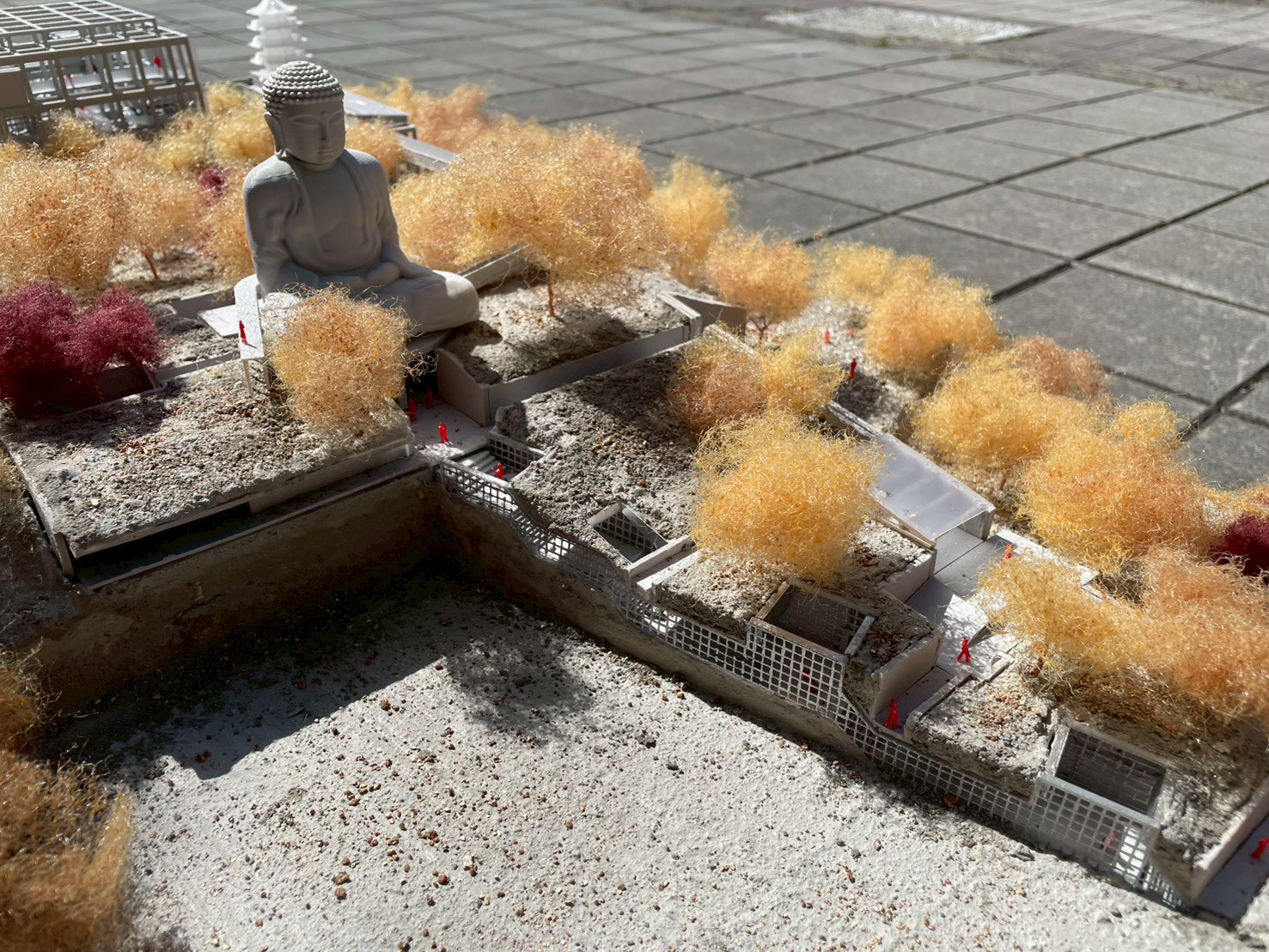
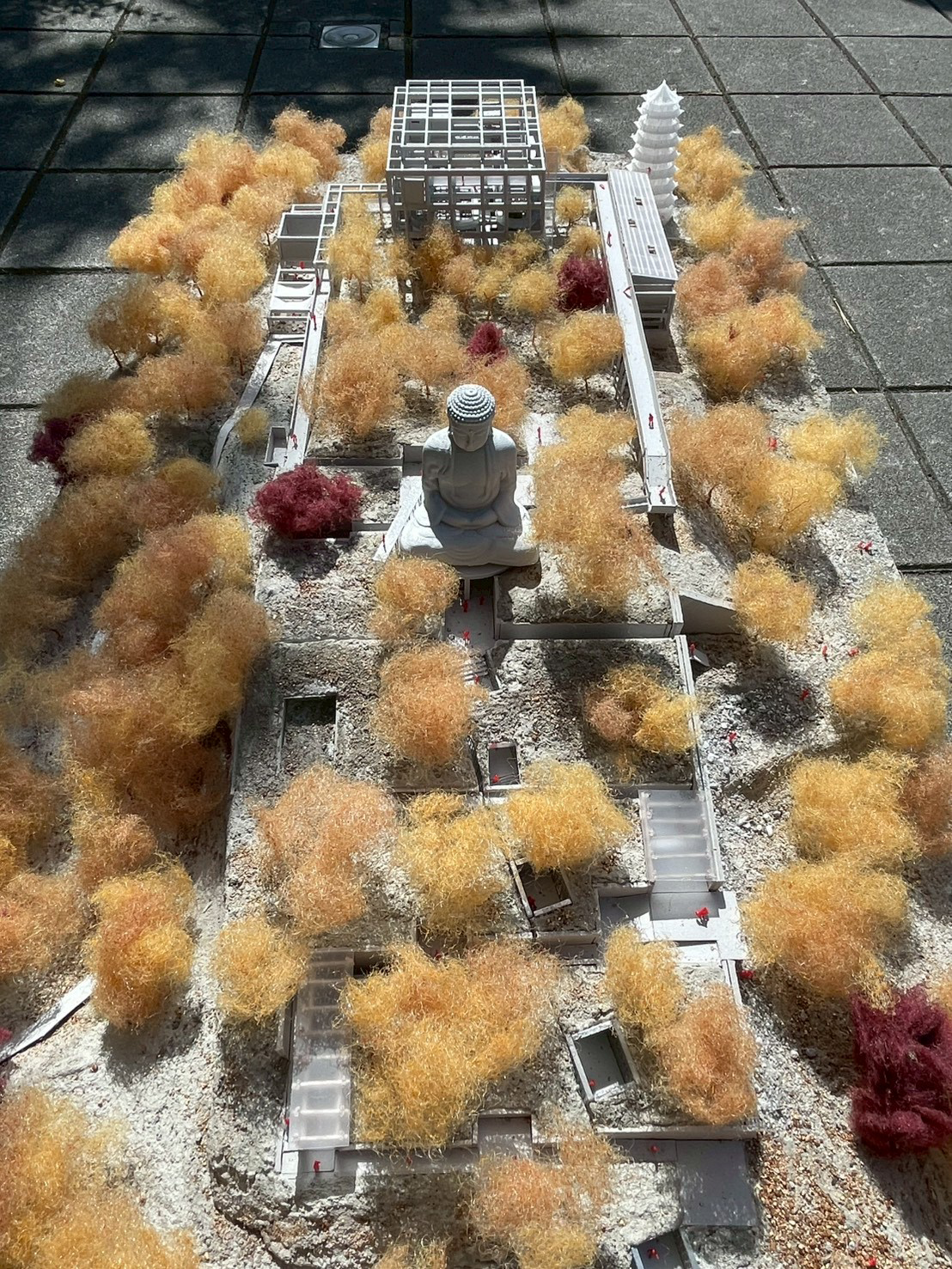
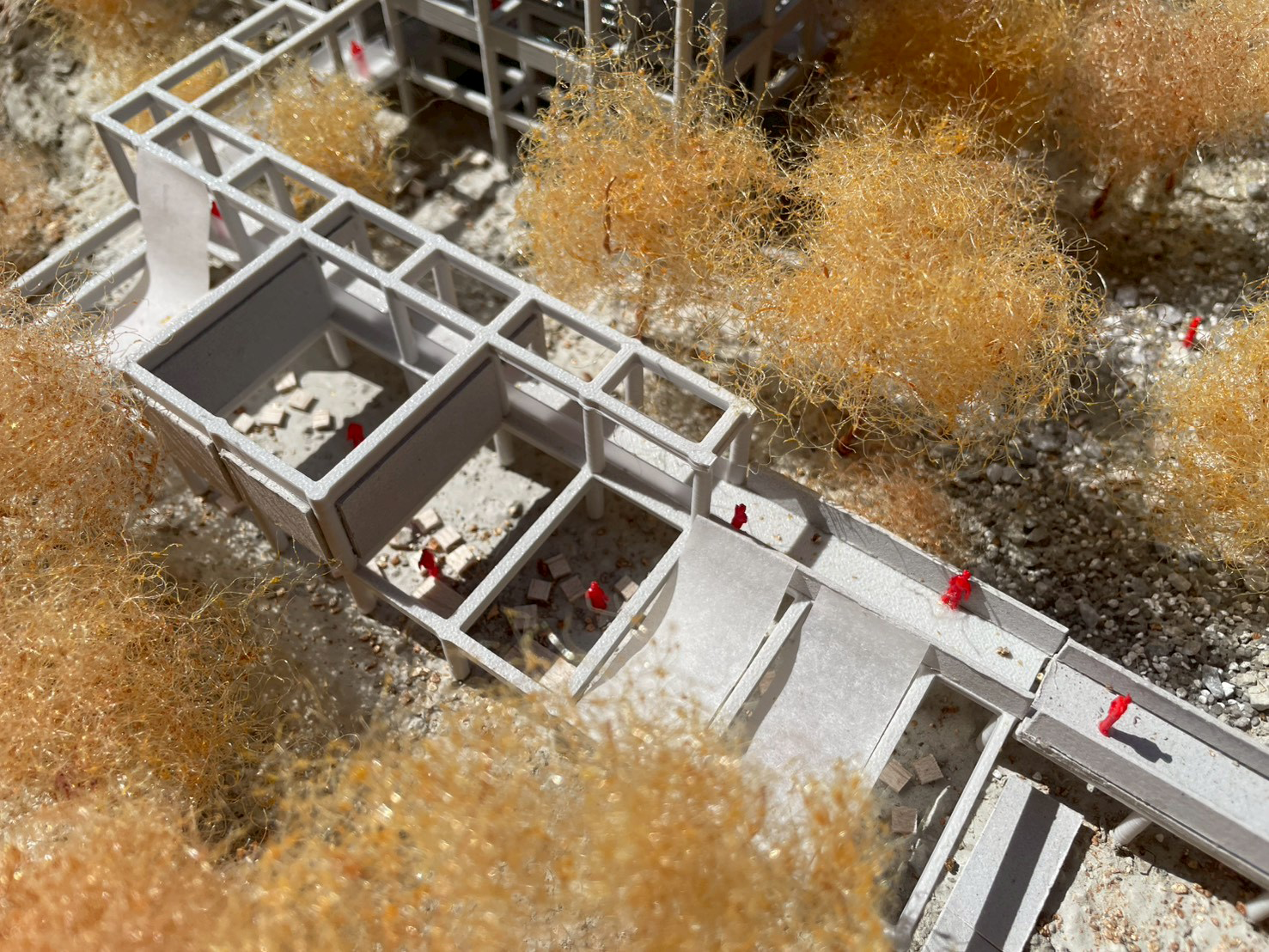
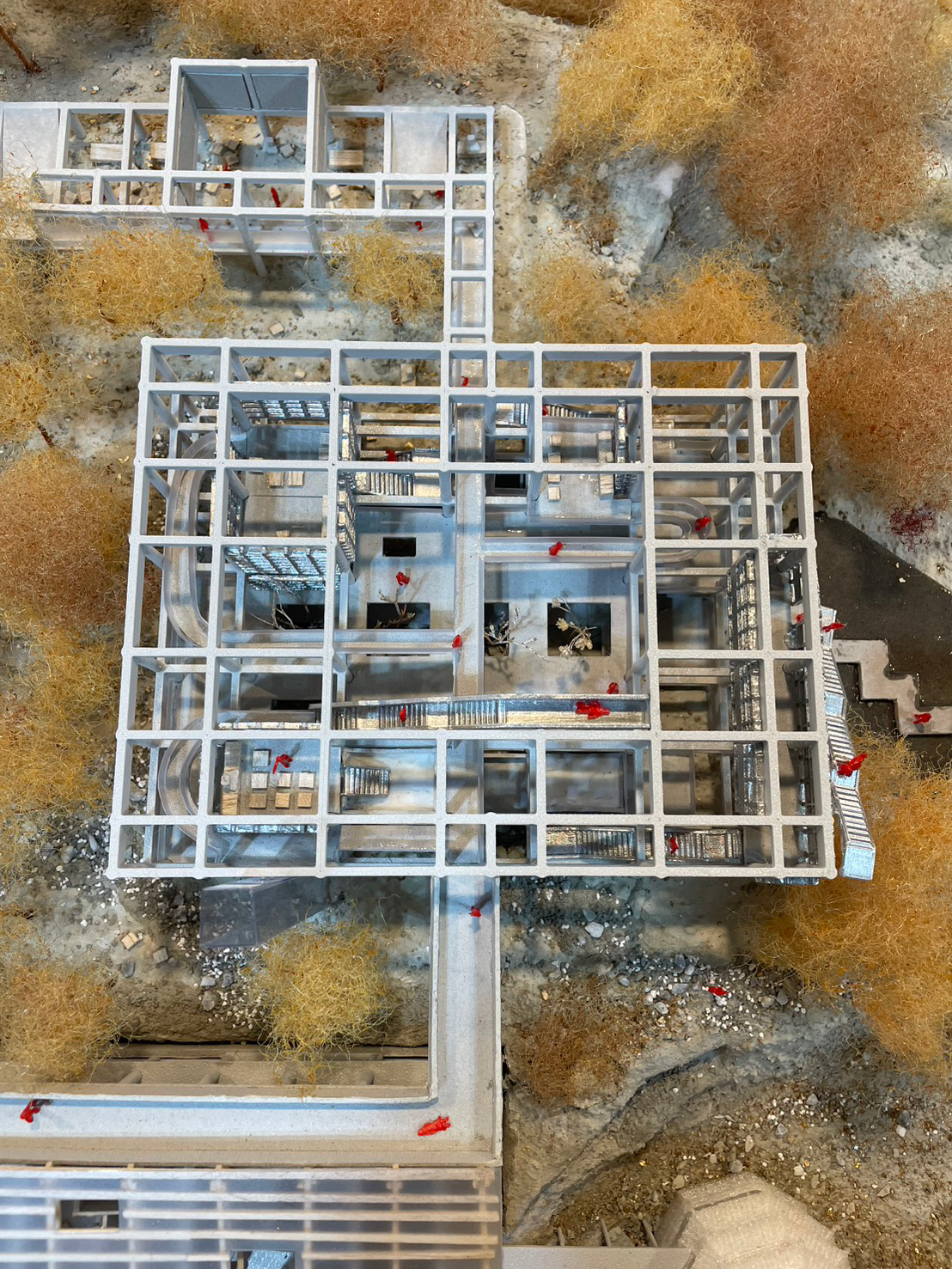
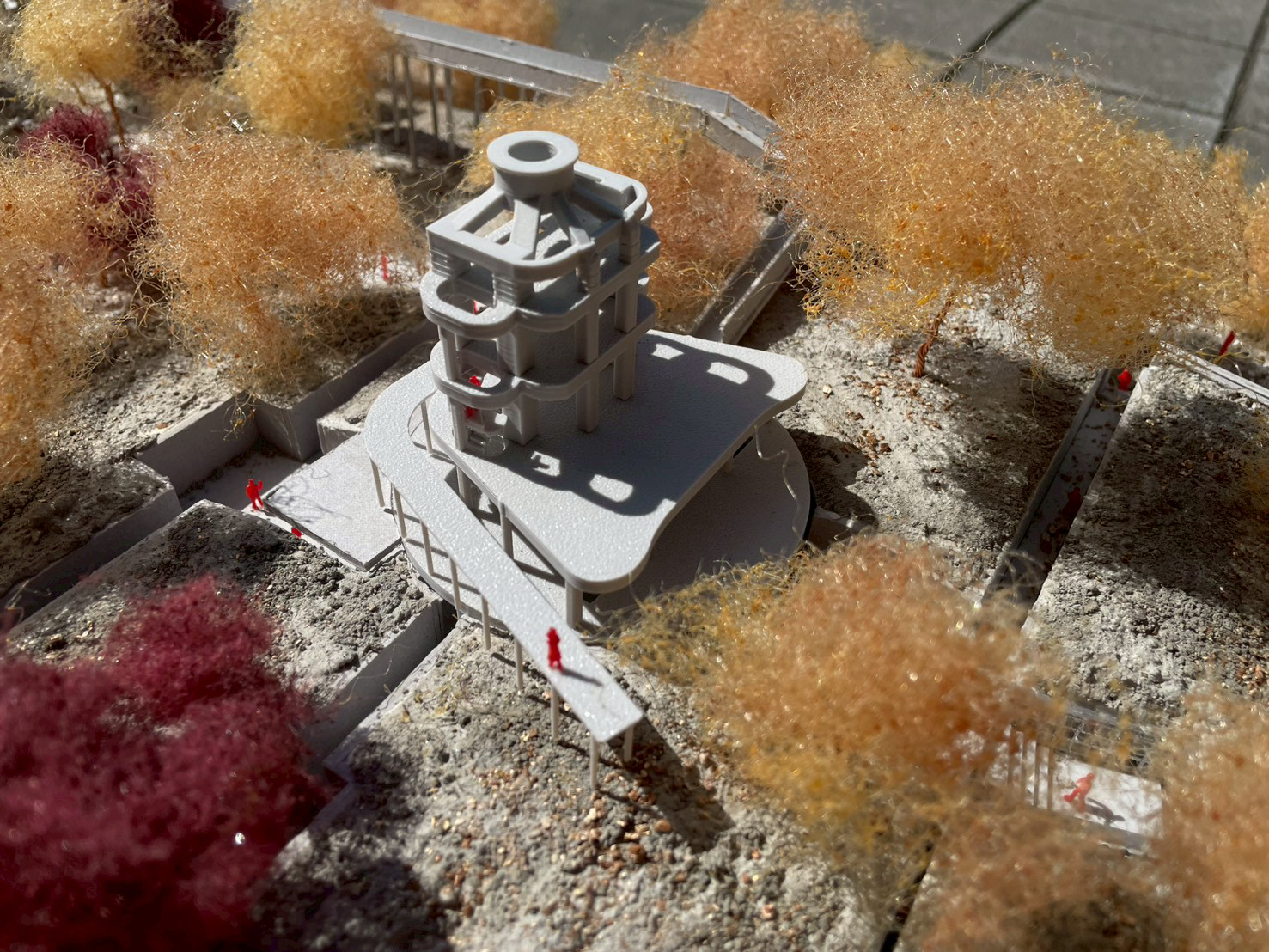
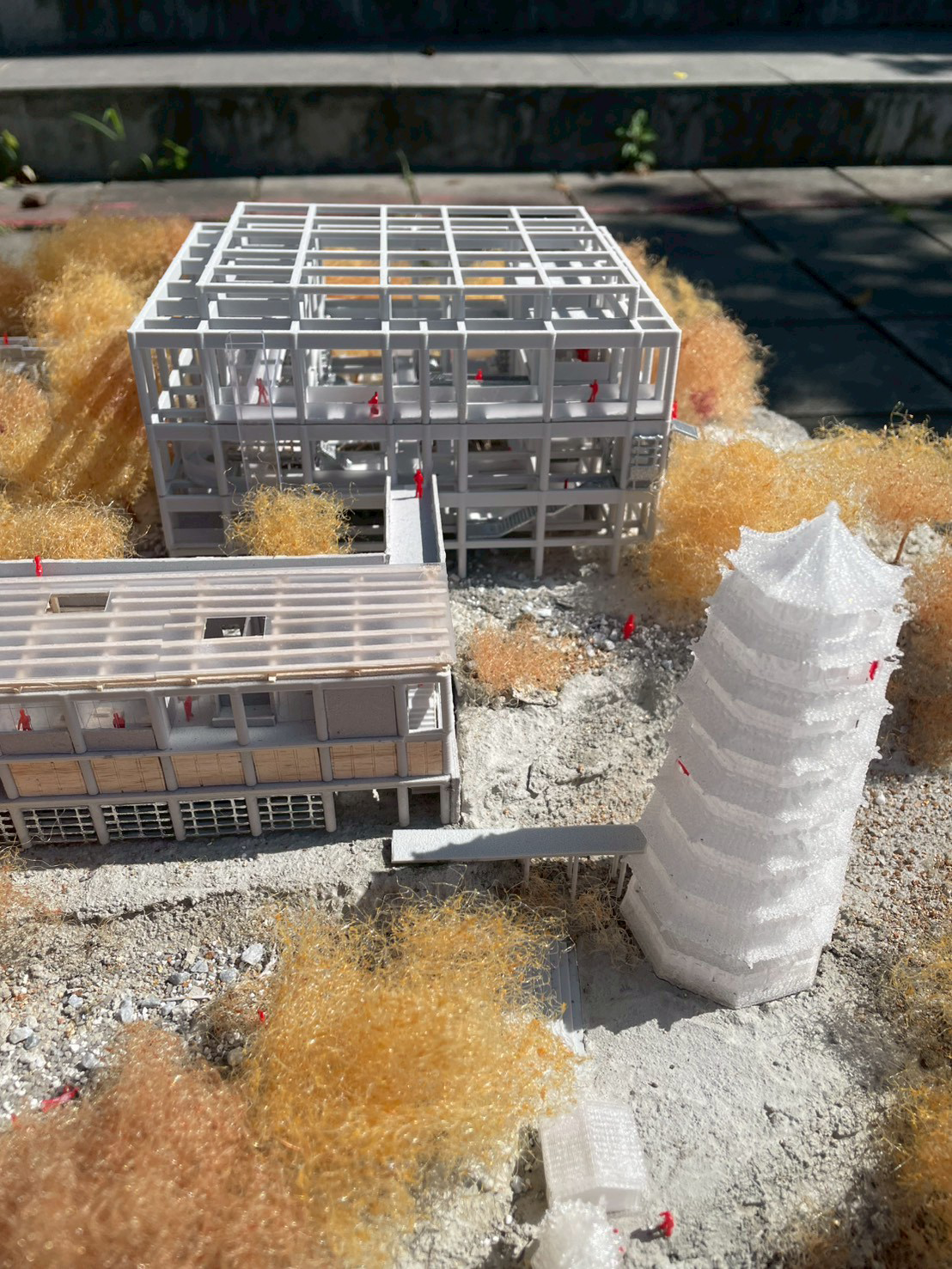
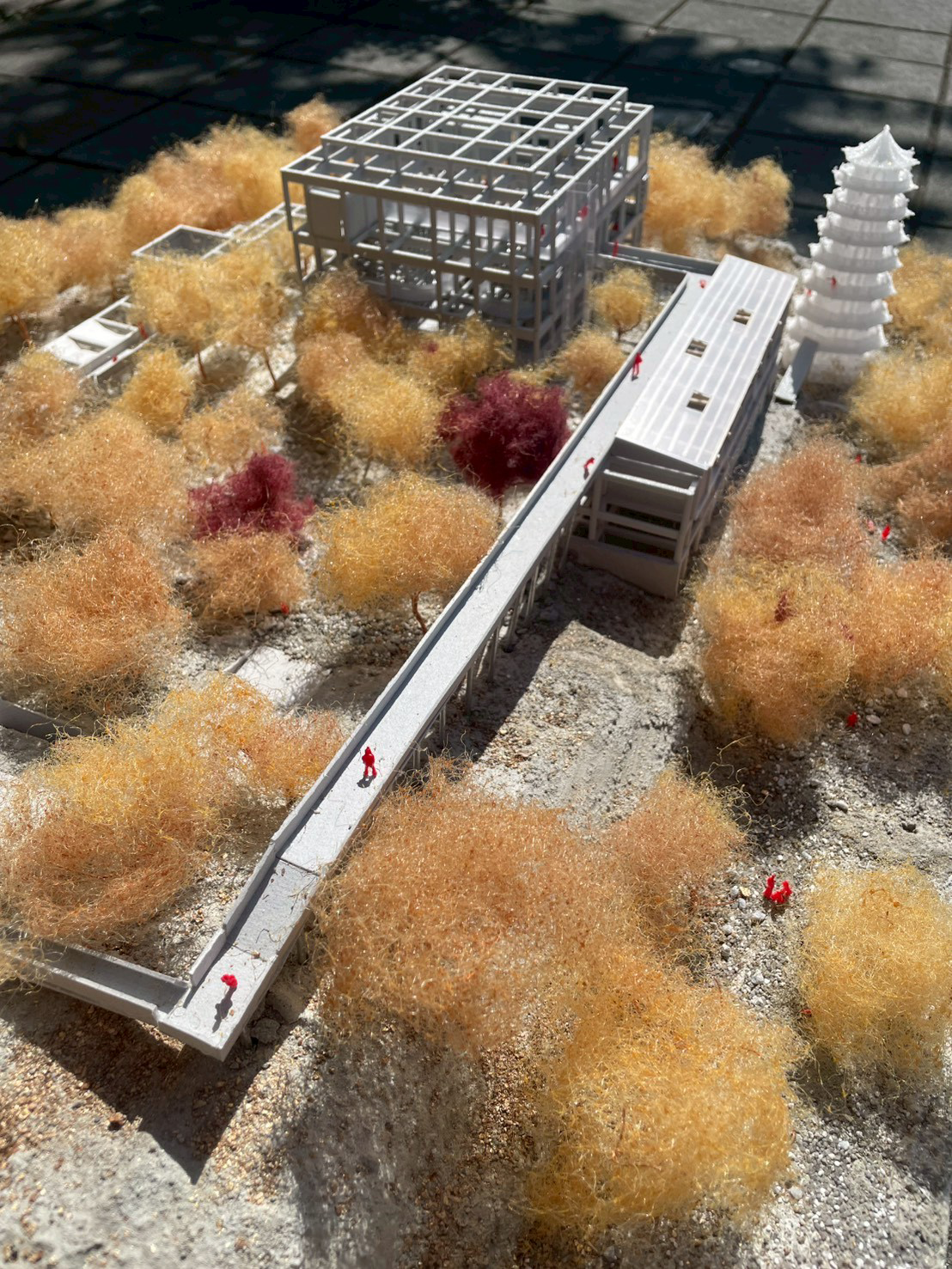
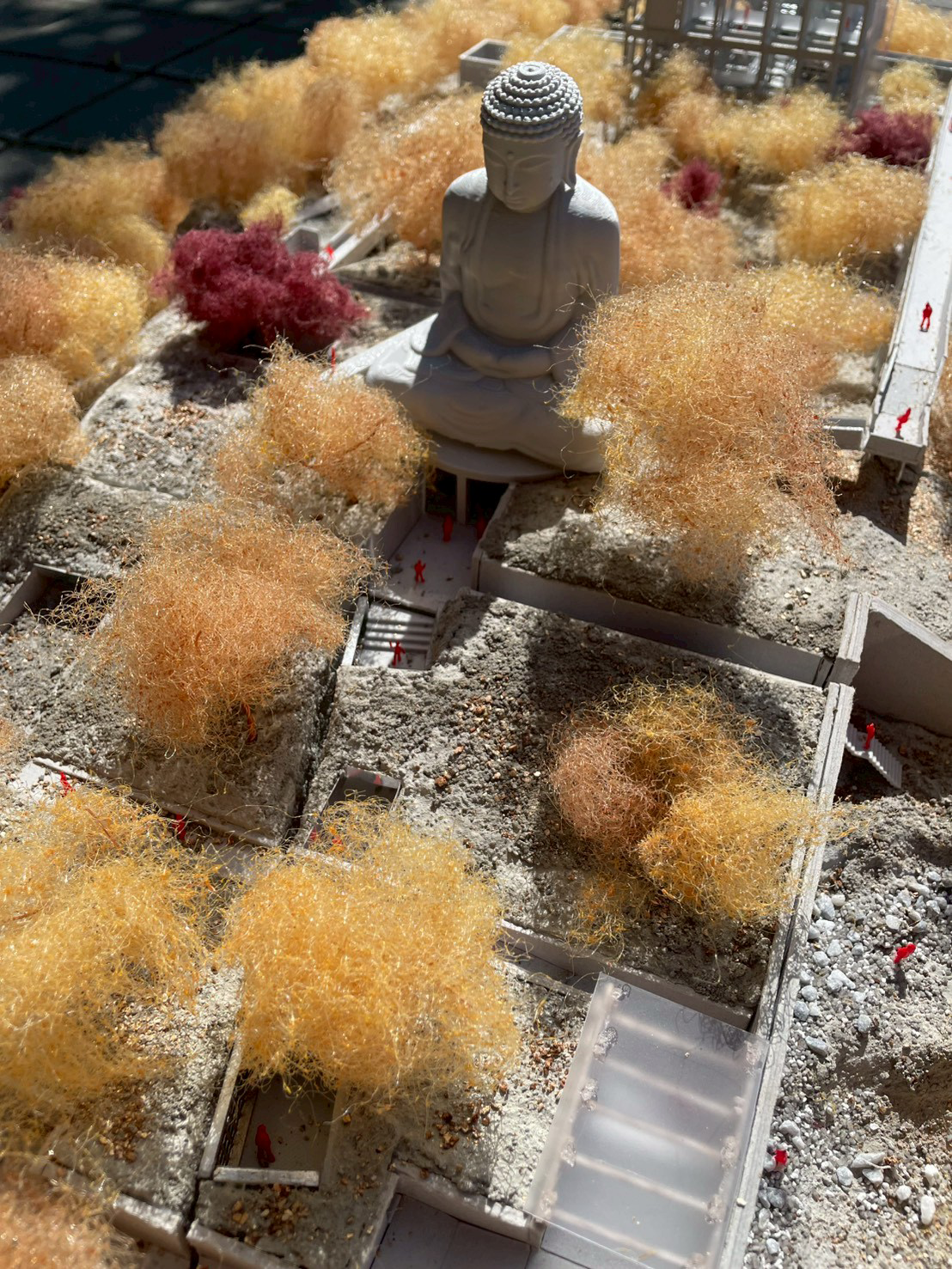
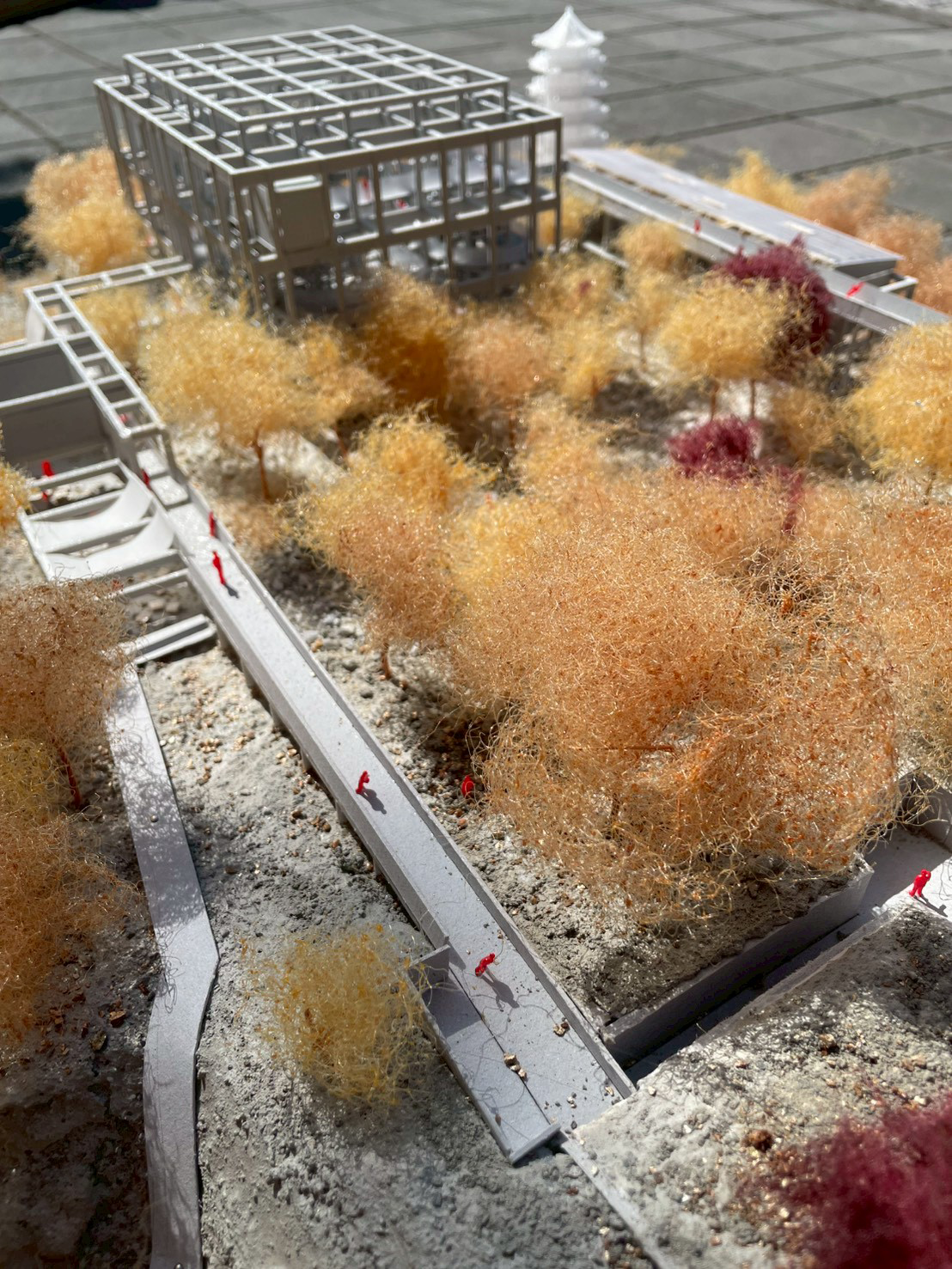
我的研究起點來自家鄉彰化的八卦山大佛。
這座戰後興建的大佛,原本承載著撫慰人心、重建地方認同與發展觀光的使命,如今卻成為彰化最鮮明的視覺座標。
作為一場「容器與內容物」的翻轉,廟宇中的佛像被放大成建築本身,如同一張巨大的城市看板。
這種高度符號化的存在,讓大佛尚未被接近便已一覽無遺,人們與它的關係也逐漸停留在一次性的觀看。
然而,這不是我所認識的八卦山。童年的八卦山,對我而言從來不是單純的宗教場所,
而是一座充滿遊樂場、森林步道、小吃攤、防空洞與地方傳說的山。
真正吸引我的,不是抵達山頂,而是在不同路徑間反覆行走,從遺跡、地形與傳說中逐漸認識這座山。
每一次攀登,都因季節、光線與視角不同,而形成新的理解。
大佛也並非只能站在廣場前仰望,而是經常出現在彰化的各個角落:屋頂的縫隙、街角的盡頭,或陽台遠望的風景之中,
以片段卻持續的方式陪伴著彰化人的日常。
而今日的八卦山,同時留下了兩座逐漸沒落的觀光建築──大佛與天空步道。
它們都曾代表一個時代,也都在熱潮退去後逐漸失去吸引力。
我開始思考,或許問題並不在建築本身,而是它們都將「抵達」視為目的,
卻忽略了真正令人難忘的,是人們在行走、探索與重新發現八卦山的過程。
–
“Inside” and “Outside” is not merely about the boundary between interior and
exterior, but about a way of perceiving the world. At Bagua Mountain, many
relationships are constantly reversed and reinterpreted. Do we live in the city
looking toward the mountain, or within a city embraced by the mountain?
Does faith reside inside the temple, or has it already dispersed into rooftops,
street corners, and everyday life? Does the monumentality of a Buddha statue
signify stronger belief, or does genuine faith transcend the need for
monumental representation?
Mountain and plaza, foreground and background, image and meaning are
never fixed oppositions. Instead, they continuously shift through movement,
perception, and lived experience. This project seeks to return to this state of
ambiguity—where inside and outside are no longer absolute but constantly
negotiated—allowing Bagua Mountain to be understood through the space in
between.