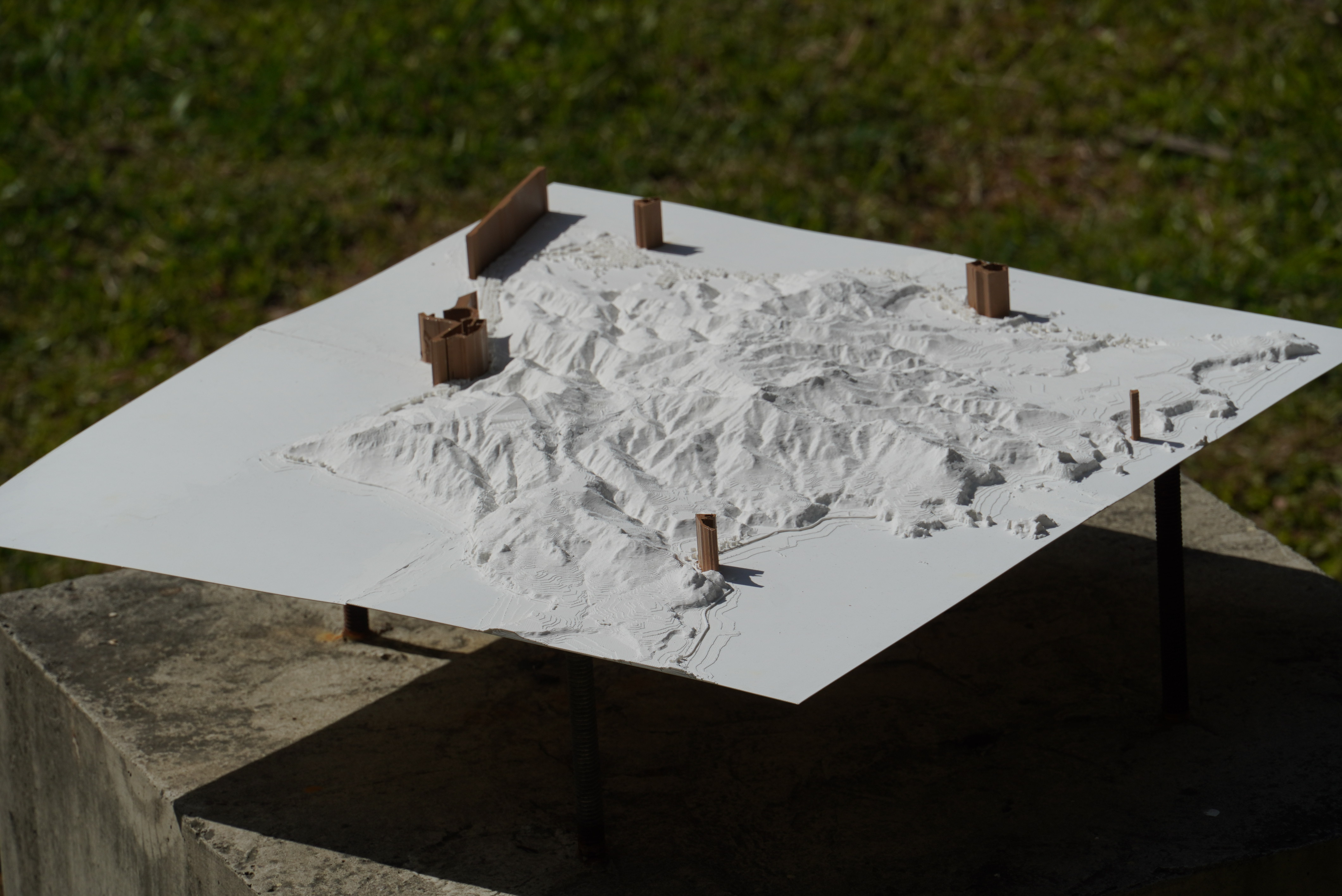
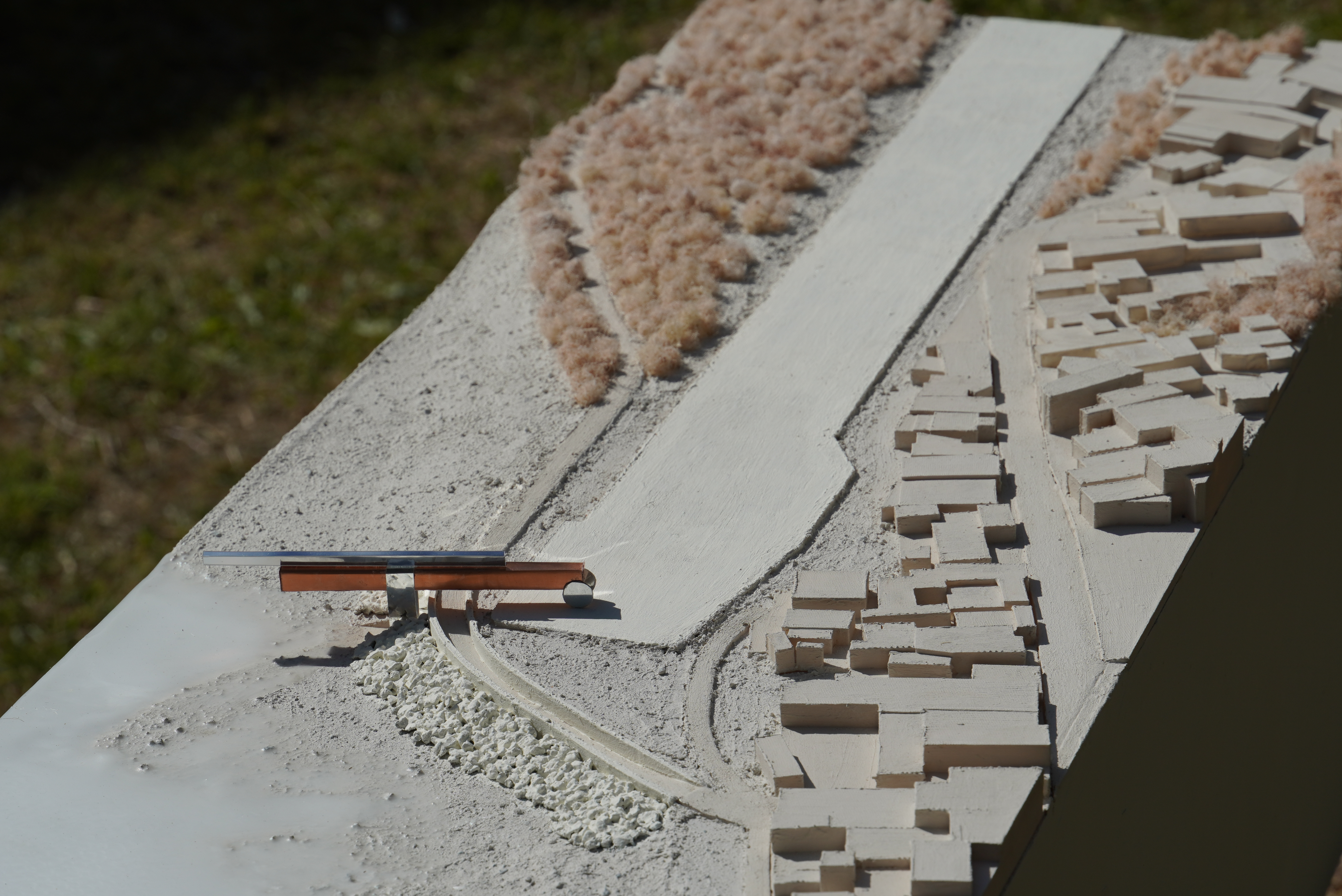
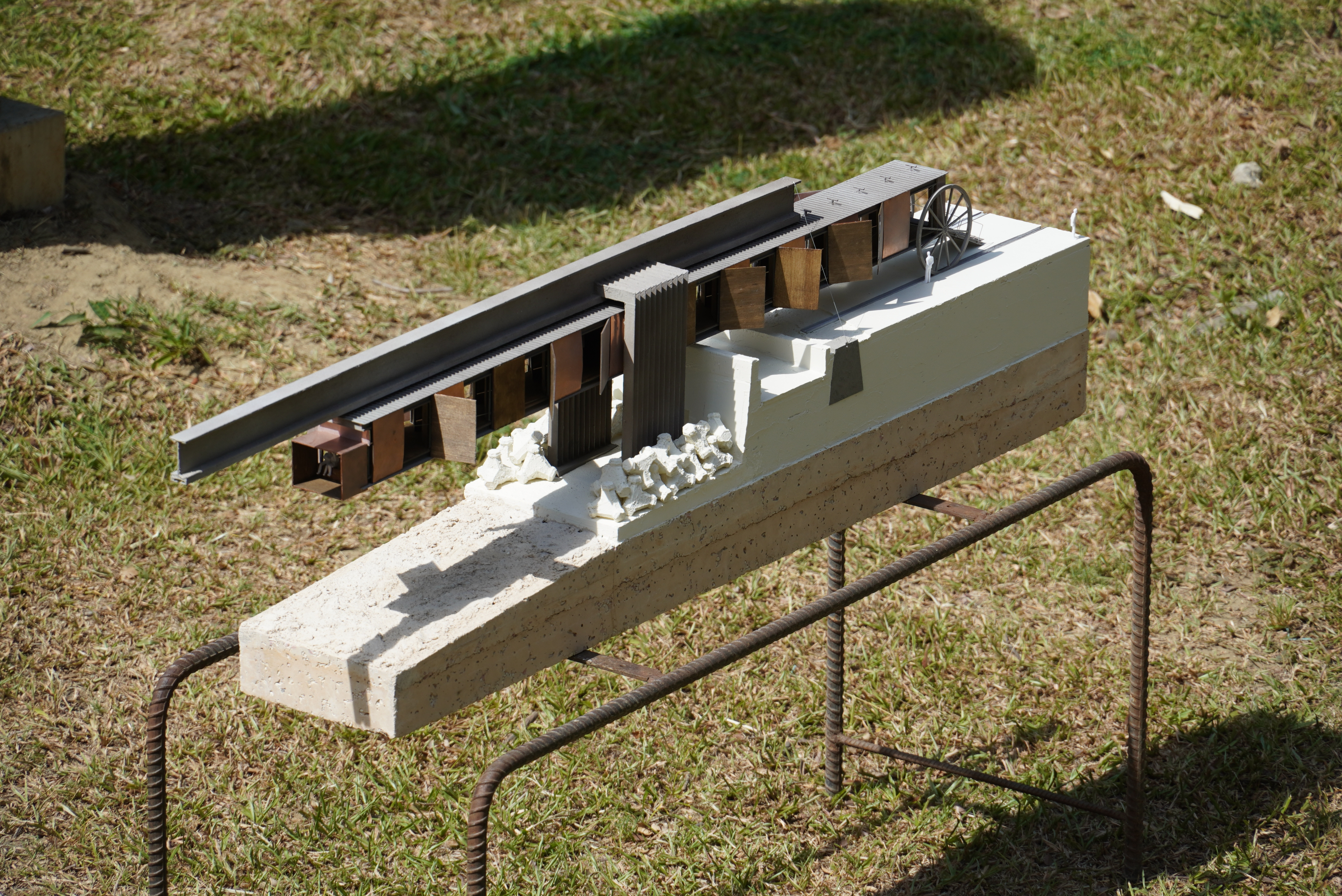
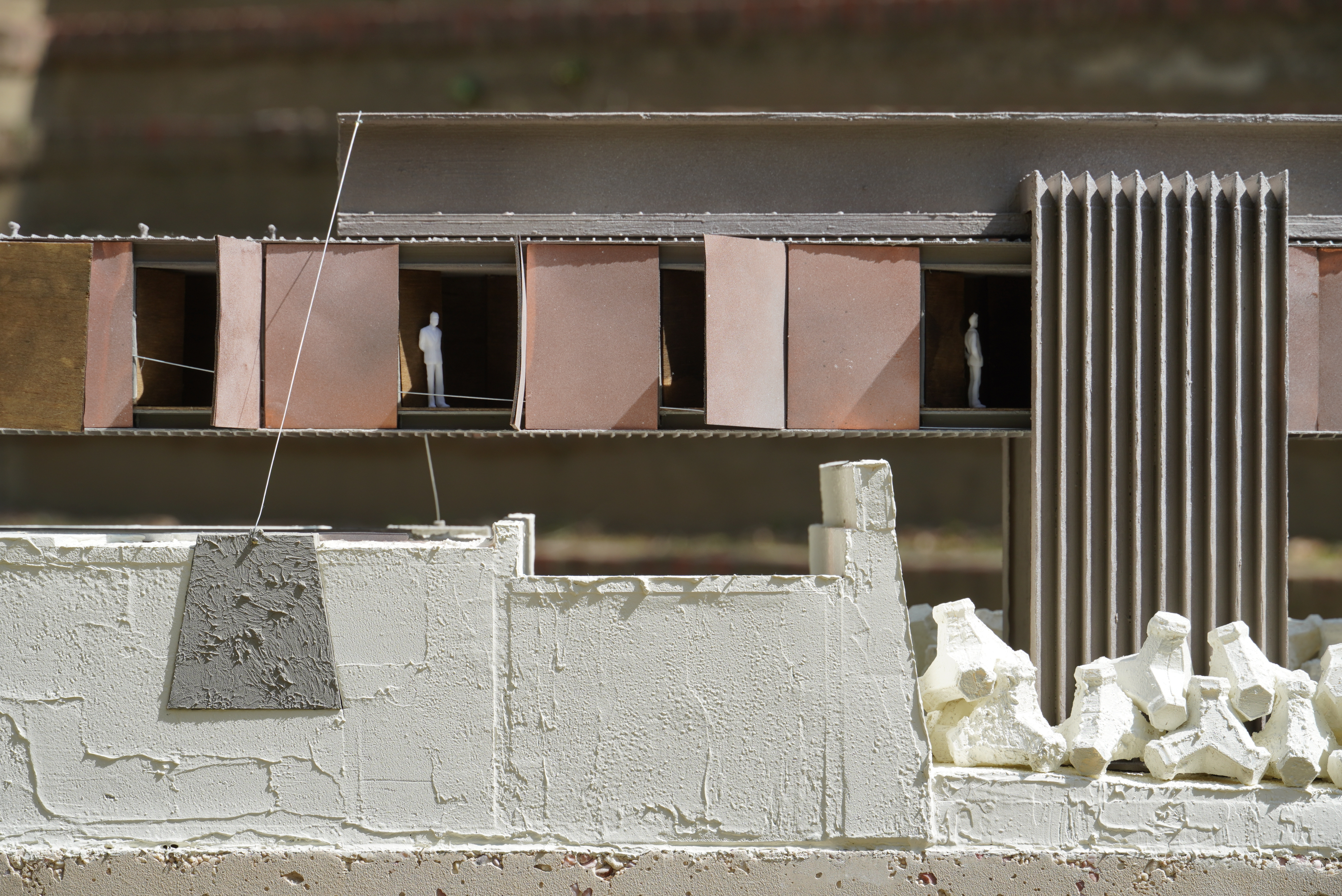
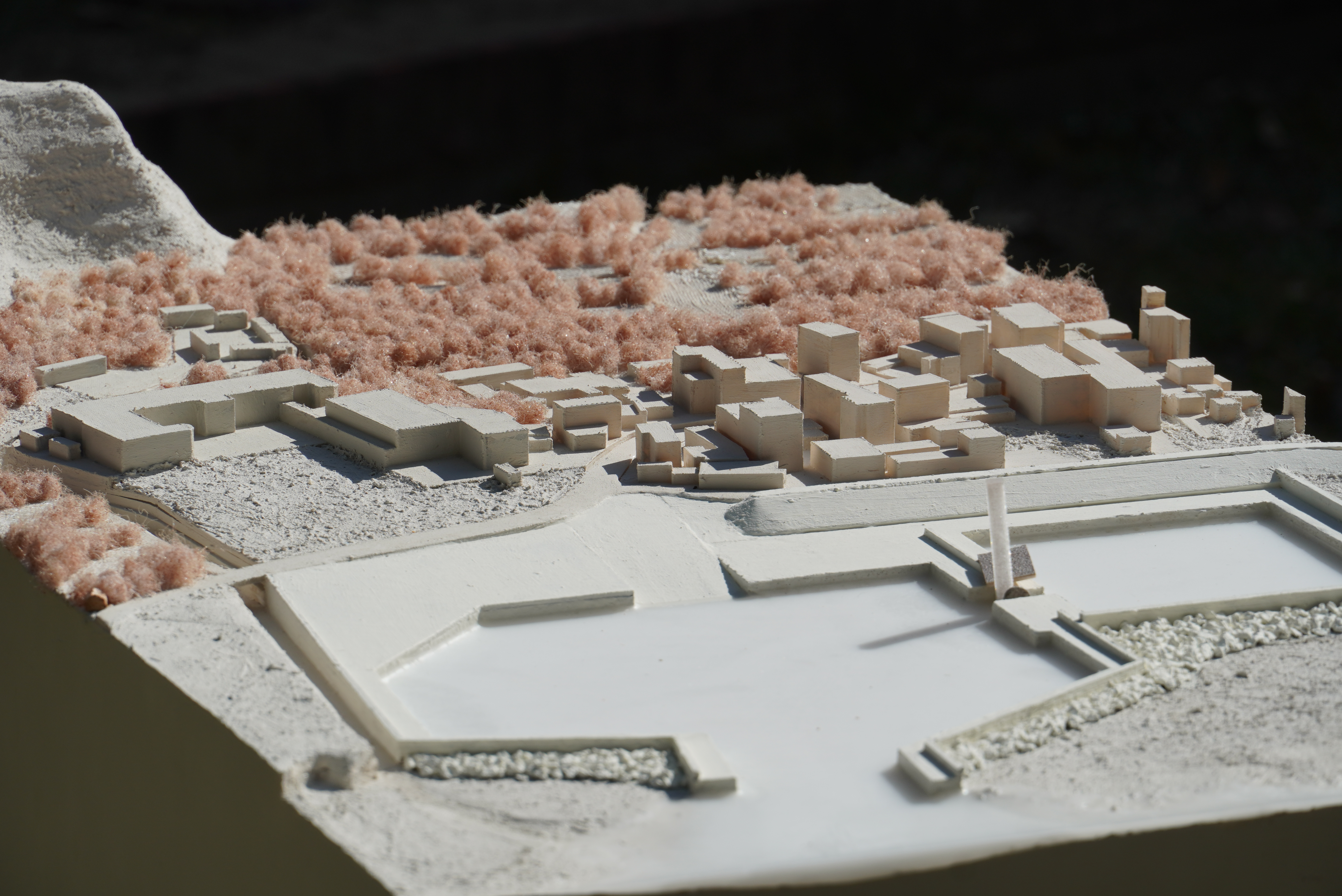
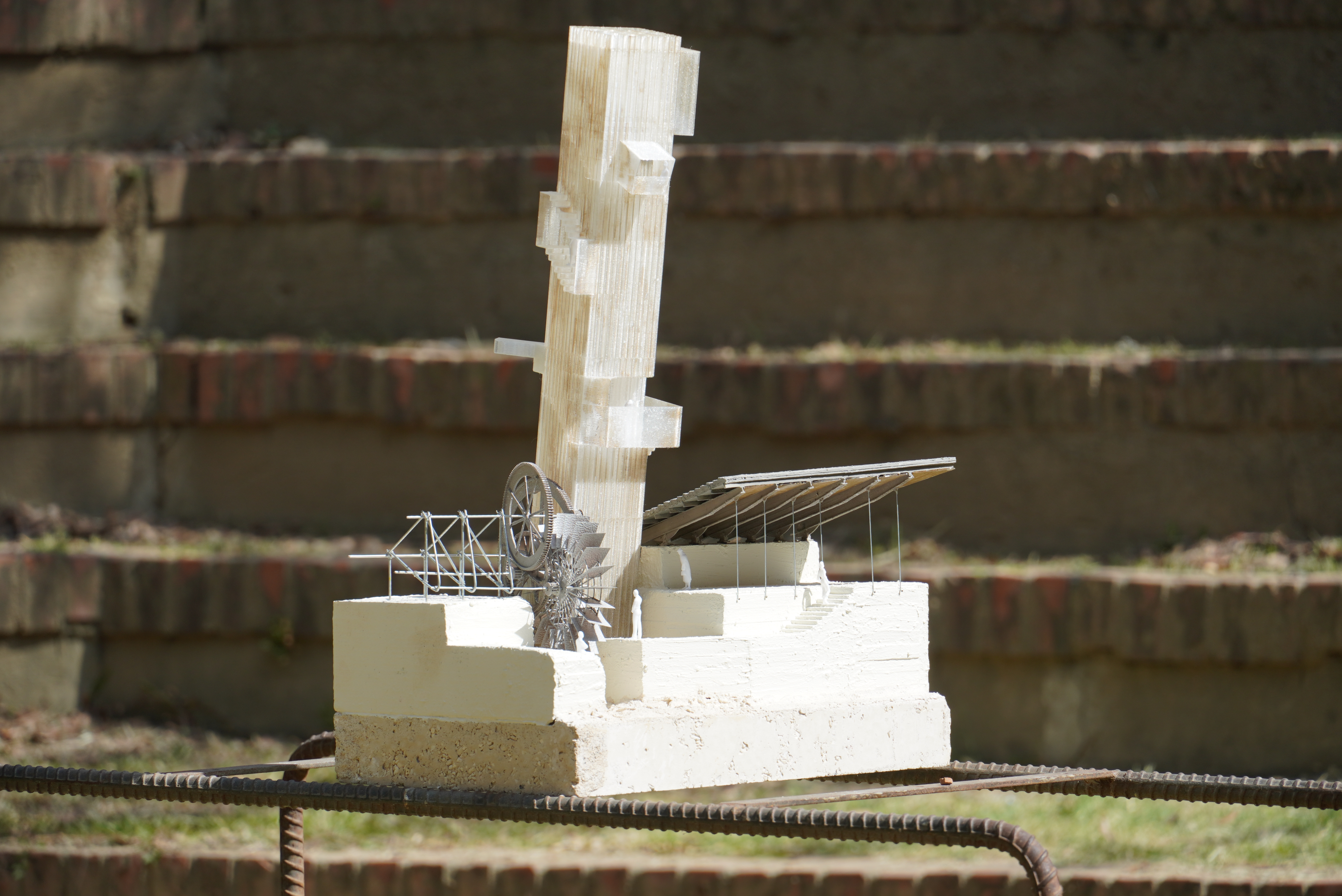
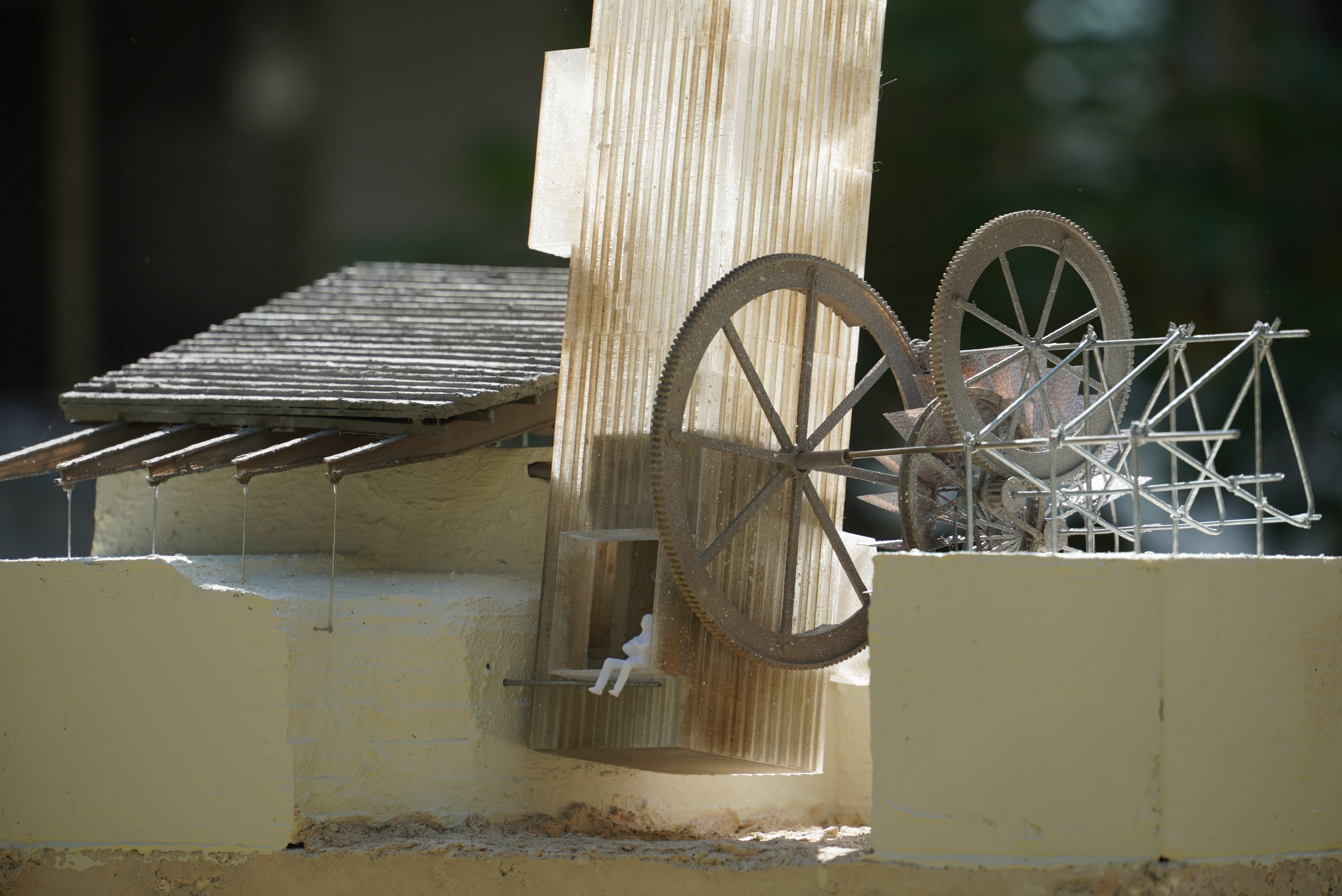
在風浪與孤立中,「持續性的脆弱」編織了綠島的本質。近百年來,跑道、港口與養殖池等固著的秩序被暴力地植入,
在地景中切割出巨大而冰冷的「空白」。然而,這些由外部意志強加的混凝土構造,
終究在浪潮中快速失效,退化為凝滯、無聲,卻充滿縫隙的當代遺跡。
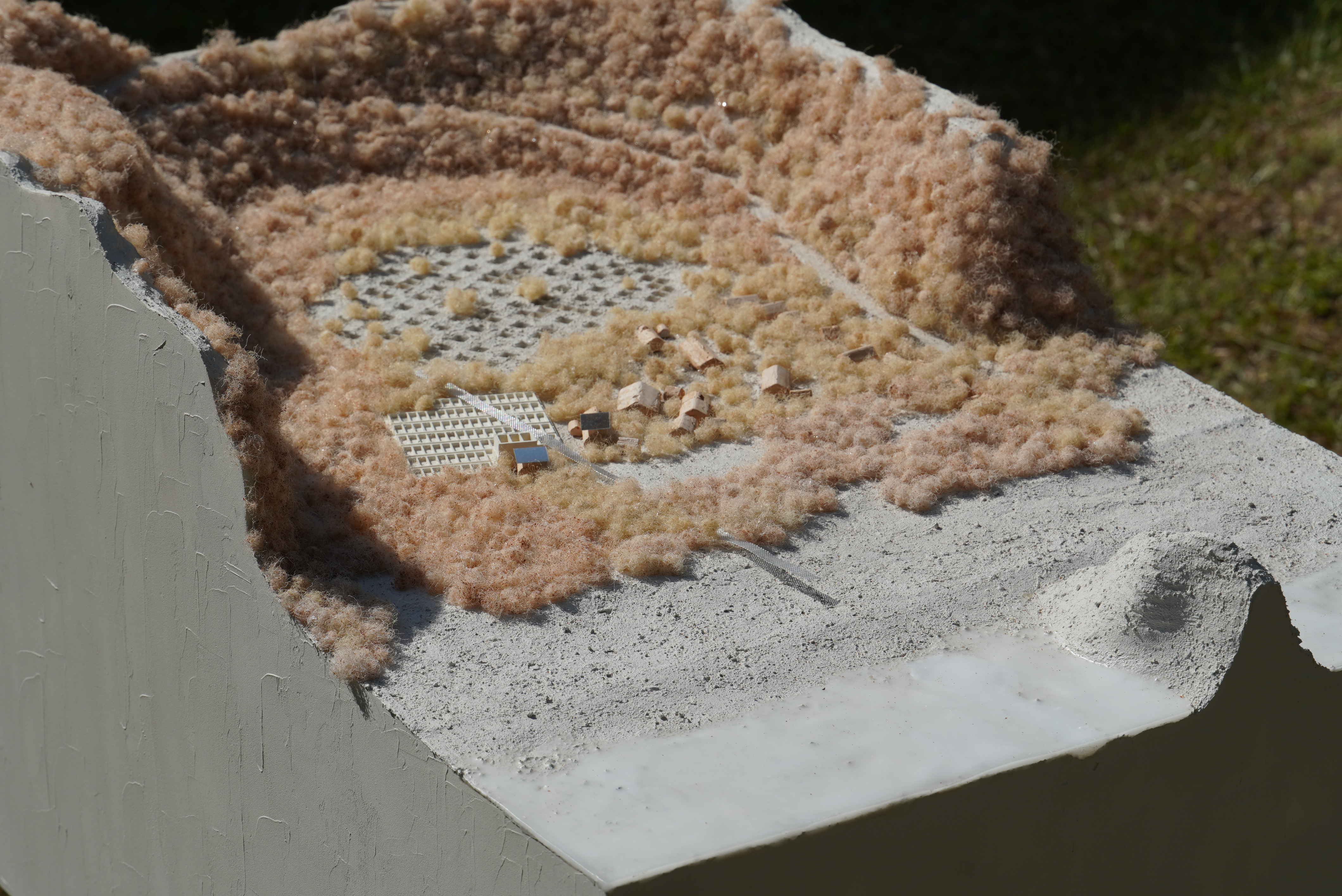
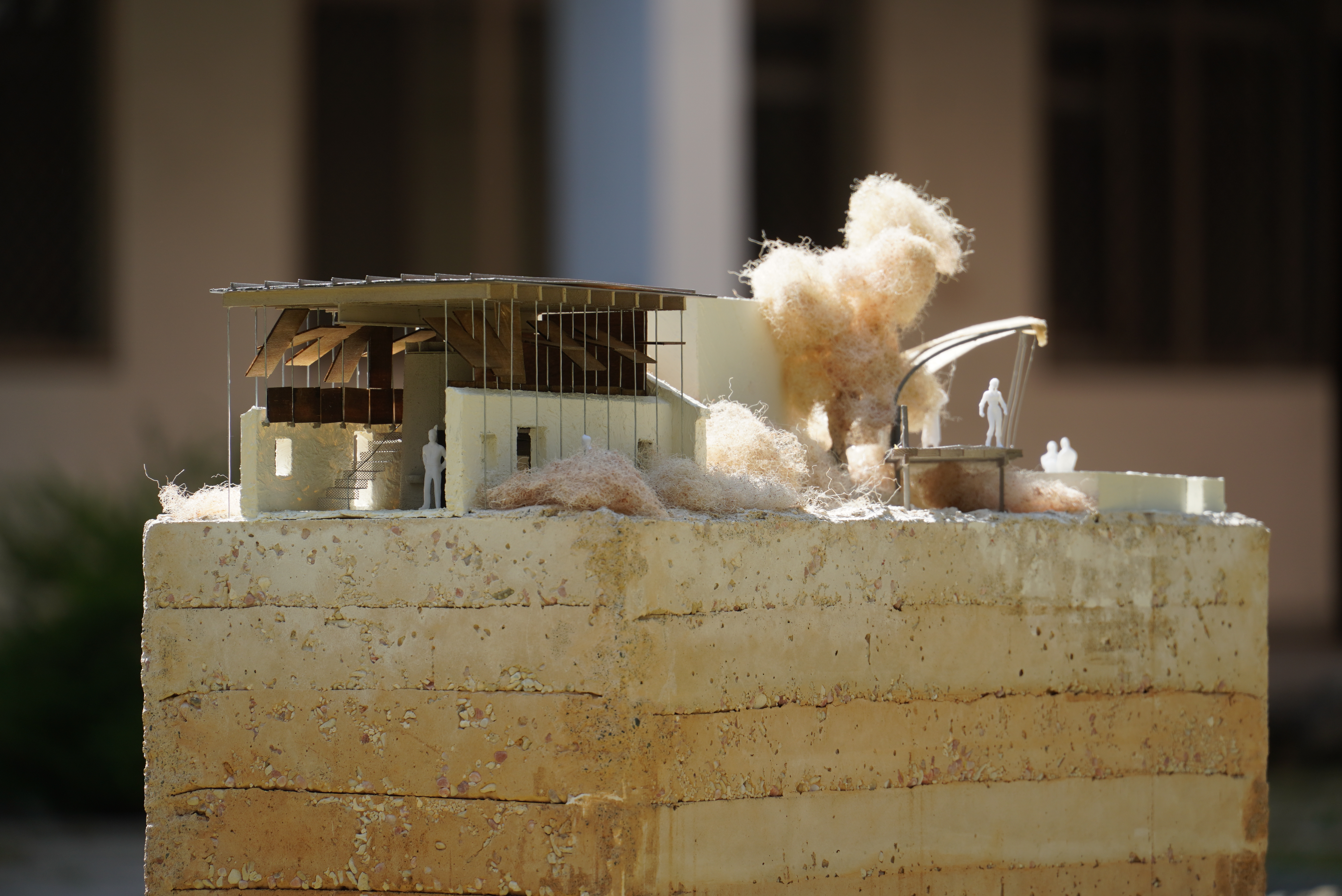
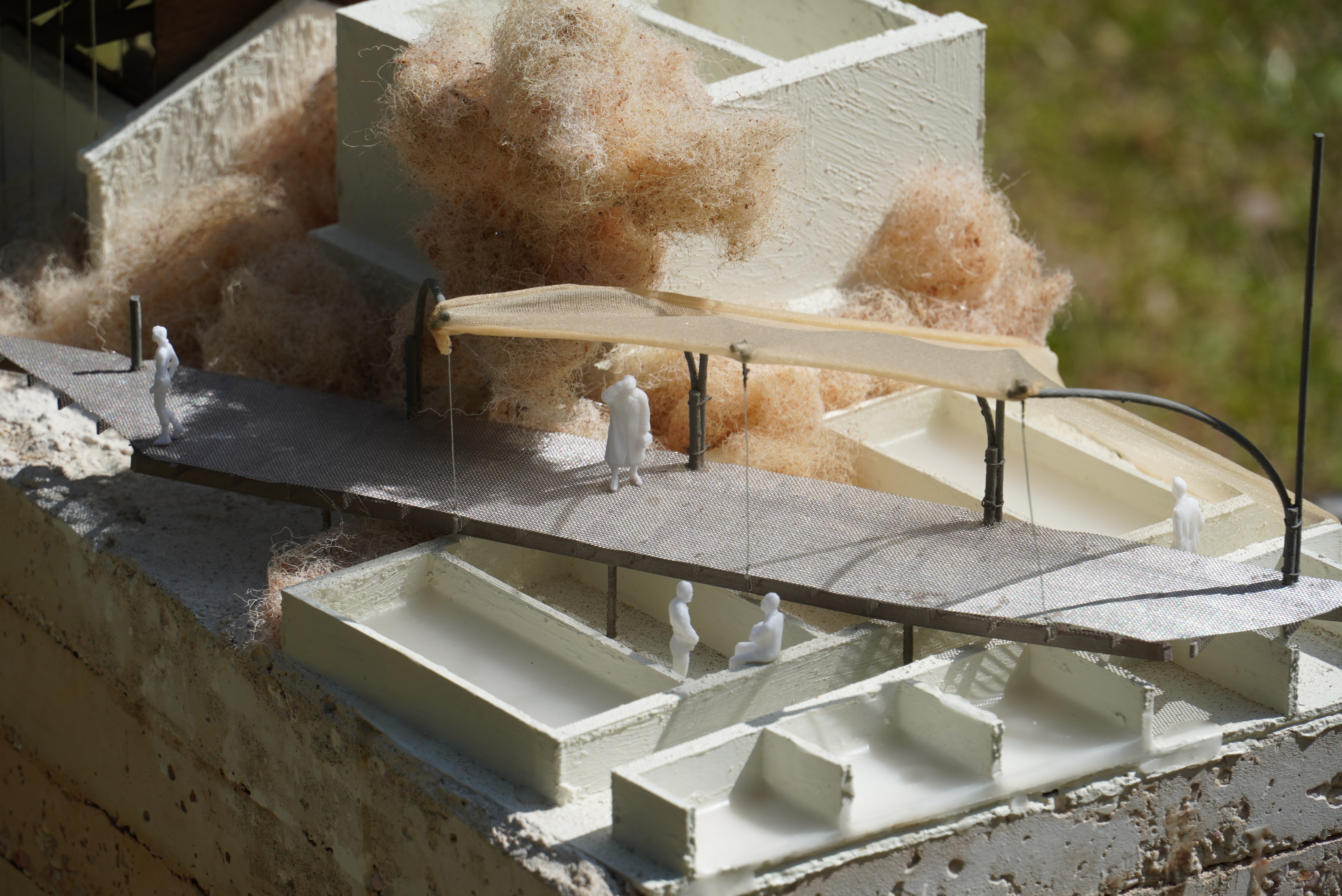
設計介入這三處失效的固著邊界。
透過輕巧的構築與因應風浪而生的動態空間,將風力、潮汐與時間的流動,重新引回那些被撕開的破口。
藉由身體在年歲流轉中的不同感知、冬日暴風中的曲折抵抗、潮汐漲退間的轉動升降,
人們重新步入這片荒廢的空白,在物質與歷史的疊加中,接納並重構島嶼深處脆弱而真實的作息。
–
Woven from gales, waves, and isolation, "perpetual fragility" defines the essence of Green
Island. Over the past century, rigid orders—runways, harbors, and aquaculture
ponds—were violently implanted, carving vast, cold "voids" into the landscape. Yet, these
concrete structures imposed by an external will ultimately failed rapidly against the waves,
degenerating into static, silent, yet fracture-filled contemporary ruins.
The design intervenes within these three failed, rigid boundaries. Through lightweight
tectonic frameworks and dynamic spaces shaped by wind and waves, it reintroduces the
flows of force, tide, and time back into the torn ruptures. Through shifting bodily
perceptions across the passage of years, convoluted resistance within winter storms, and
rotational ascents and descents during tidal cycles, people re-step into these abandoned
voids. Within the superposition of matter and history, they embrace and reconstruct the
fragile yet authentic routines deep within the island.