人類本能地嚮往自然並排斥廢棄物,卻矛盾地將廢棄物拋置於自然之中。
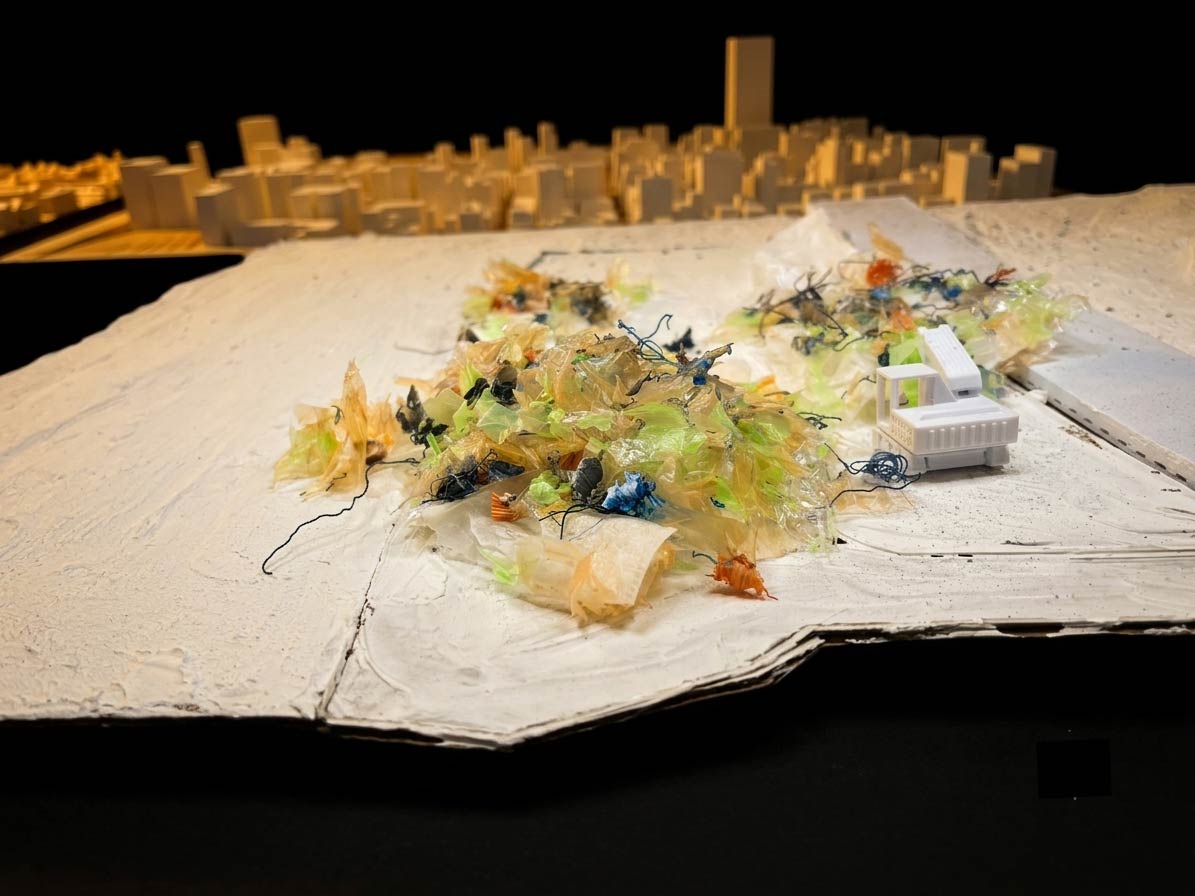
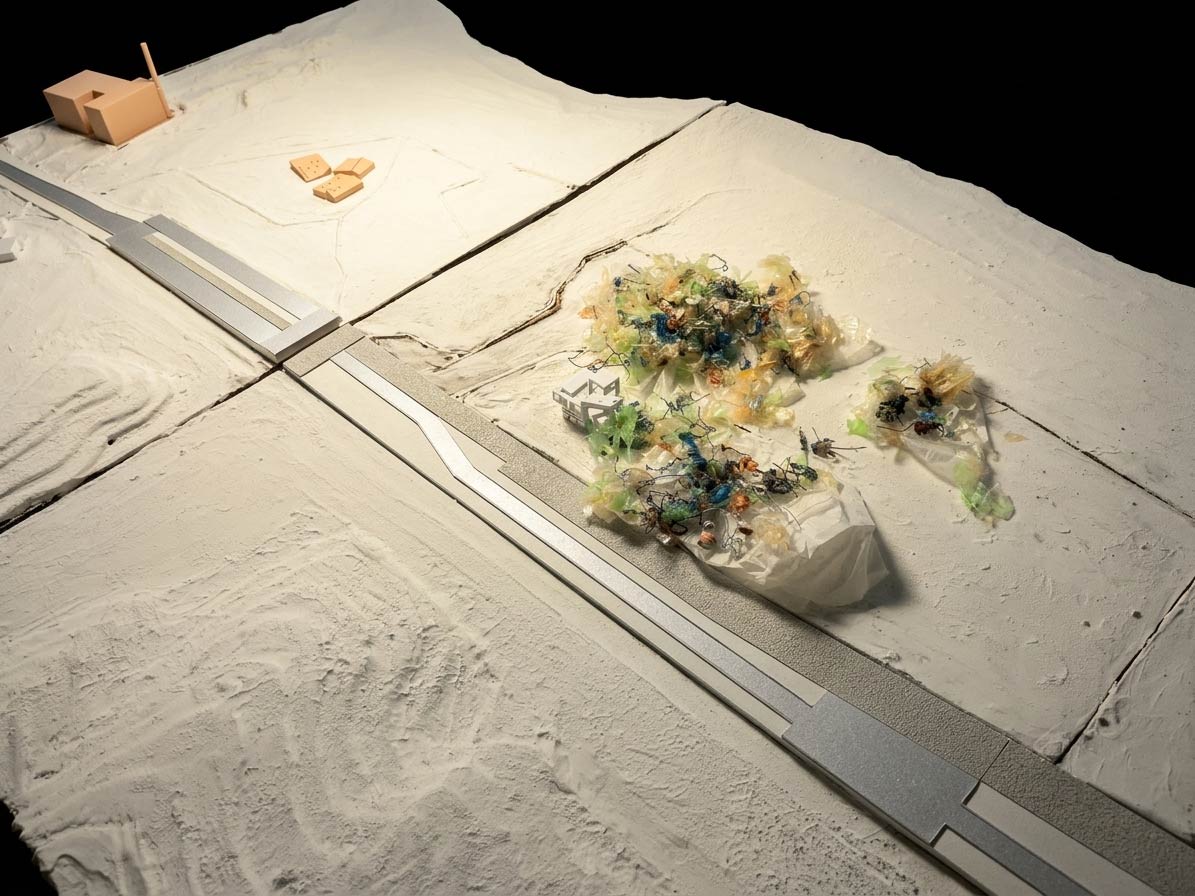
這些累積的「垃圾山」已然演變成一種超現實的地景,它不僅是物理上的阻隔,更是一種心理屏障,加深了人類社會與自然之間的斷裂。
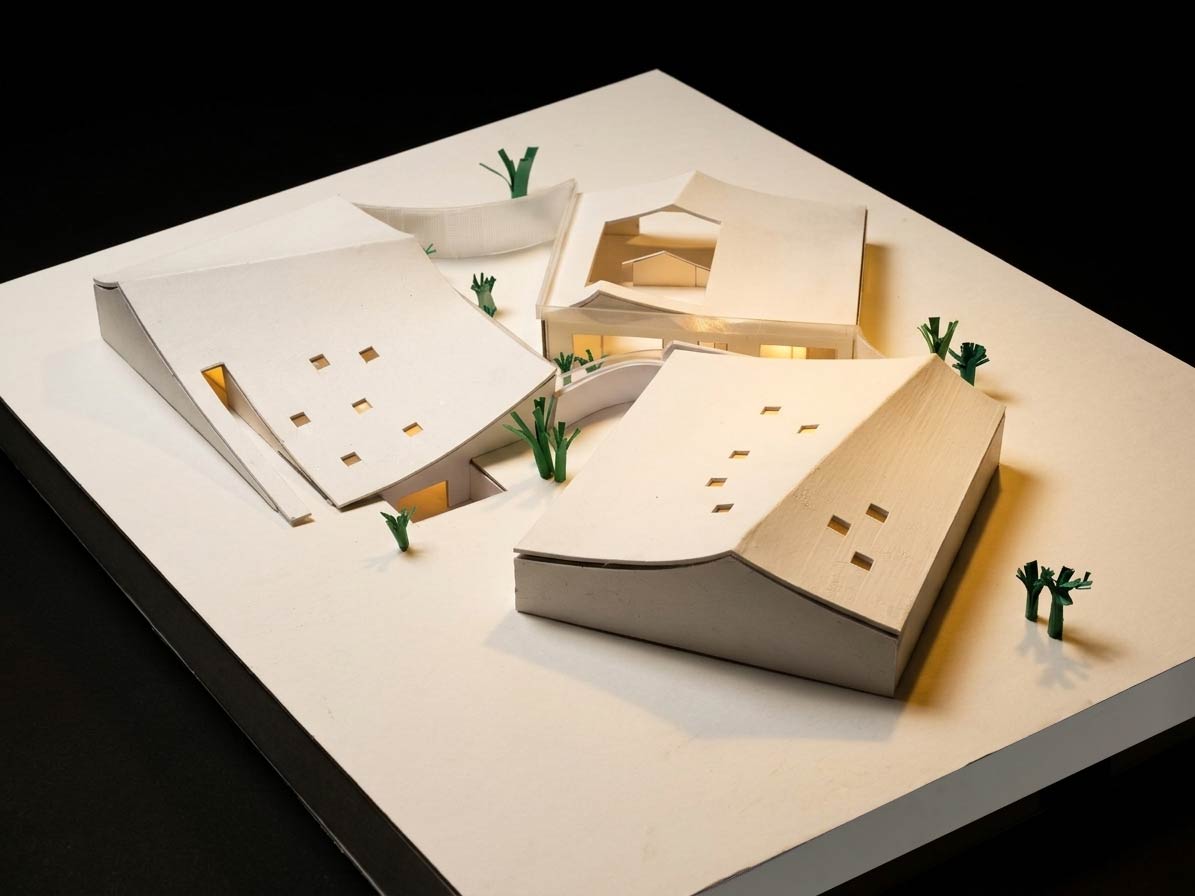
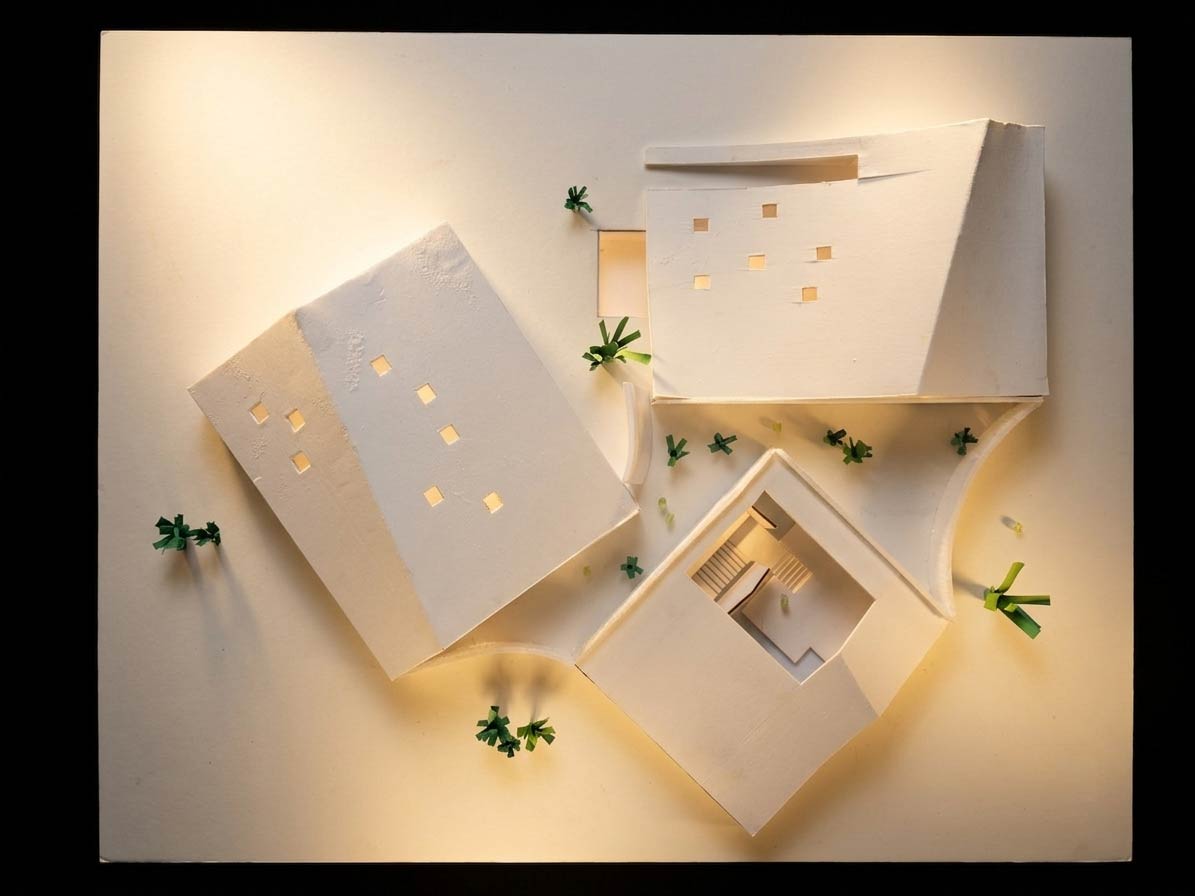
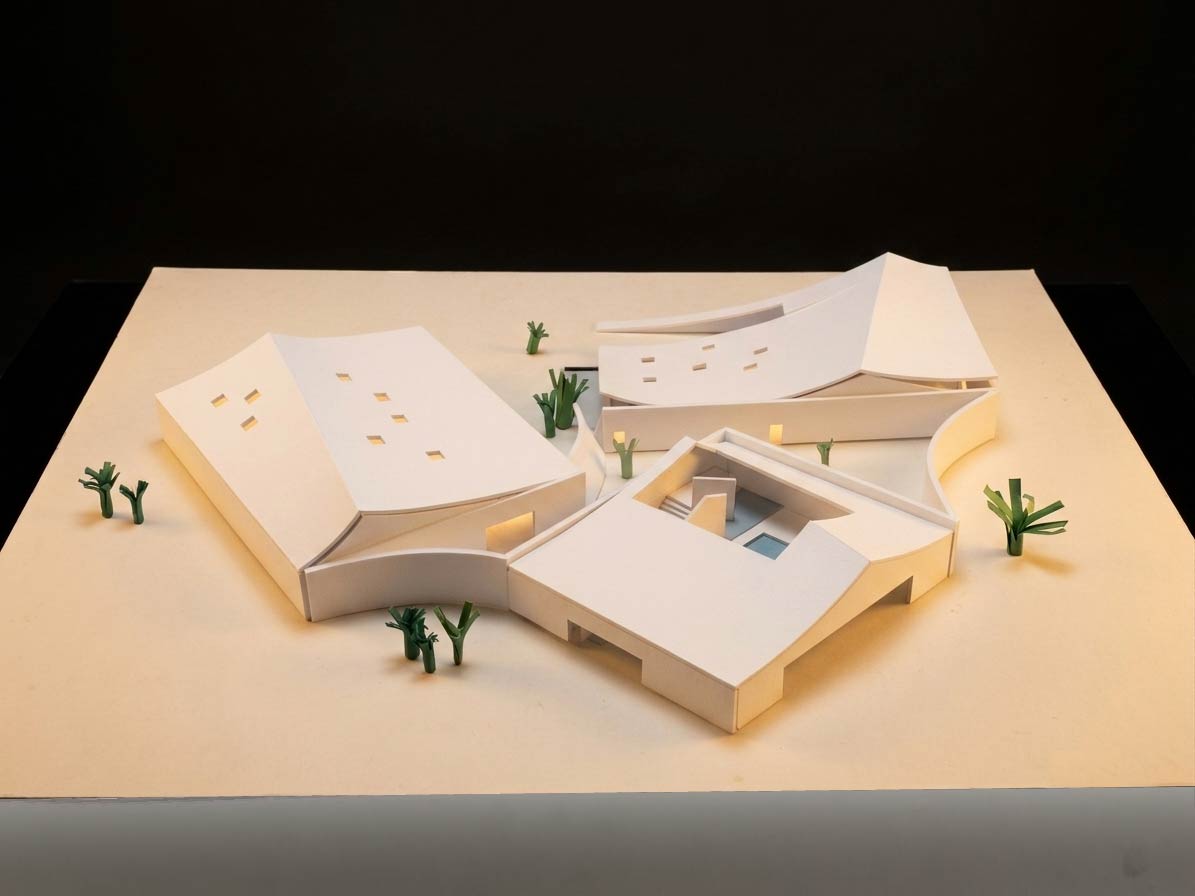
這個設季旨在探討如何以建築作為媒介,重新定義人、廢棄物與自然三者間的關係。
計畫透過策略性的設計介入,挑戰將基礎設施視為「鄰避設施」的傳統偏見,轉化為共生景觀。
建築在此不再僅是封閉的處理機器,而是空間的縫合者,透過物質循環與能源轉化的透明化,
修復受損的地表與生態系統。最終,本計畫不僅致力於物理環境的再生,更期望在社會認同與環境倫理中,
找回三者之間失落已久的平衡狀態,將工業負擔轉化為社區的永續資產。
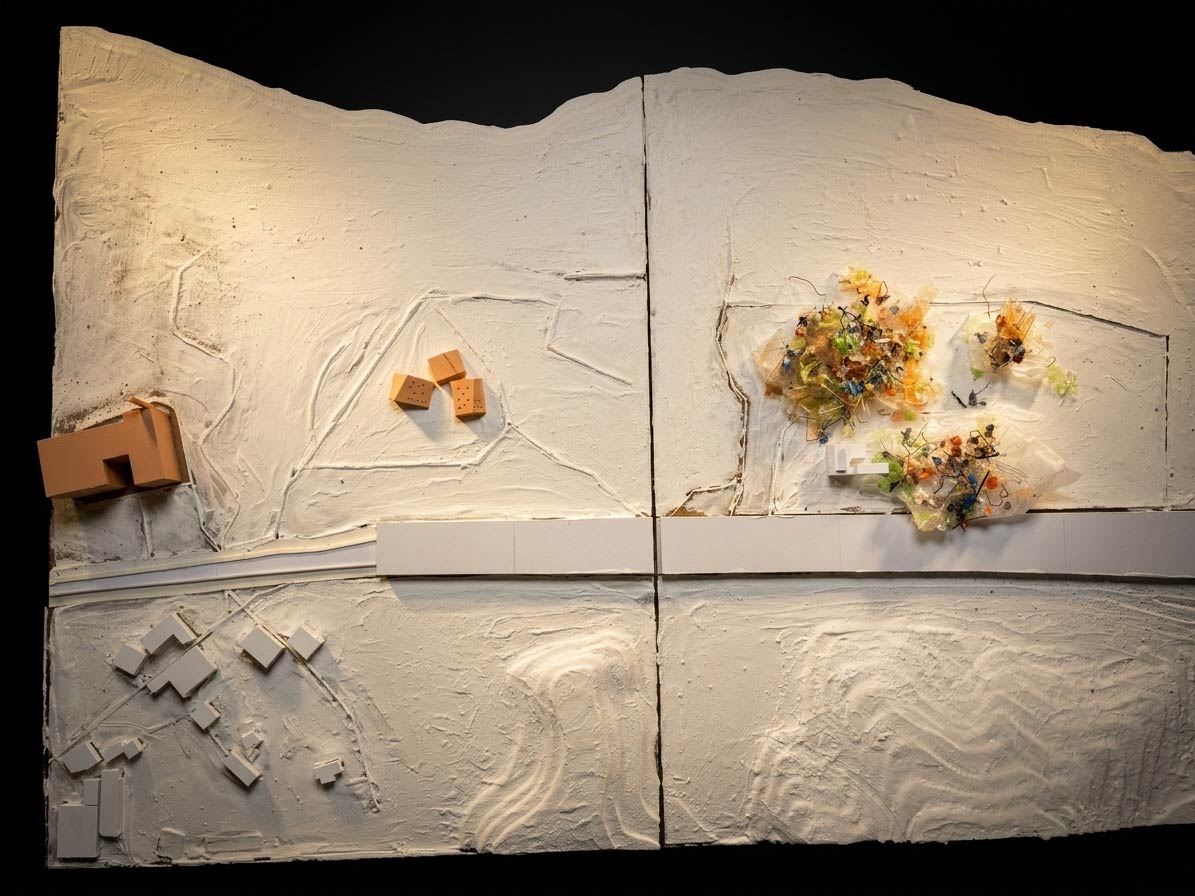
這塊基地長期默默地吸收了都市生產的過剩廢棄物,但因為它位處都市之外,人們往往選擇遺忘它的存在。
就這樣它持續的擴張,吞噬了原本的綠地,成為了垃圾山式的地景。而這樣的事件,正發生在台灣許多的垃圾暫置場。
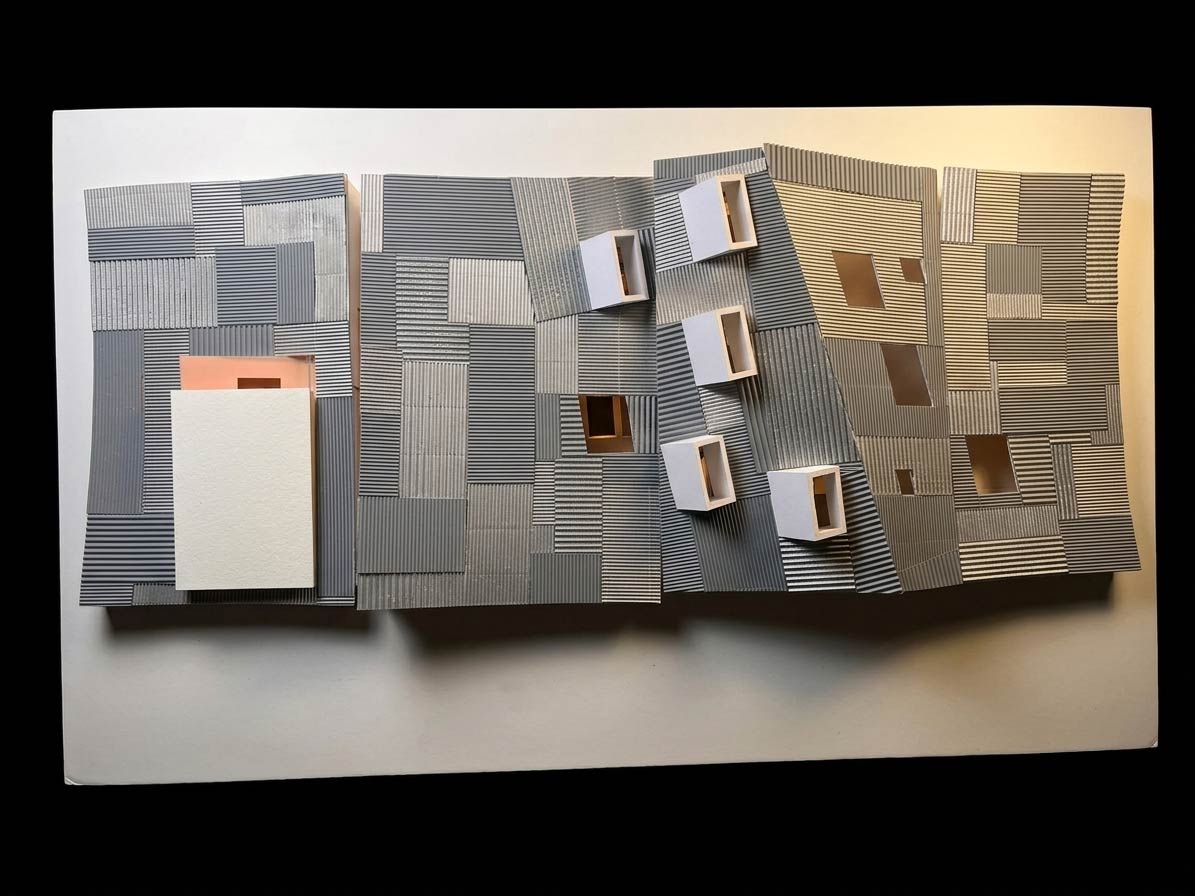
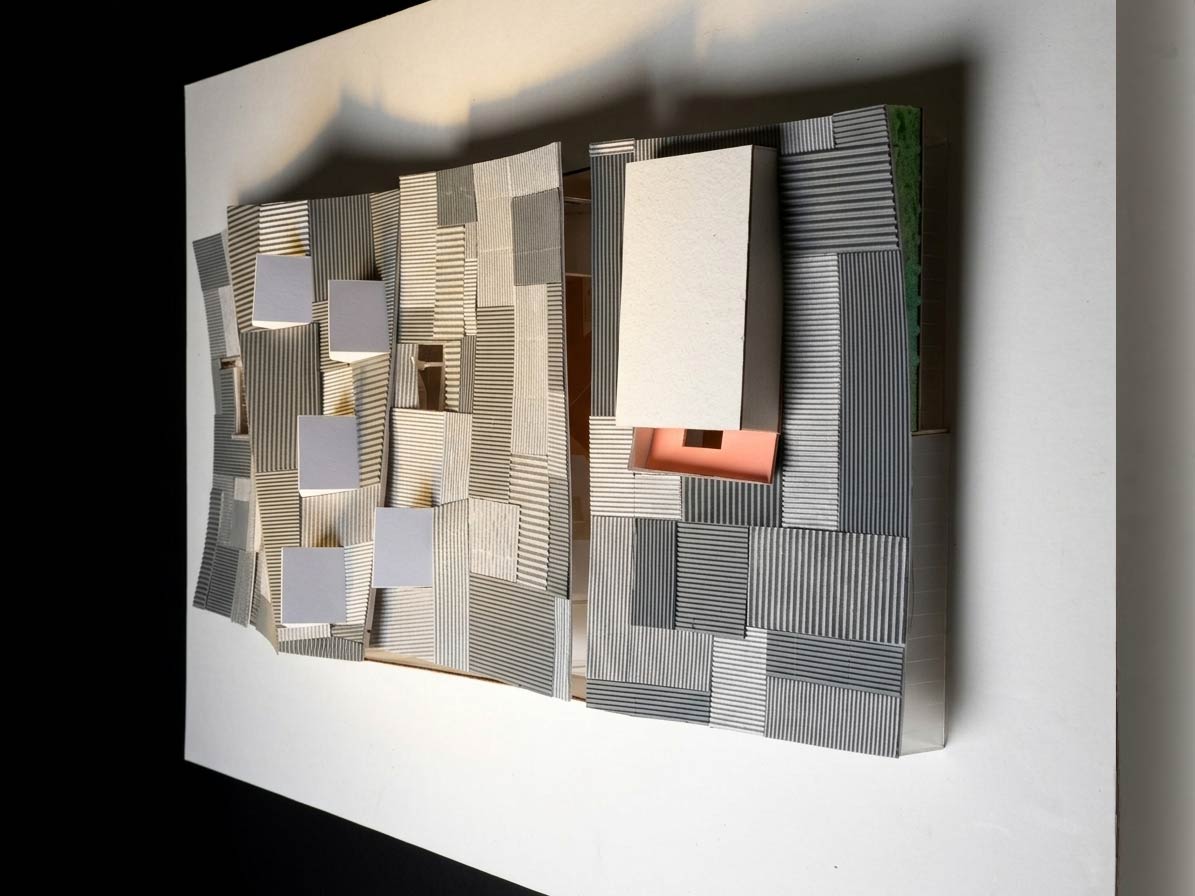
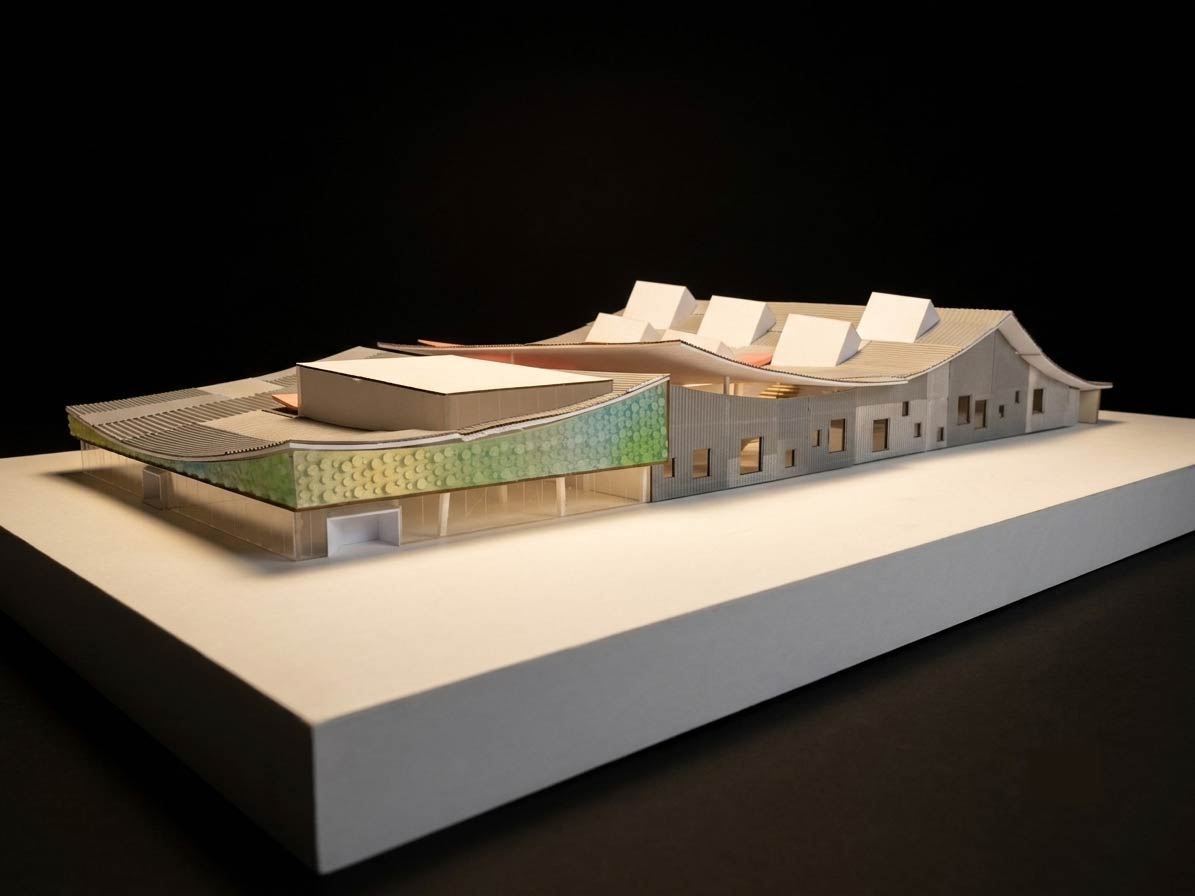
本計畫透過教育回收中心與社區溫浴中心,定義了場域轉型的雙重角色。
回收中心象徵場域邏輯的本質改變,將原本終端處理的「線性掩埋」轉化為「循環再生」,並作為教育媒介向大眾展示廢棄物資源化的可能。
溫浴中心則是對社區的回饋與修復,在垃圾山移除後,將長年的污染負擔轉化為再生能源,
提供居民日常洗浴與社交空間。透過這種能量轉化,廢棄物不再是鄰避的威脅,而是重塑社區價值與環境倫理的永續資產。
本計畫核心的能量對策,在於將新豐焚化爐產生的「廢熱副產品」轉化為驅動區域重生的生產性社會能源。
為最大化熱能的階梯式利用,系統自源頭提取焚熱能後進行多級分流:首先配送至分選中心(Sorting Center)維持低能耗運作,
並做為植物復育所需的溫水熱源;接著導入溫浴中心(Warm Bath),為居民建構一座與身體療癒相連結的公共場域。
最終,這條能源鏈將跨越基地邊界,透過地下管線向受垃圾掩埋場影響最深的尚義村輸送日常家庭熱源,實現實質的環境正義。
–
Human beings naturally seek nature and reject waste. Yet, at the same time, we continue to
throw waste back into nature. Over time, these growing "garbage mountains" have become
surreal landscapes. They are not only physical barriers but also psychological ones,
deepening the separation between human society and the natural environment.
This project explores how architecture can redefine the relationship between people, waste,
and nature. Through strategic design interventions, it challenges the traditional view of waste
facilities as unwanted infrastructure and transforms them into shared landscapes.
Architecture is no longer only a closed processing machine, but a connector that repairs
damaged land and ecosystems by making material recycling and energy transformation
visible. Beyond environmental restoration, this project aims to rebuild social awareness and
environmental ethics, turning an industrial burden into a sustainable community asset.
For many years, this site has quietly received the city's excess waste. Because it is located
outside the urban area, people have chosen to ignore its existence. As a result, the landfill
has continued to expand, replacing green land with a mountain of waste. This situation is not
unique to this site, but is happening at many temporary waste storage sites across Taiwan.
The project introduces two main programs: an Educational Recycling Center and a
Community Warm Bath Center. The Recycling Center represents a new way of dealing with
waste by changing the old linear system of landfill into a circular recycling system. It also
serves as an educational space, helping the public understand how waste can become
valuable resources. The Warm Bath Center gives something back to the local community.
After the garbage mountain is removed, the pollution that the community has lived with for
years is transformed into renewable energy, providing a place for bathing, relaxation, and
social interaction. Through this process, waste is no longer seen as a threat, but as a
resource that supports both the community and the environment.
The project’s main energy strategy is to transform waste heat from the Xinfeng Incineration
Plant into productive social energy that supports regional regeneration. To make the best
use of this energy, the recovered heat is distributed through several stages. First, it supplies
the Sorting Center, supporting low-energy operations and providing warm water for plant
restoration. It then flows to the Warm Bath Center, creating a public space where energy is
connected to physical comfort and well-being.
Finally, the energy network extends beyond the site through underground pipelines,
delivering hot water to Shangyi Village, the community most affected by the landfill. In this
way, the project provides a practical form of environmental justice while reconnecting
people, infrastructure, and nature.