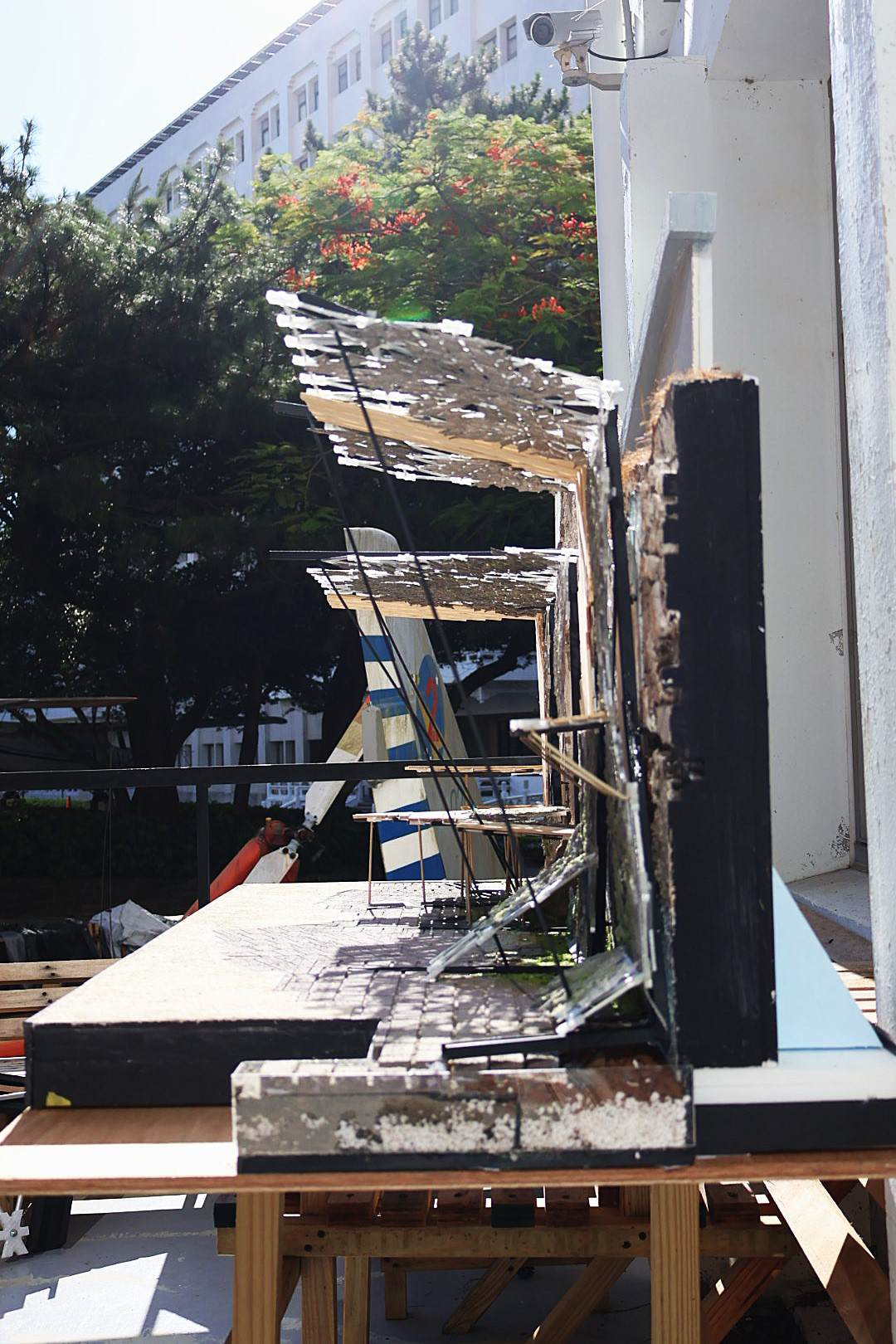
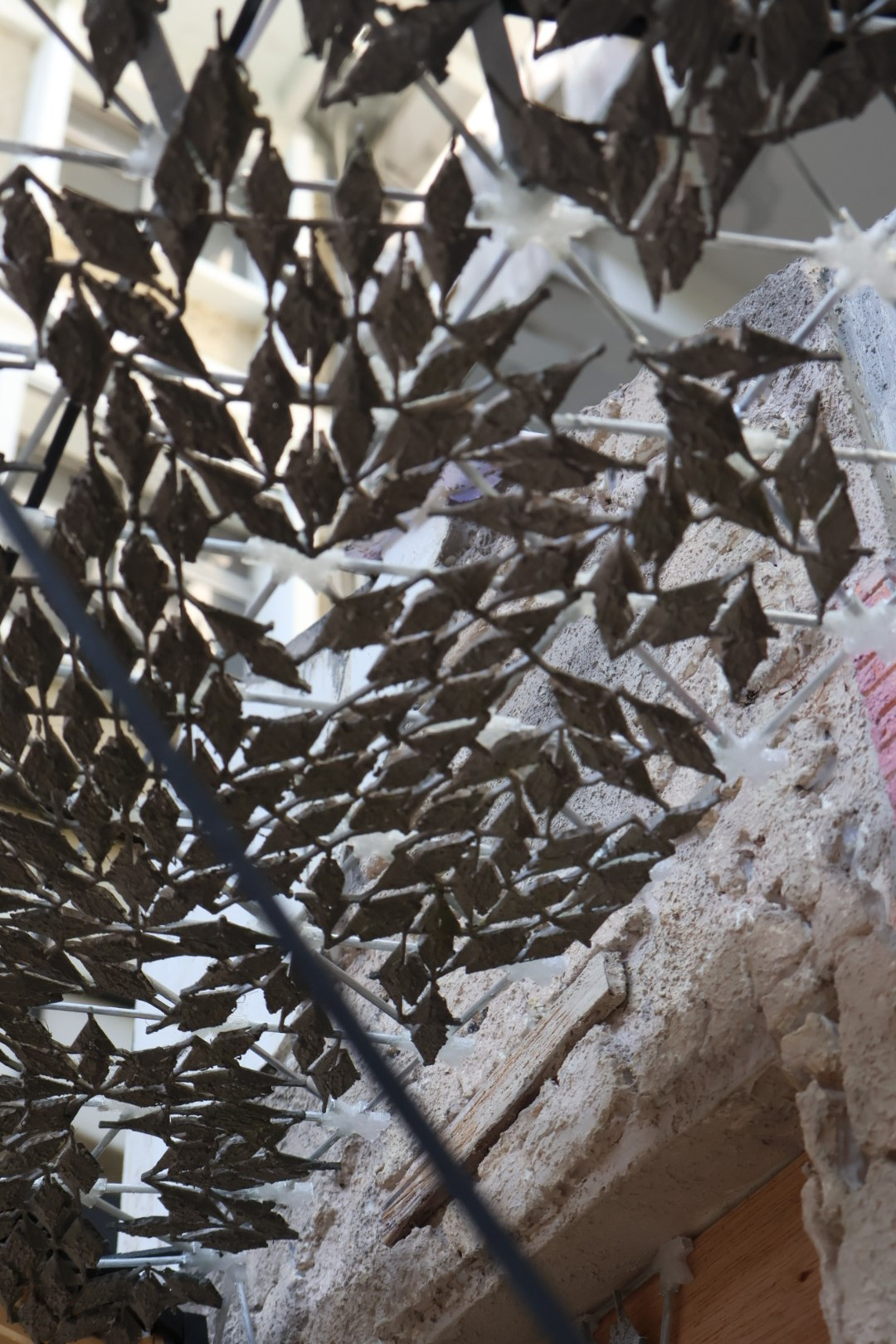
當代都市更新多以拆除或表層覆蓋作為主要手段,使建築以嶄新的外貌重生,
卻也抹除了建物在長時間使用中累積的痕跡,包括自然侵蝕與人類活動留下的印記。
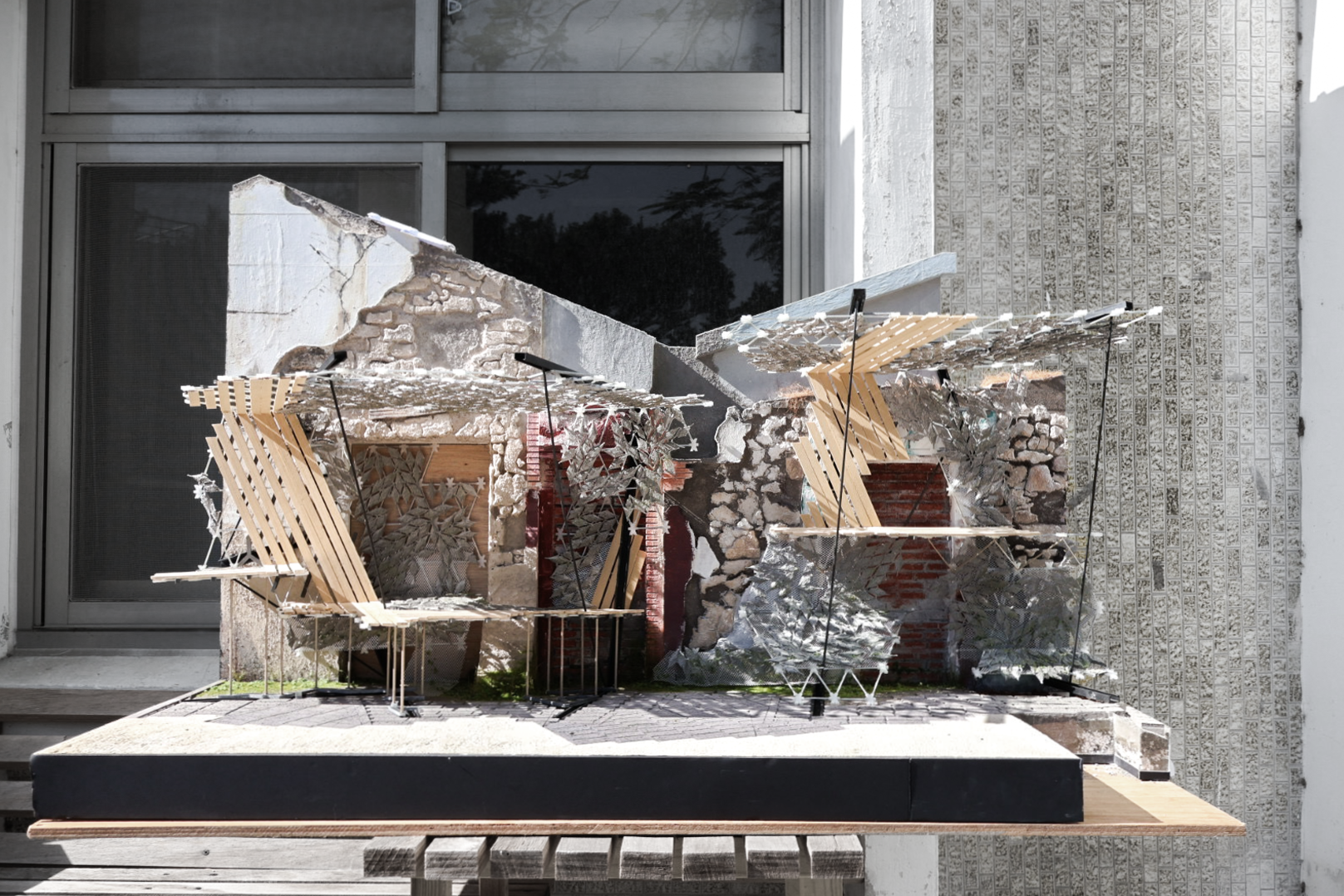
以高雄旗津老建物群為基地,重新思考建築更新的可能性。
在不消除既有痕跡的前提下,將其視為可被讀取、轉譯與介入的生成依據,使時間所留下的痕跡得以被延續,而非被覆蓋。
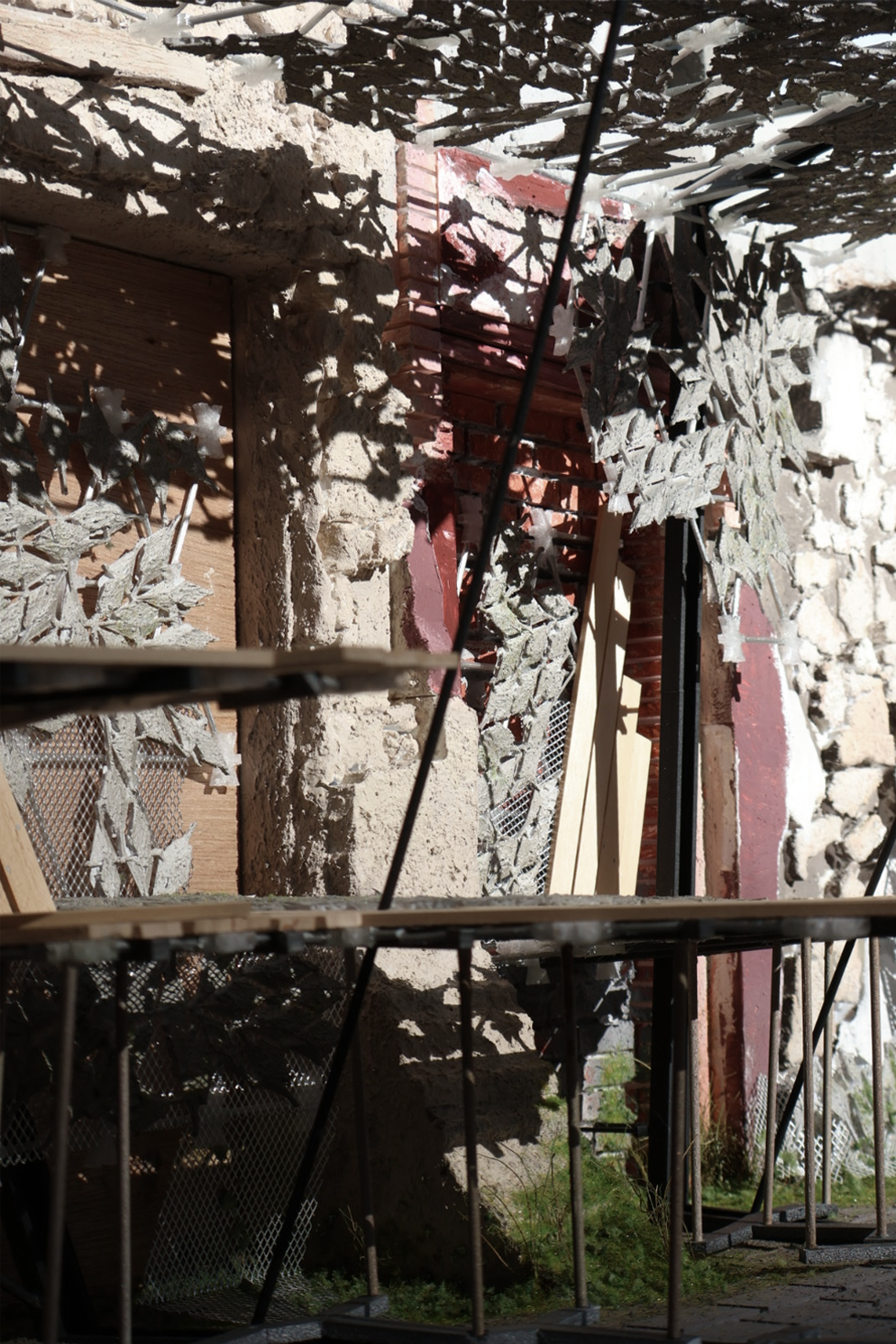
以「有機與無機的共存」為核心,設計透過生成系統,將痕跡轉化為空間構築的基礎,並結合蔓生植物與既有建築,發展出回應環境與人居活動的介面。
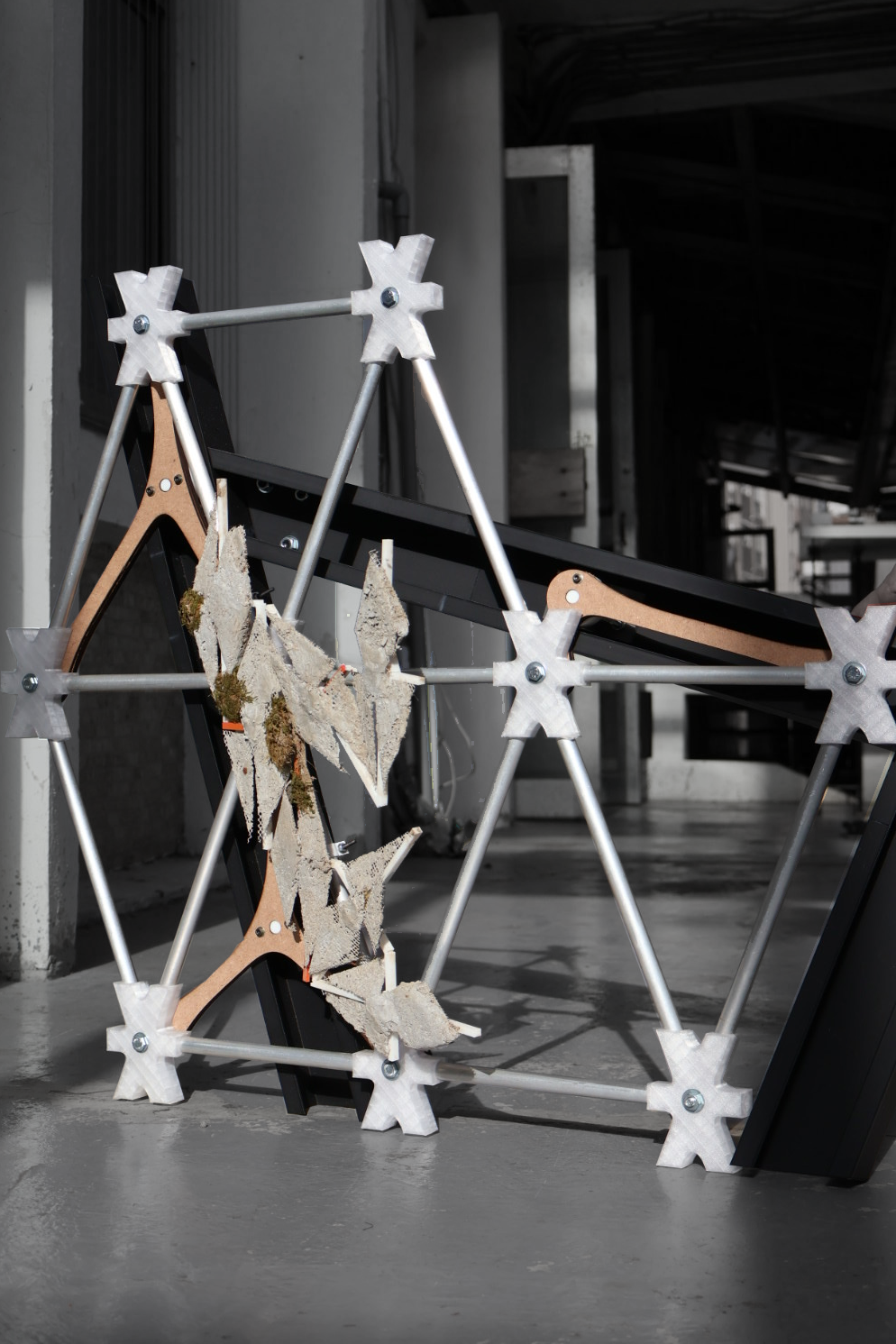
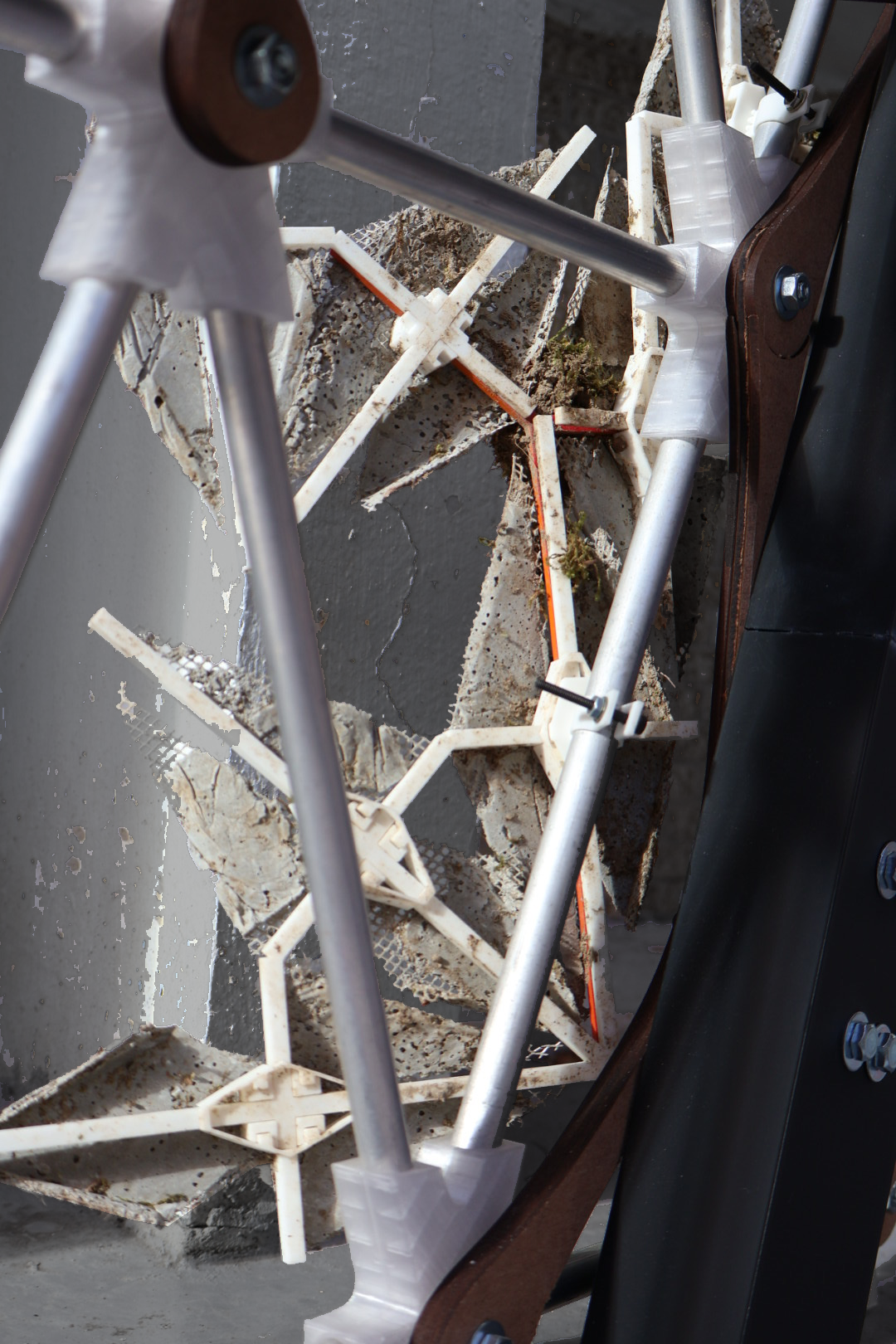
研究聚焦於工法及基地應用,首先工法為單元型式與系統組織研究,透過縫隙形式實驗,比較不同條件下的生長差異,發展對應的單元與材料策略;
其次針對基地牆面痕跡進行採樣分析,推導單元生成邏輯與組織方式。
完成工法研究後將系統置入基地,結合行為觀察發展行為原型,形成供人類與非人類共同使用的空間。
本設計提出一套持續演化的共存系統,作為有機與無機、行為與非行為之間的
過渡介面,讓建築在時間、環境與生命的交互作用下持續生成與轉變。
–
Contemporary urban renewal often relies on demolition or superficial replacement
as its primary strategy, allowing buildings to be reborn with a renewed appearance
while simultaneously erasing the traces accumulated through long-term occupation,
including traces left by natural weathering and human activities.
This project takes the aging building clusters of Qijin, Kaohsiung, as its site and
reconsiders the possibilities of architectural renewal. Rather than removing existing
traces, these traces are treated as readable, translatable, and generative conditions
for intervention, enabling the marks of time to be extended rather than concealed.
Centered on the coexistence of the organic and the inorganic, the project employs a
generative system that transforms traces into the basis of spatial construction. By
integrating climbing vegetation with existing architectural structures, it develops an
interface that responds to environmental conditions and patterns of inhabitation.
The research focuses on both fabrication method and site implementation. The first
phase investigates unit typologies and system organization through experiments
with different gap configurations, comparing growth behaviors under varying
conditions to develop corresponding unit forms and material strategies. The second
phase analyzes traces sampled from existing site walls to derive the generative logic
and unit distribution of the system. Following the development of the fabrication
method, the design is implemented within the site and combined with behavioral
observations to generate spatial prototypes that accommodate both human and
non-human users.
Ultimately, the project proposes an evolving system of coexistence that operates as
a transitional interface between the organic and the inorganic, as well as between
activity and inactivity, allowing architecture to continuously transform through the
interactions of time, environment, and life.