隨著貴安快速發展為中國重要的資料中心聚落,大規模基礎建設改變了地景,
也留下許多未完成的混凝土結構與破碎的鄉村環境。
本計畫探討如何重新利用這些被遺棄的空間,讓人、自然與數位基礎設施重新建立關係。
研究從傳統釀酒產業的循環共享模式出發,對照資料中心的線性資源消耗,
並透過布依族聚落田野調查,重新理解木構建築與舊木材再利用所蘊含的永續智慧。
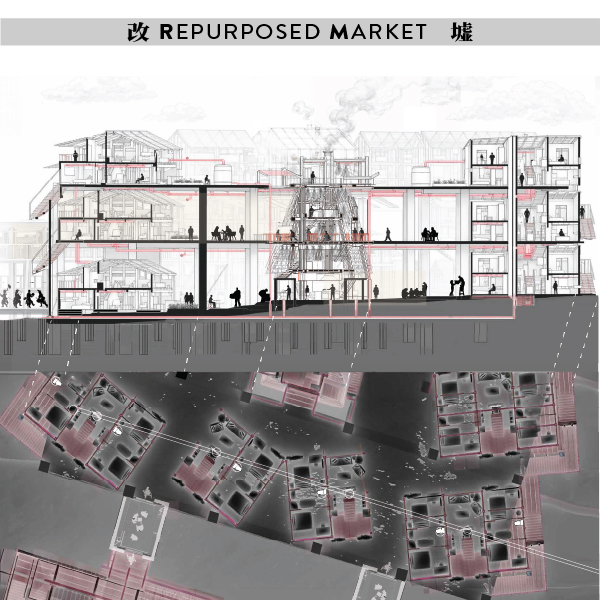
最終,提案以三十年的時間尺度,將一座廢棄主題樂園轉化為合作聚落,
結合水系修復、農業、生態復育與資料中心餘熱再利用,
打造工坊、染坊、公共浴場及社區共享設施。這不僅是一項基地設計,
更提出一套可複製、可因地制宜的更新策略,為中國各地未完成開發提供新的可能。
–
As China’s newest data center hub expands across Gui’an, rapid infrastructure development
has transformed the landscape while leaving behind abandoned mega-structures and
fragmented rural communities. This project asks a simple question: how can these unfinished
concrete landscapes be reclaimed to support both people and nature?
Rather than treating data centers as isolated industrial facilities, the proposal explores how
digital infrastructure can become part of a circular local economy. It begins by comparing the
traditional rice wine industry—where materials, energy, and knowledge are continuously
shared—with the linear resource consumption of the data industry. Fieldwork in indigenous
Buyi villages further reveals how generations of timber reuse and adaptable construction
embody principles now recognized as Design for Disassembly.
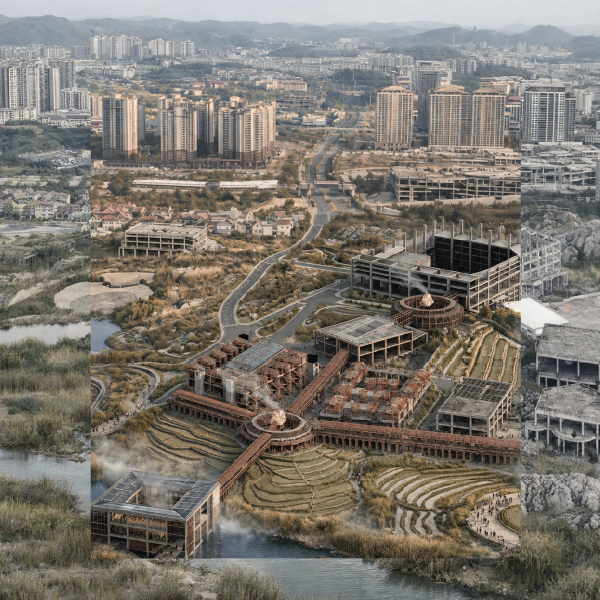
Drawing from these insights, the project transforms an abandoned peri-urban theme park
over a 30-year timeline into a cooperative village where ecology, craftsmanship, and digital
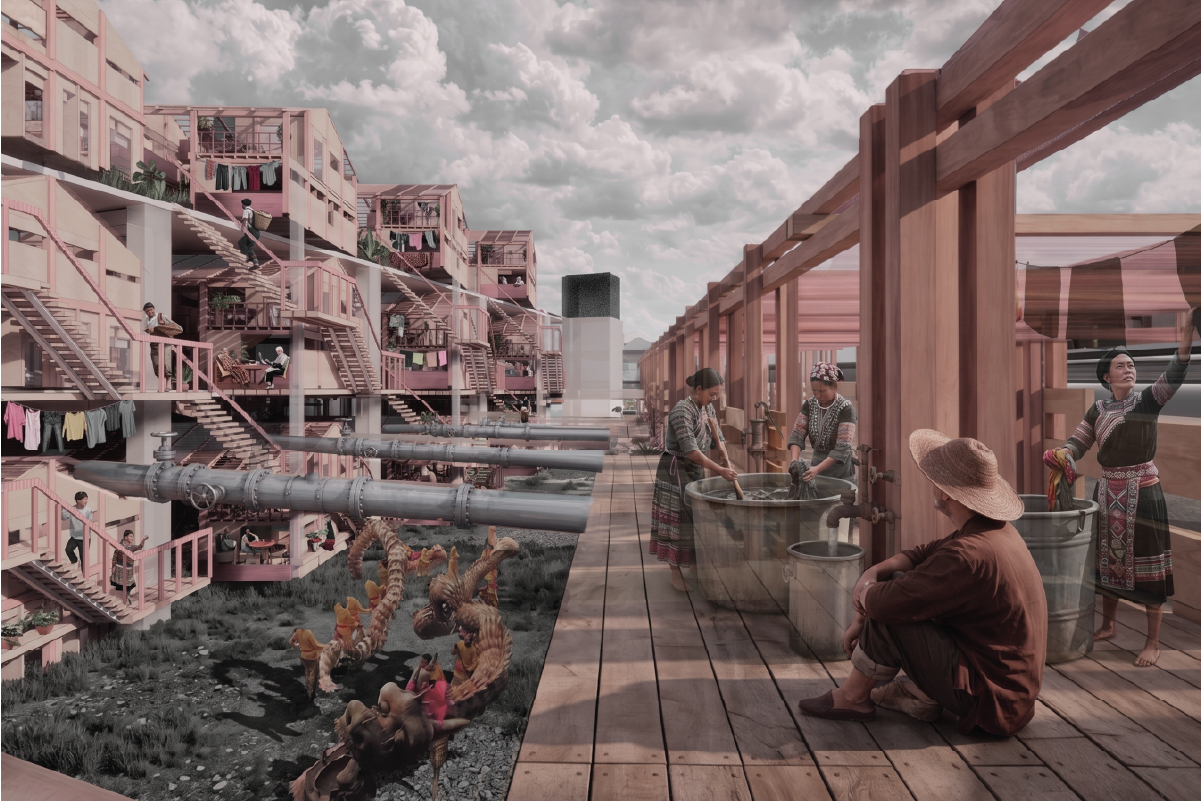
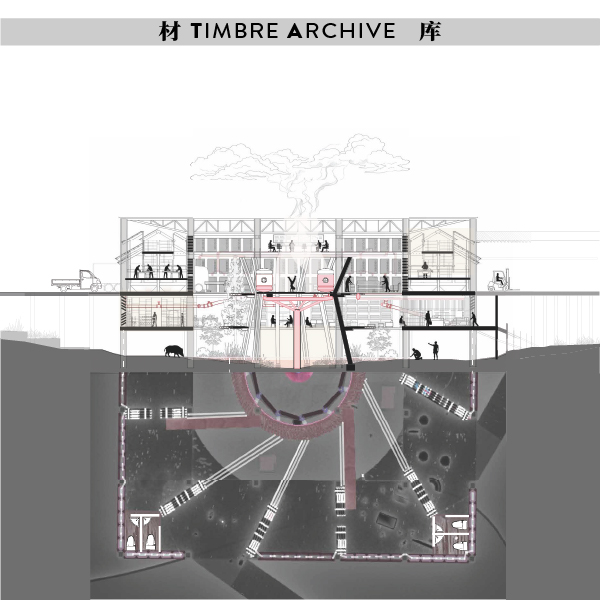
technology coexist. Retired servers are repurposed as a community archive, while excess
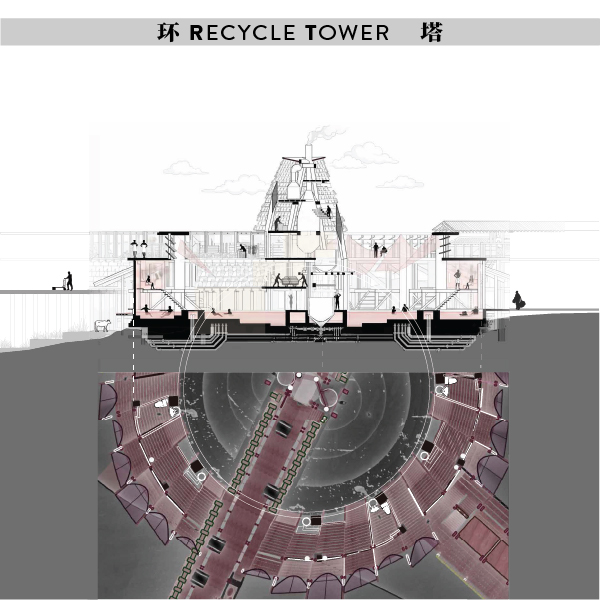
heat from nearby data centers supports workshops, textile dyeing, public baths, and other
shared facilities. Restored waterways and agricultural corridors reconnect fragmented
ecosystems, while relocated local craftsmen and digital workers exchange skills through
everyday living.
More than a site-specific proposal, the project offers a scalable framework for regenerating
unfinished developments and building resilient communities in China’s rapidly changing
landscapes.