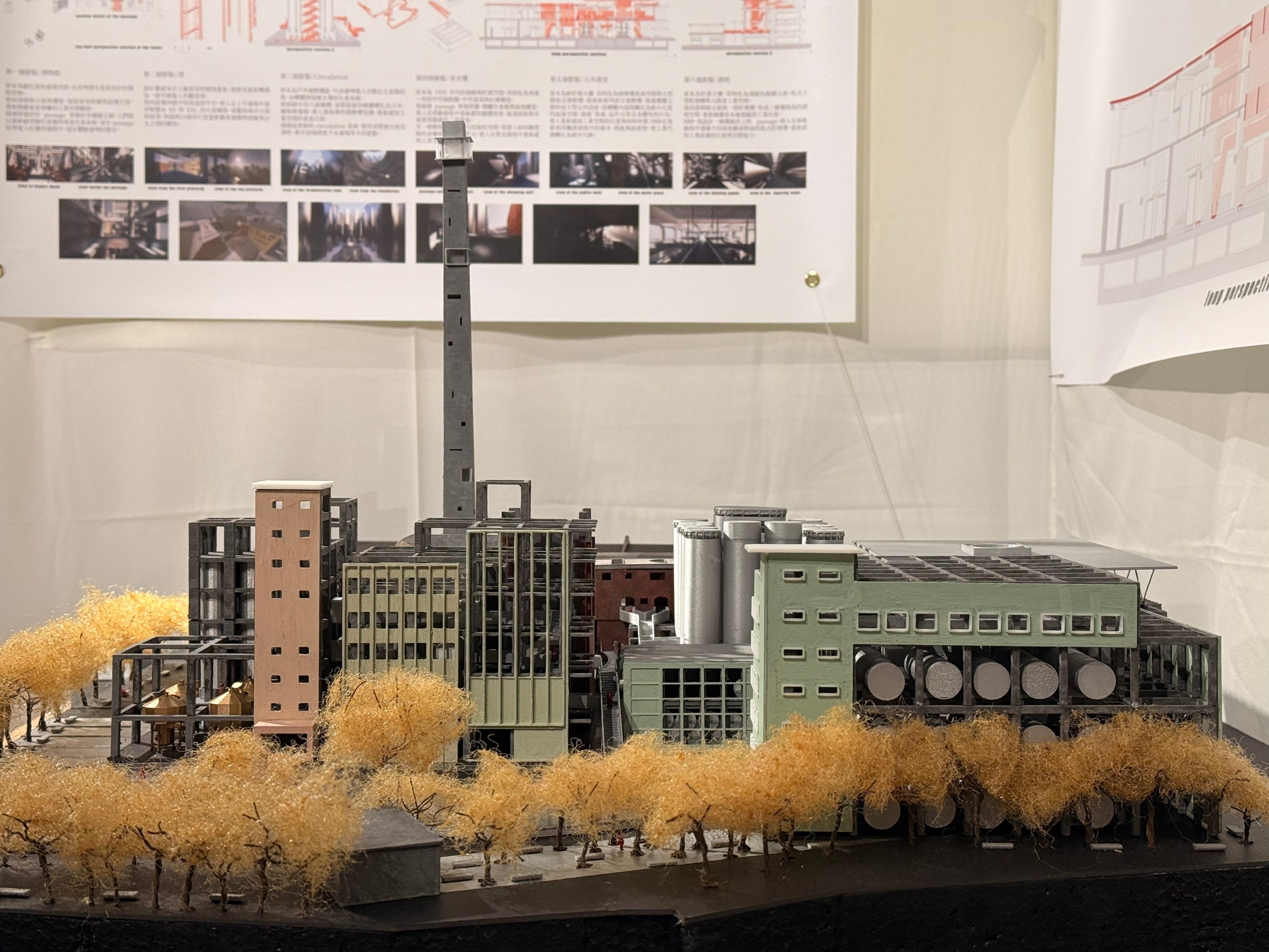
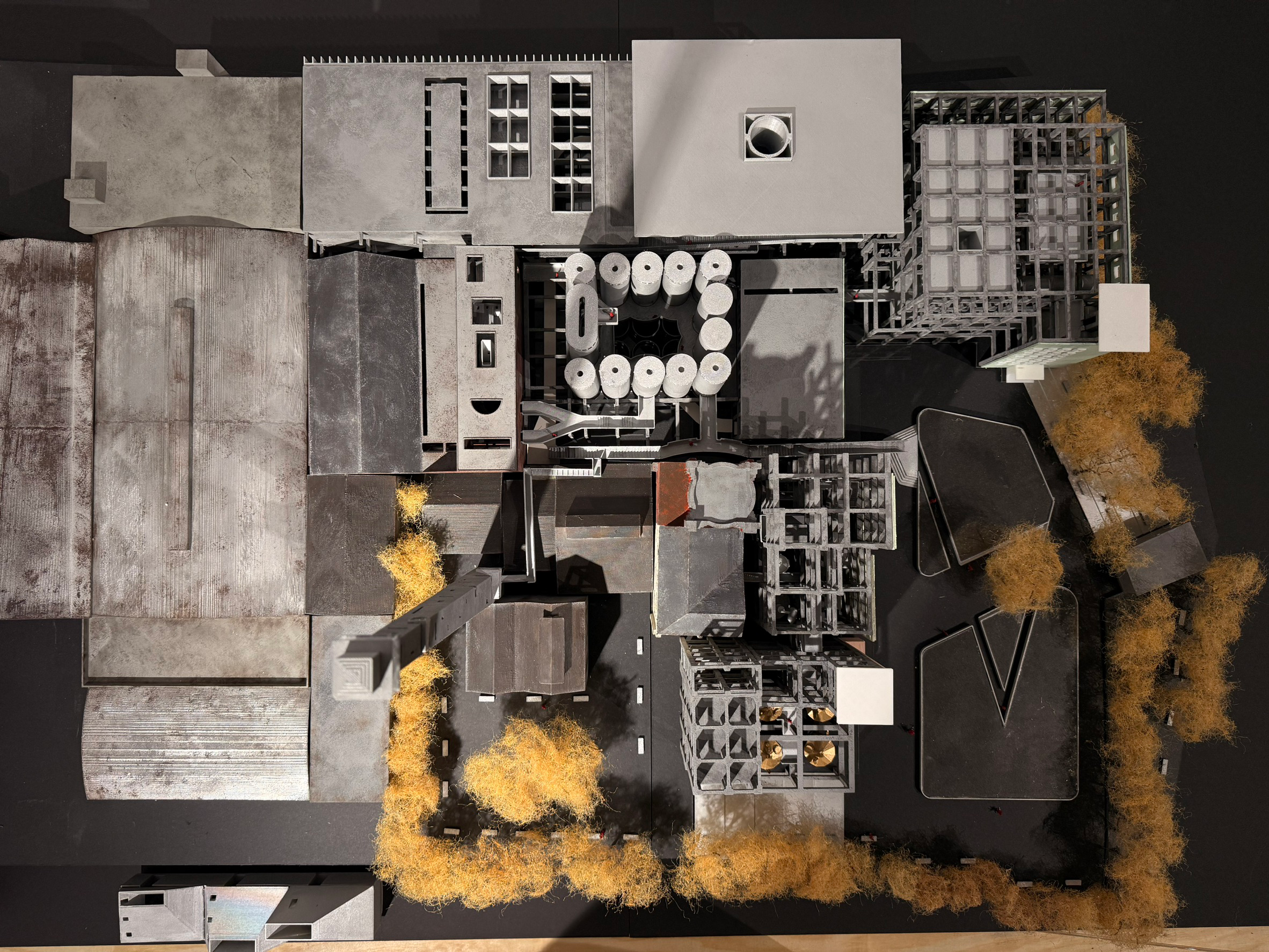
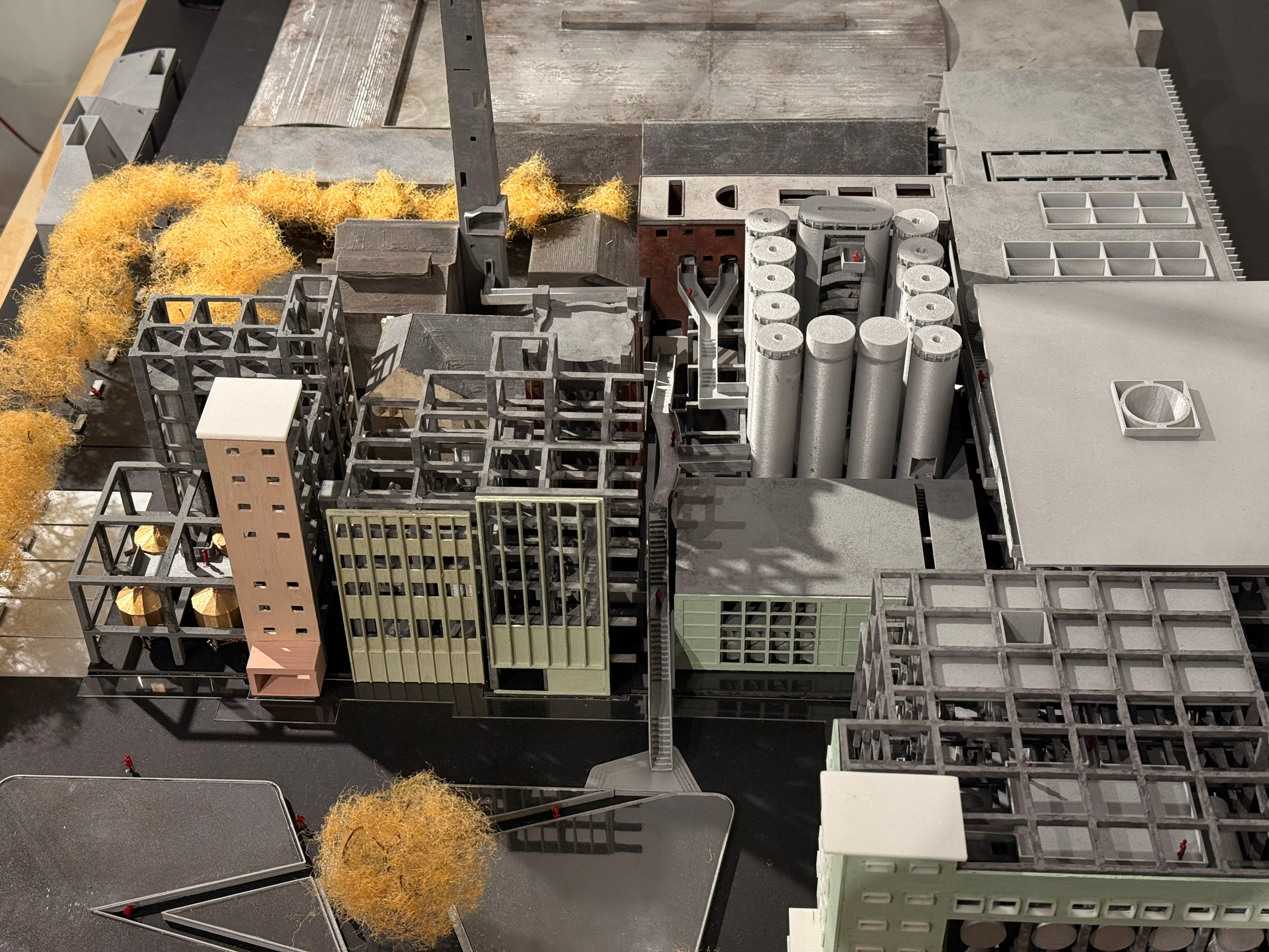
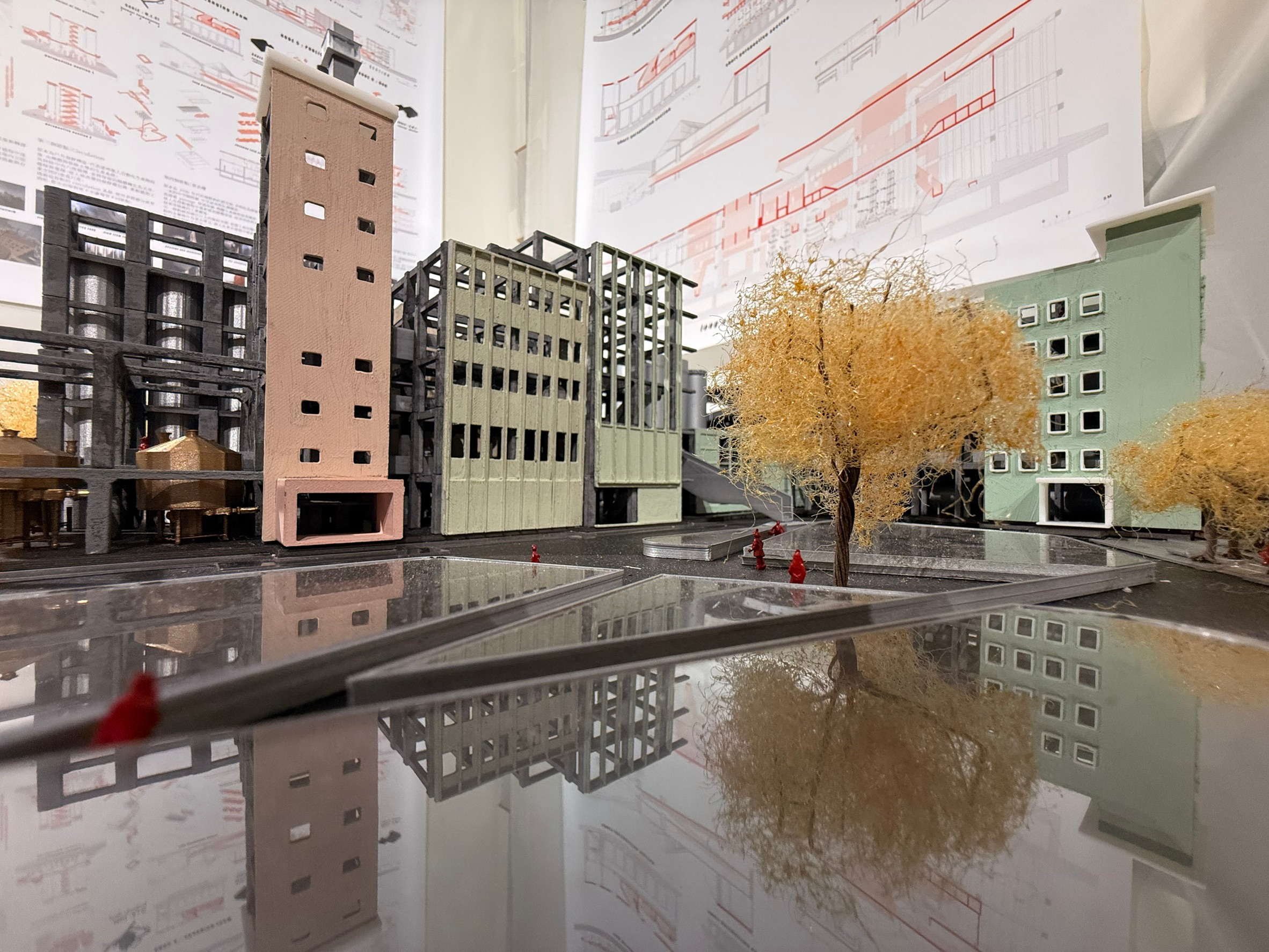
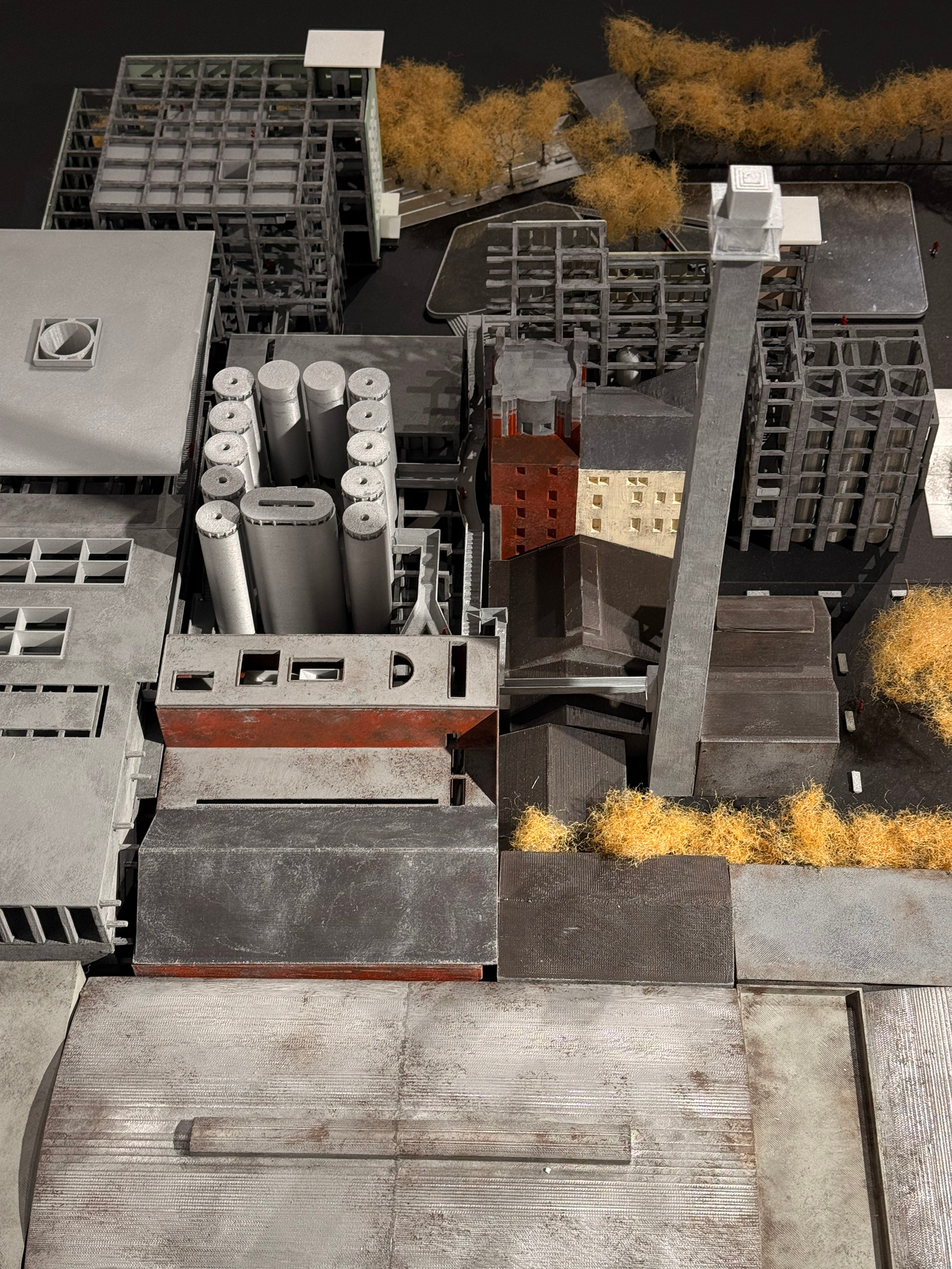
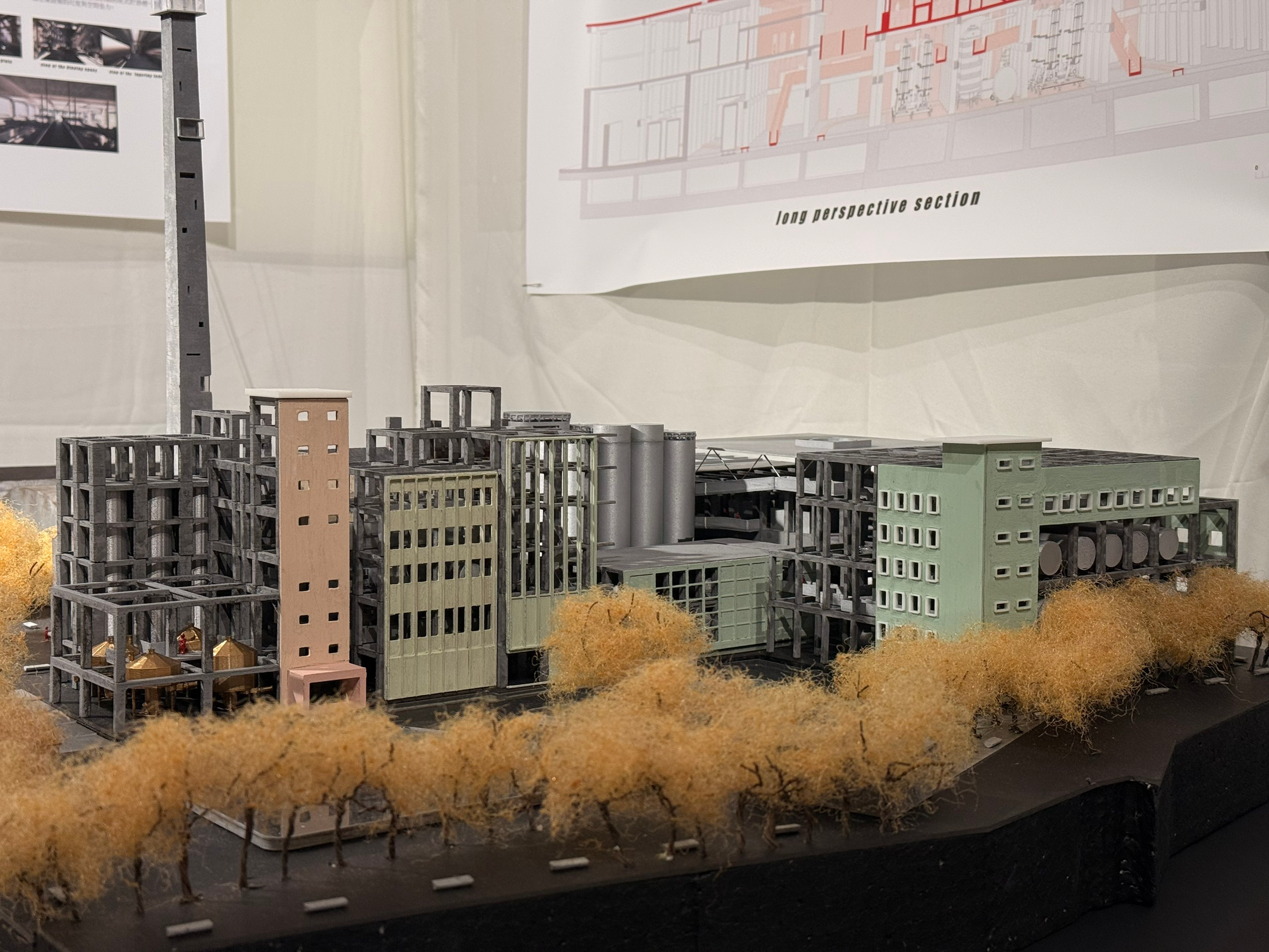
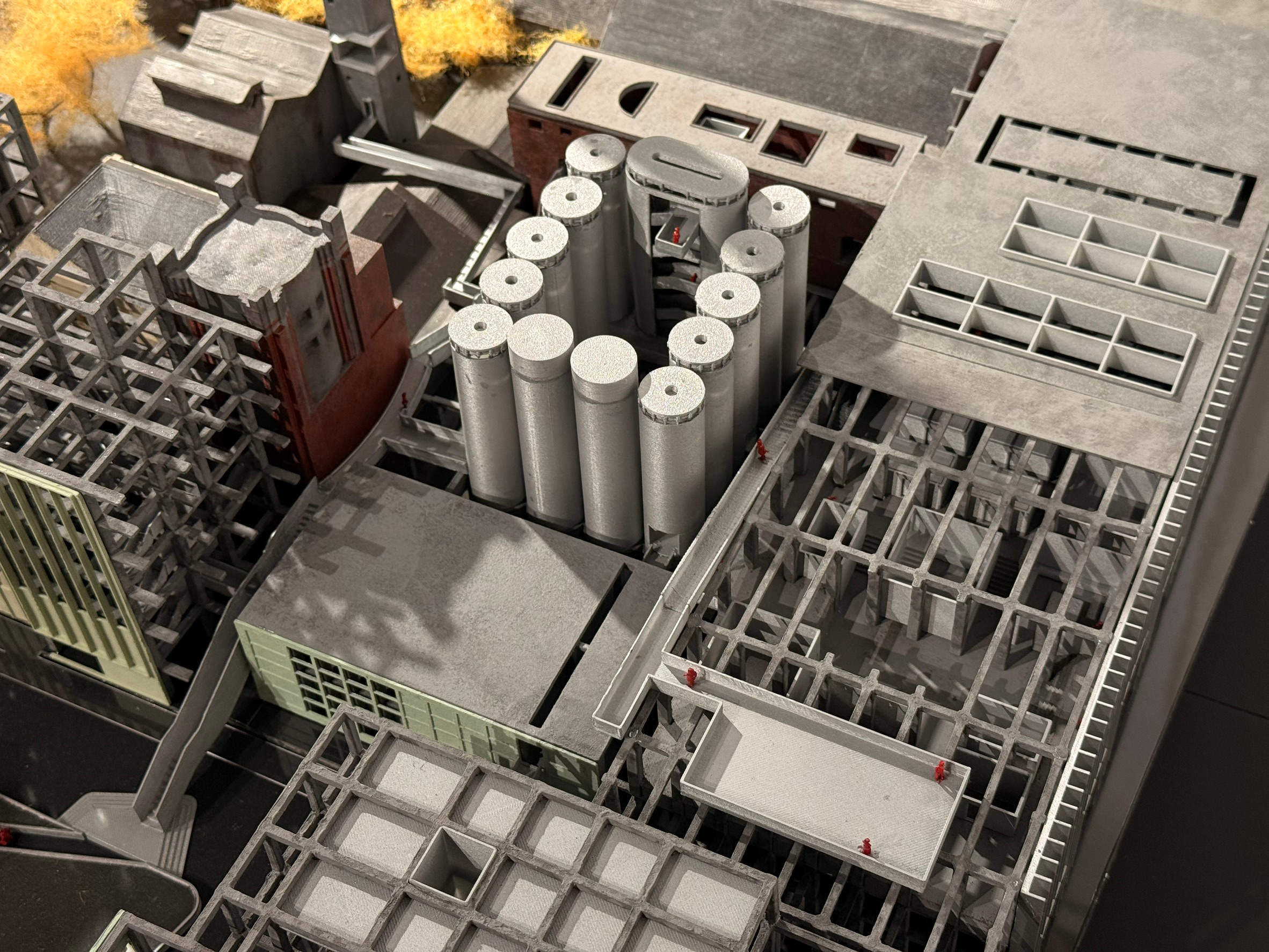
建國啤酒廠創立於1919年,是台灣第一座現代化啤酒廠,也是戰後台灣規模最大的啤酒生產基地。
隨著產業轉型與城市擴張,這座仍持續運作的工業場域逐漸淡出市民的日常感知,其真正珍貴的工業空間也被時間所遮蔽。
本計畫以既有管線系統及實際踏查廠房時所感受到的「類管道」空間經驗為靈感,
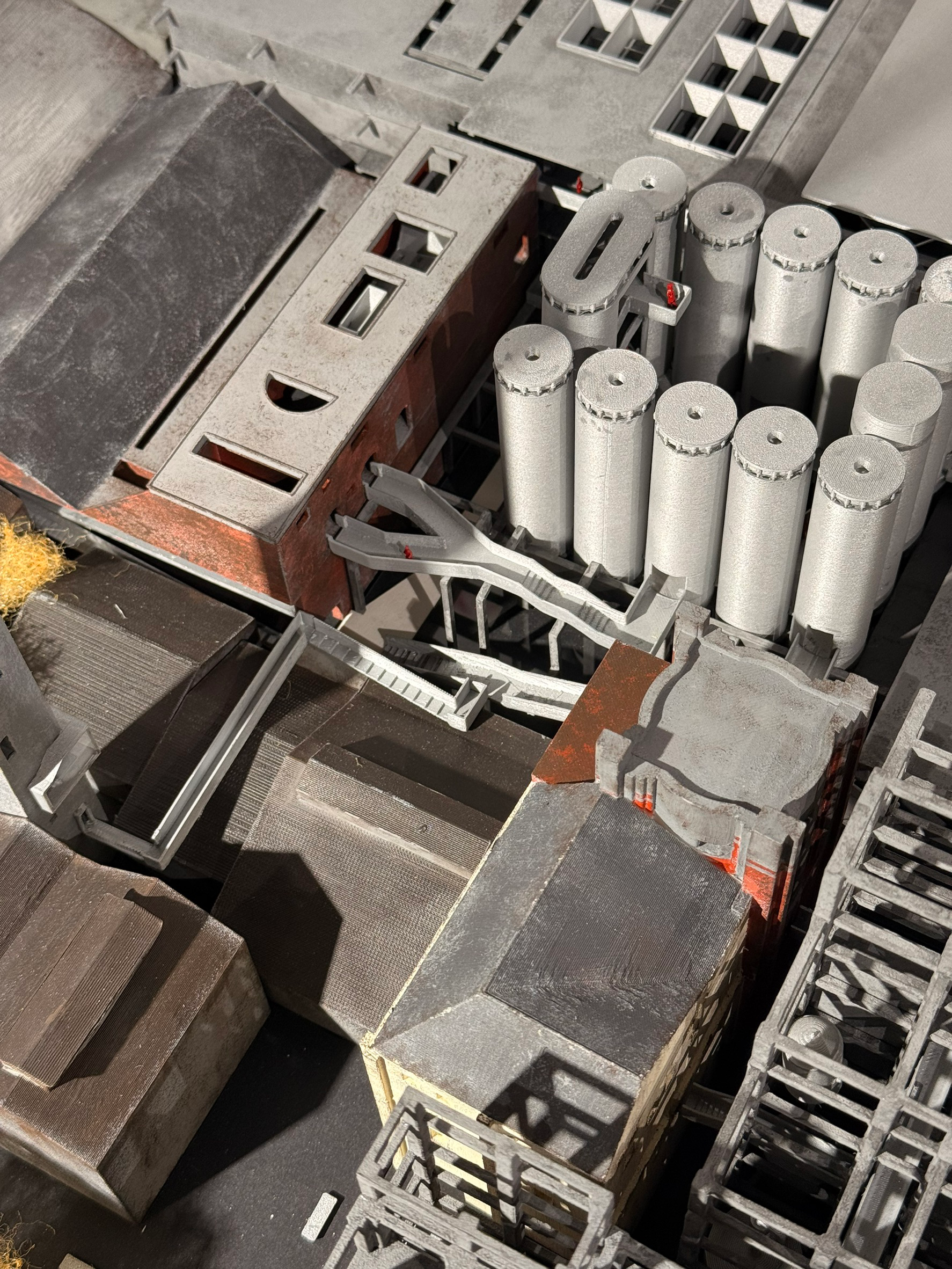
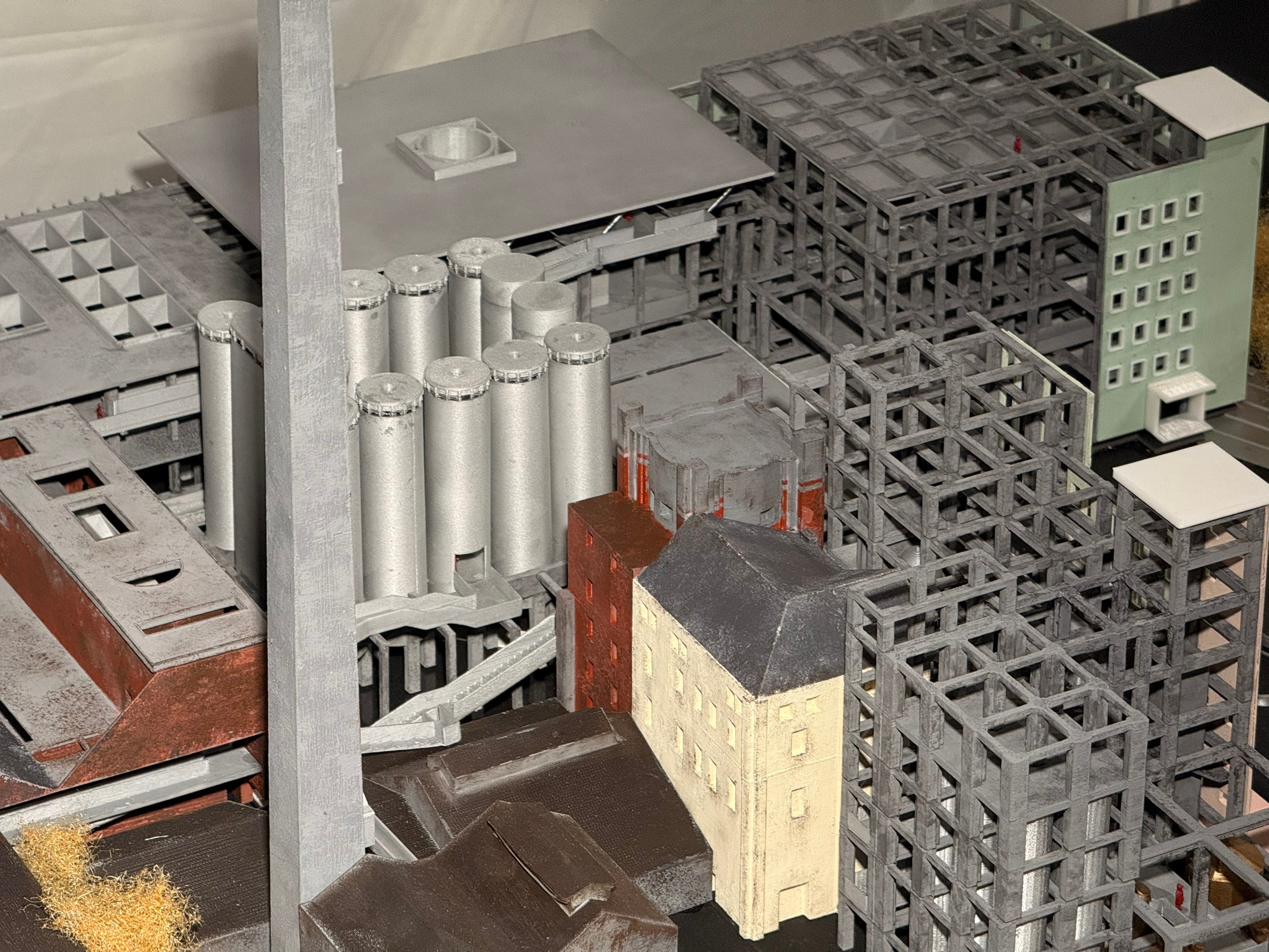
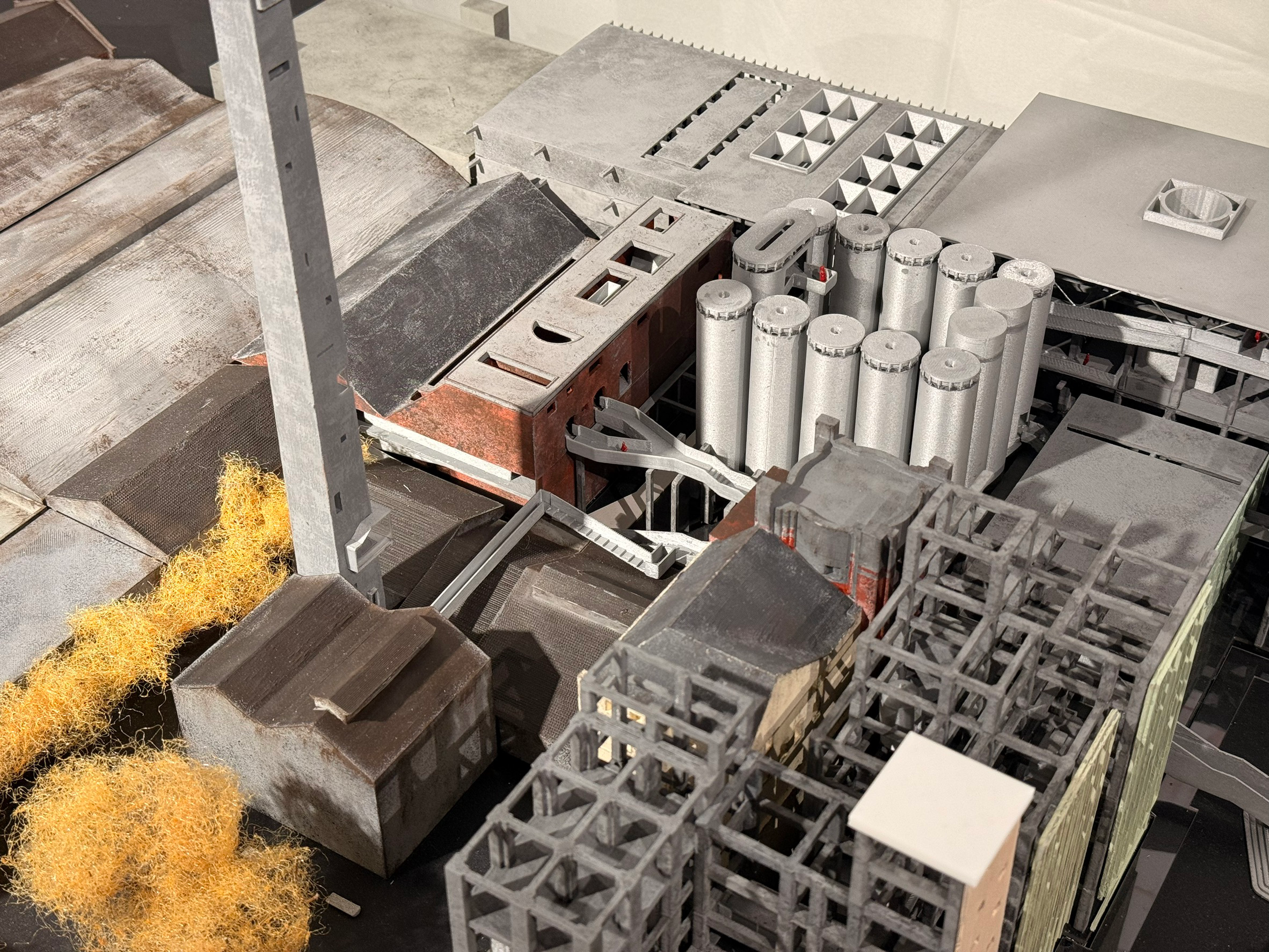
提出一條貫穿全區的 Passage 作為主要設計策略。Passage 不只是動線,更是一種重新閱讀工業遺產的方法。
它串聯六個不同節點,帶領人們穿越由XS 至 XL 的空間尺度,在狹窄與開闊、壓縮與釋放之間,以身體重新感知工業空間。
透過將既有生產空間轉化為博物館、觀景塔、都市浴場、酒吧等公共設施,原本服務於生產的水、熱能與副產物重新回到城市生活之中。
建國啤酒廠因此不再只是被保存的歷史遺產,而是一段可被穿越、被感知,並持續與城市共同生成新記憶的空間連續體。
–
Established in 1919, Jian-Guo Brewery was Taiwan's first modern brewery
and later became the country's largest beer production facility. As the city
expanded and industries transformed, this still-active industrial site gradually
faded from everyday urban awareness, leaving its unique spatial qualities
increasingly concealed.
Inspired by both the brewery's existing pipeline network and the pipe-like
spatial experiences encountered while exploring its interconnected factory
buildings, the project introduces a Passage as its primary design strategy.
More than a circulation route, the Passage reconnects six spatial nodes and
guides visitors through a continuous transition of scales from XS to XL,
allowing industrial space to be experienced through the body.
Former production spaces are transformed into a museum, observation tower,
urban bathhouse, bar, and other public programs. Water, thermal energy, and
industrial by-products generated during the brewing process are reactivated
as resources for urban life. Rather than preserving the brewery as a static
heritage artifact, the project redefines it as a spatial continuum that can be
traversed, sensed, and continuously reinterpreted, generating new collective
memories within the contemporary city.