當代都市更新習慣以功能之名剷平舊建築,新建均質、冰冷的玻璃盒子,形成扼殺生命力的「平滑城市」。
本設計從「都市權」理論出發,轉而關注由人自發產生、充滿記憶的「粗糙城市」——那些在西門後巷、掛滿冷氣外梯的連續粗糙狀態,
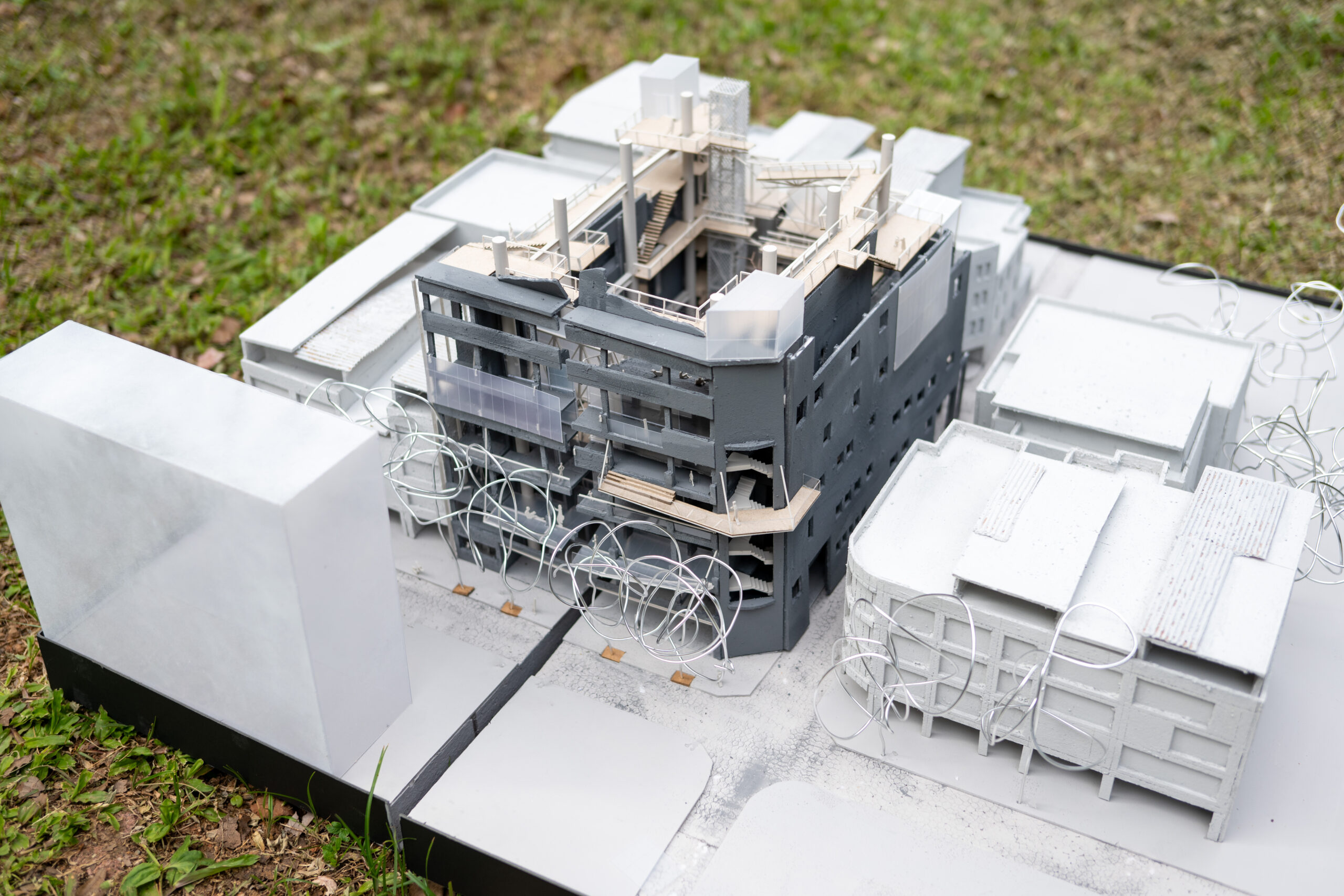
以及因人所產生的空間狀態。我選擇即將拆除的「台北大戲院廢墟」作為基地,
在都更下,他也許能成為粗糙城市的繁殖地點。
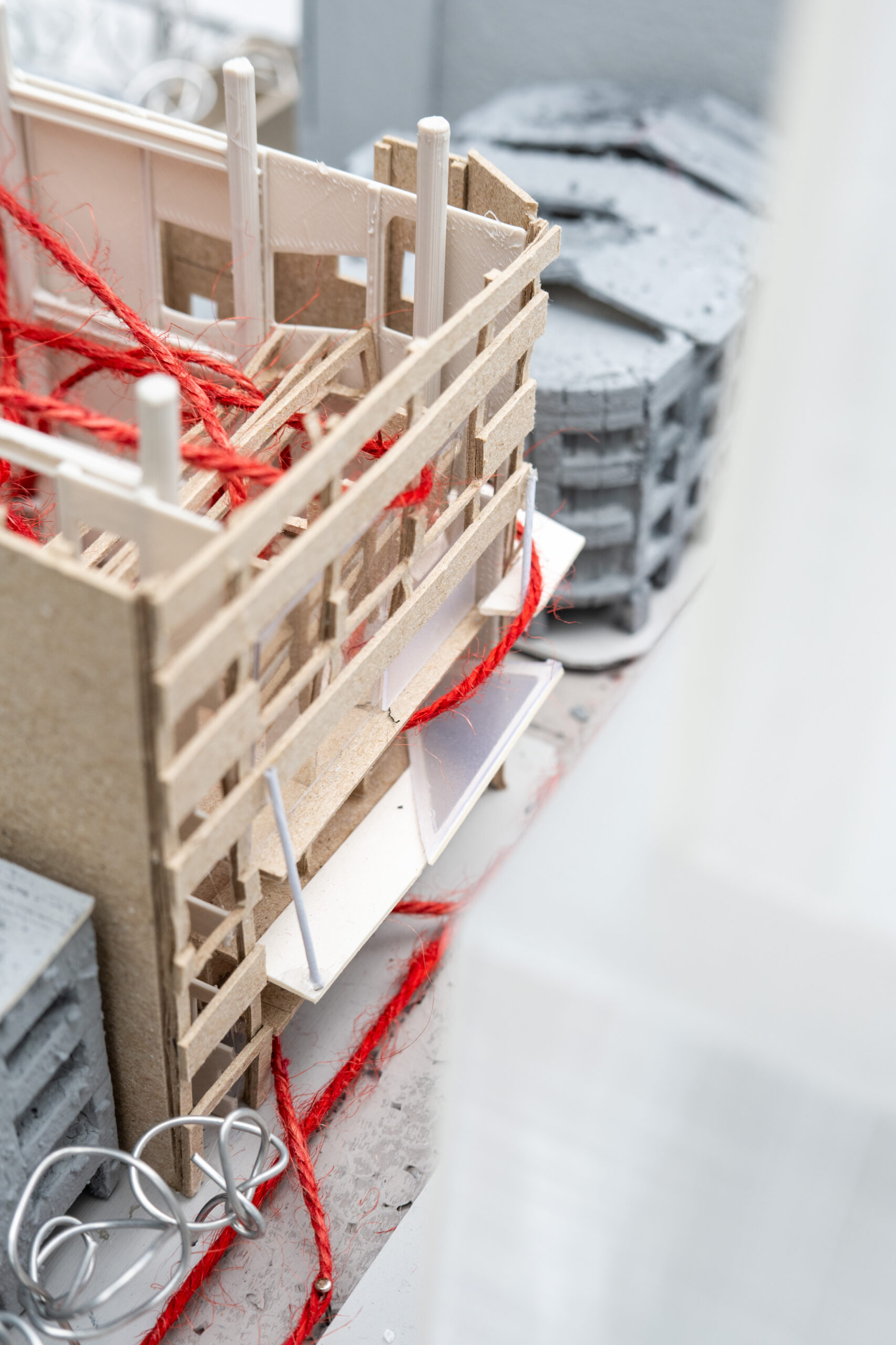
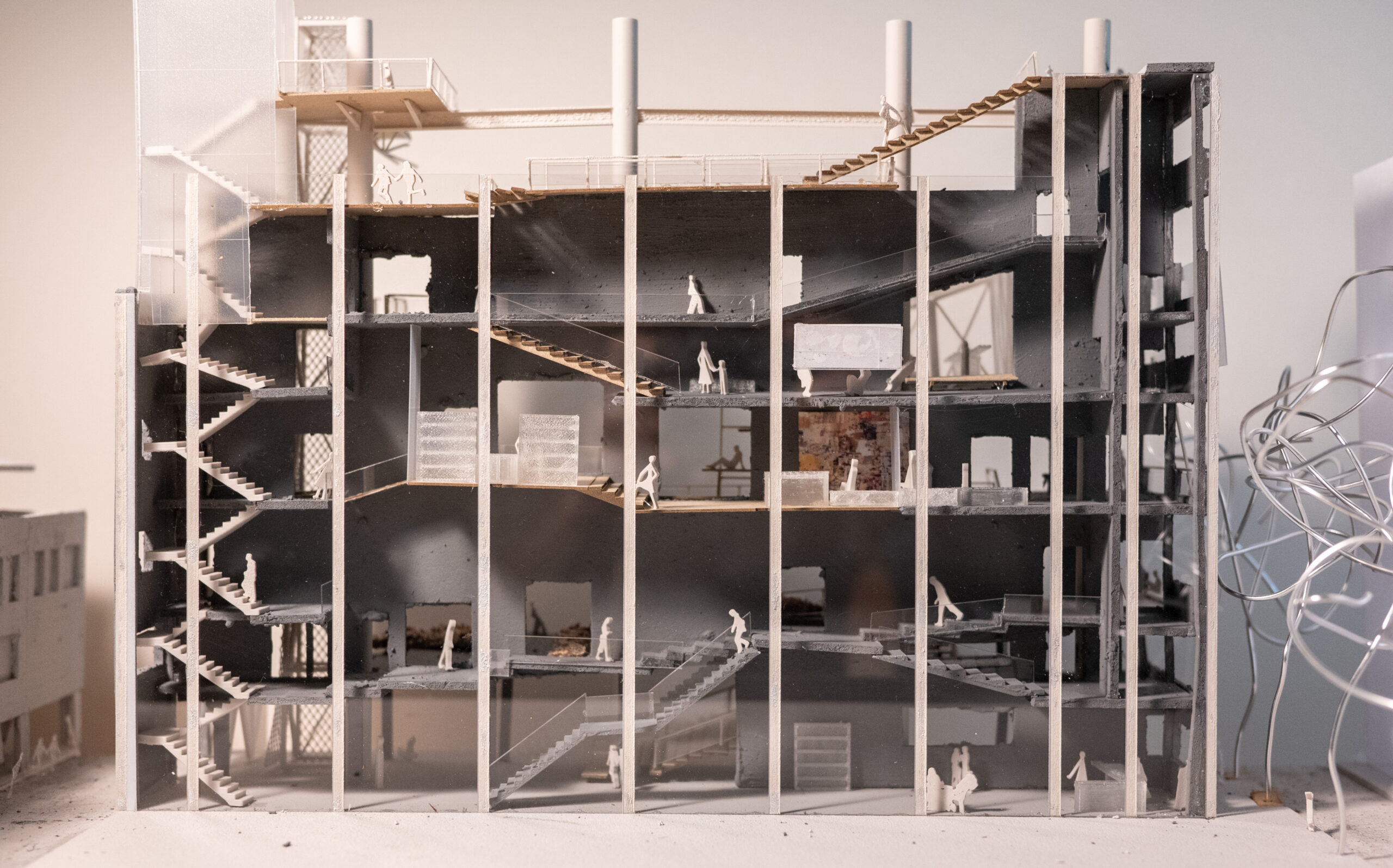
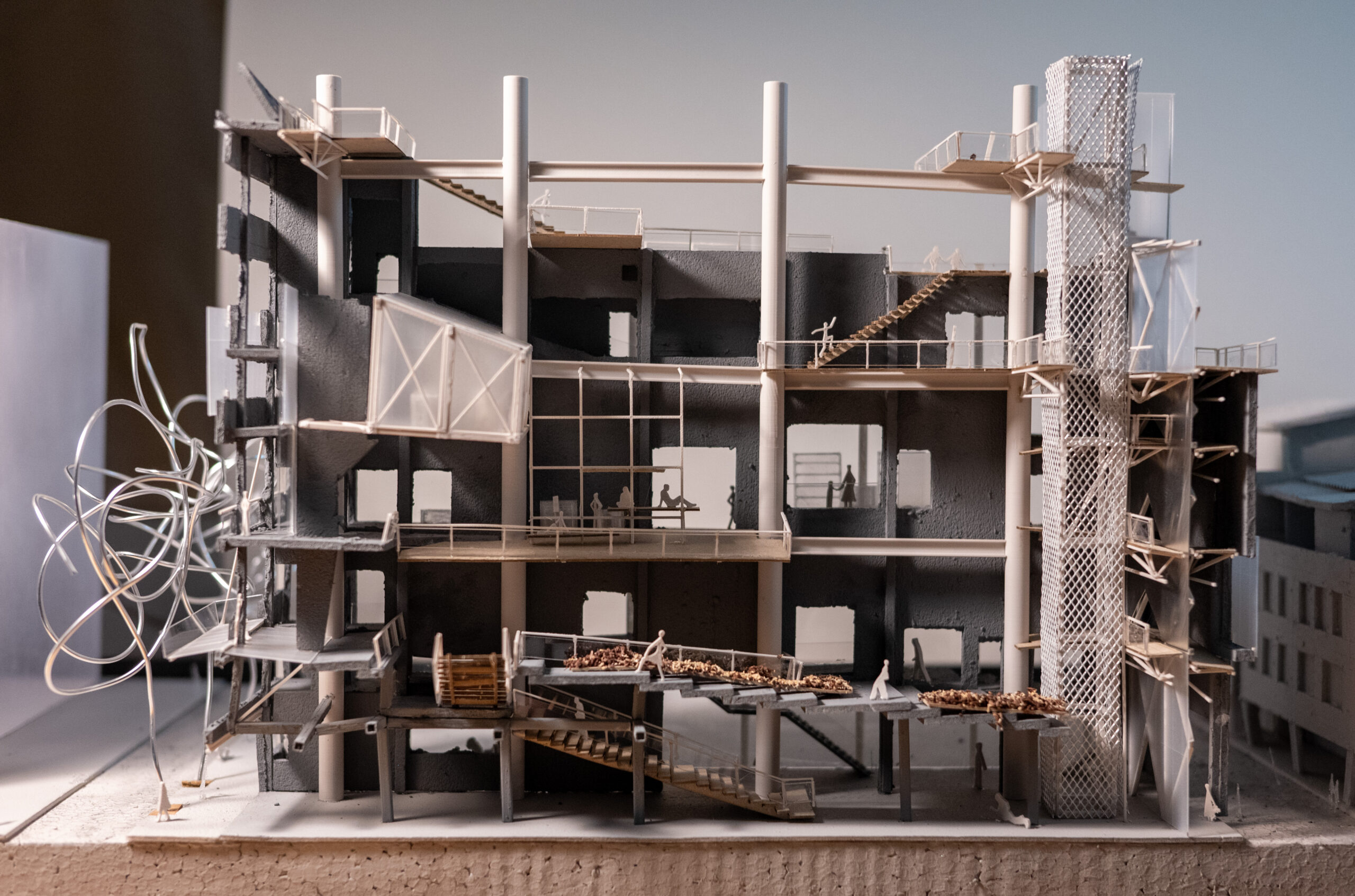
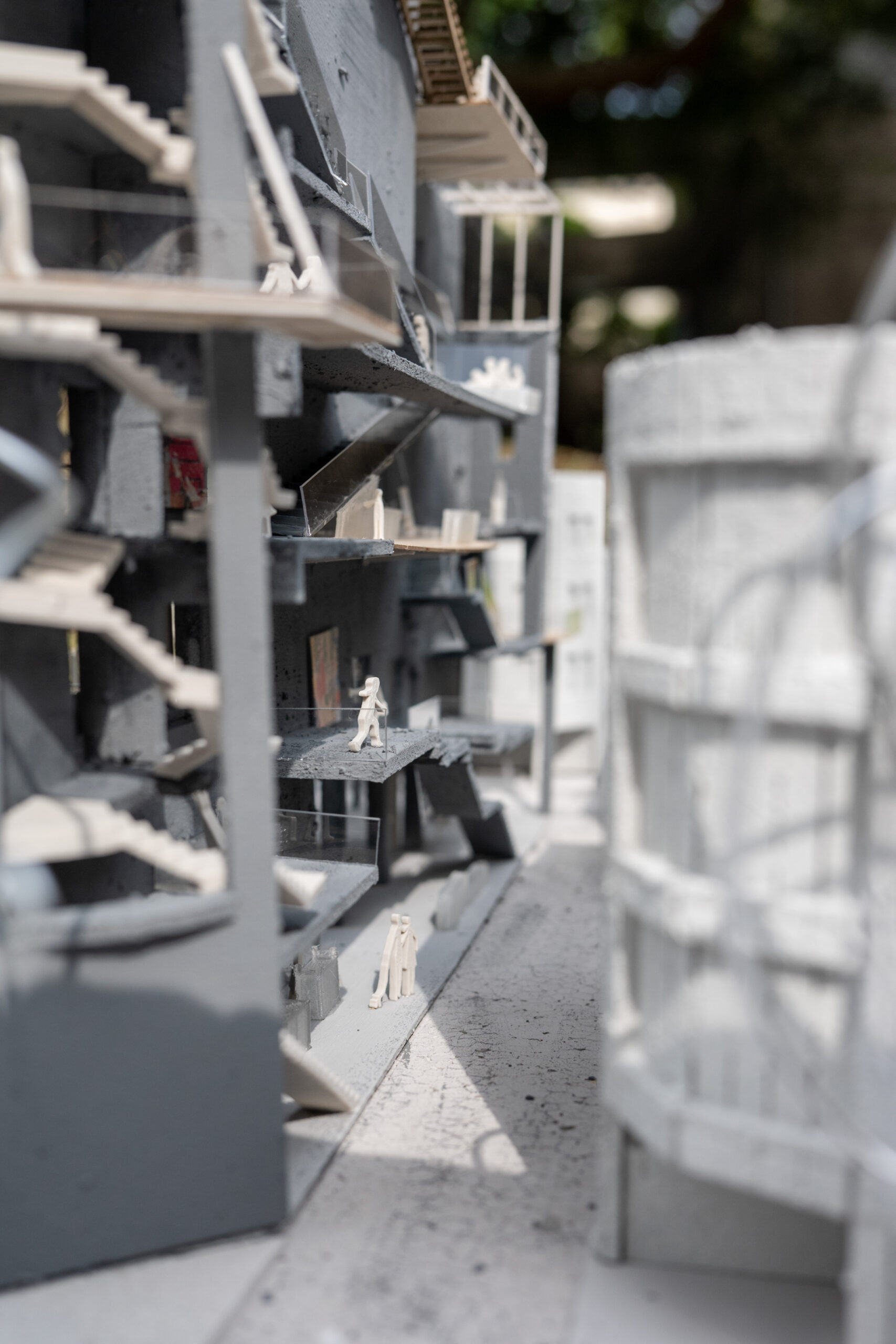
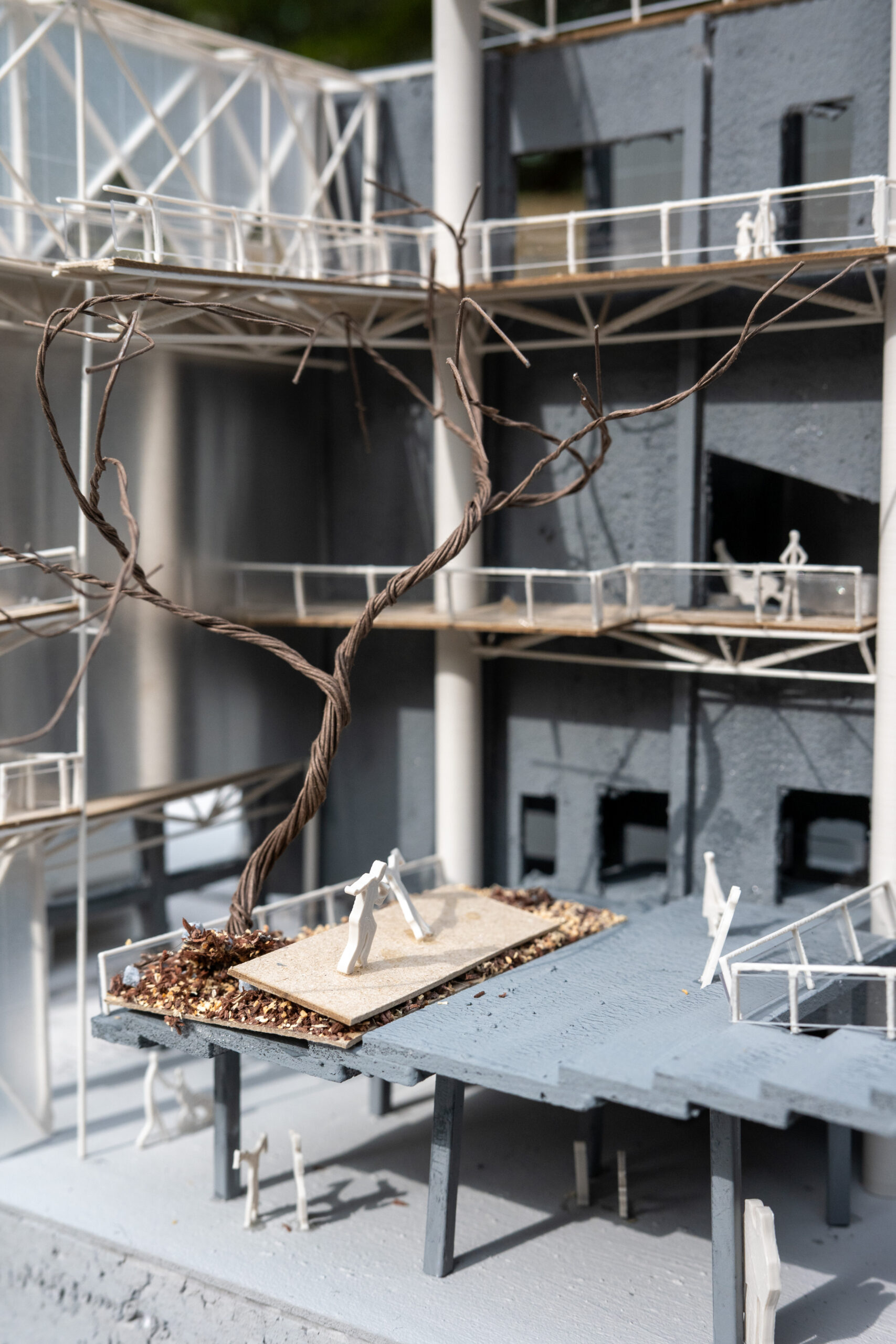
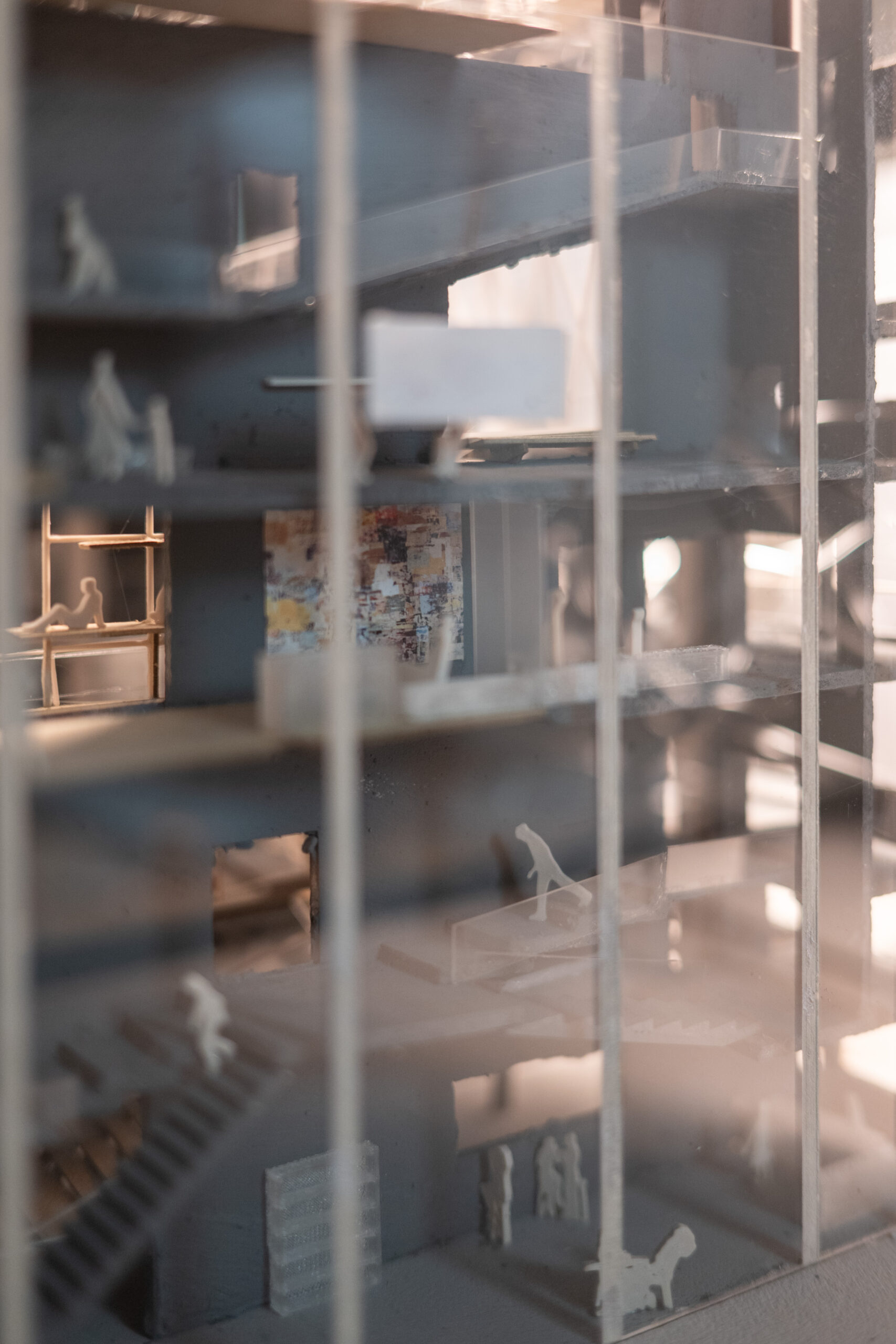
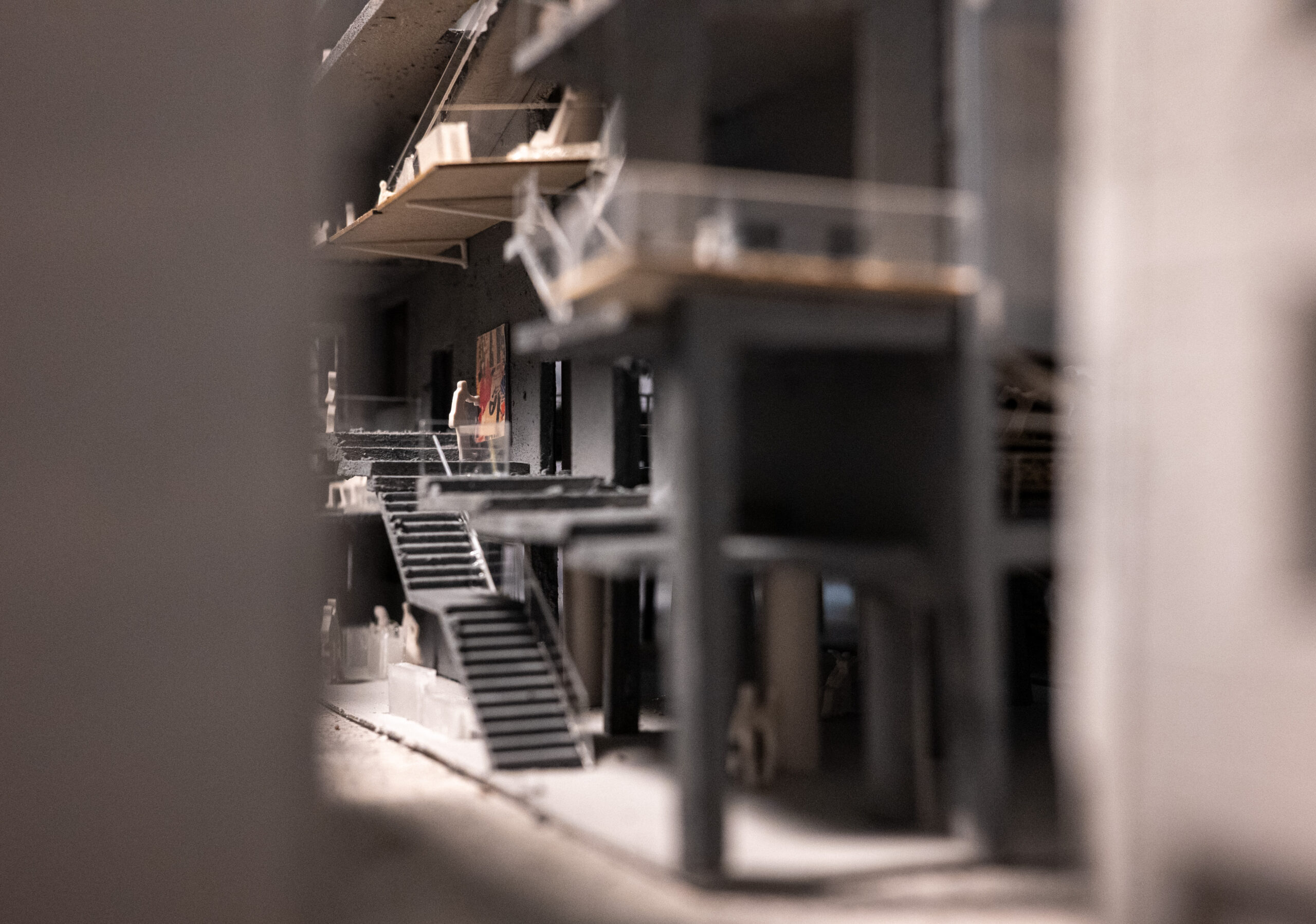
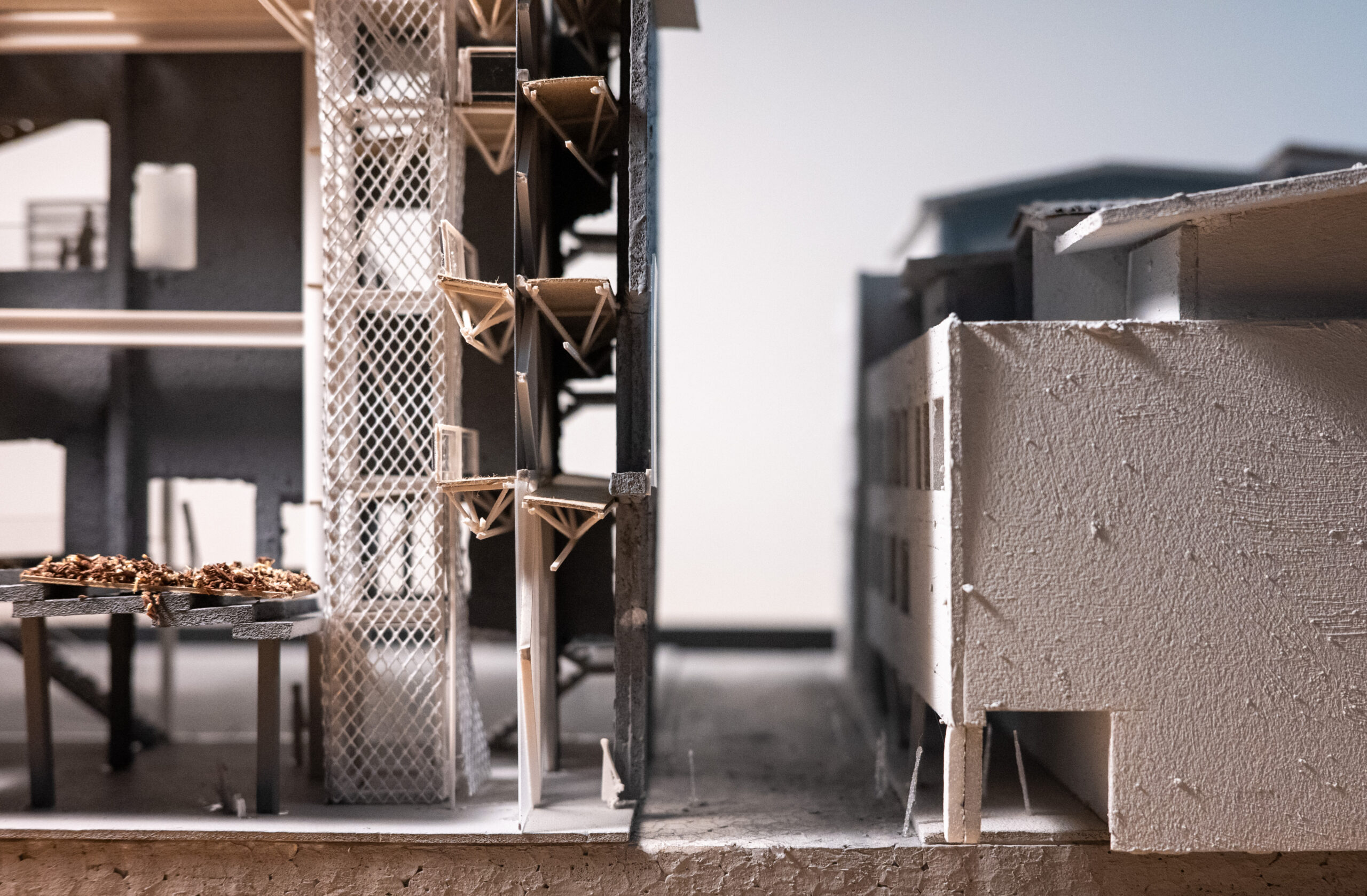
設計分為三階段介入:第一階段「結構介入與開放」,物理性切開大戲院並操作原有的「雙牆介面」,模糊內外邊界,
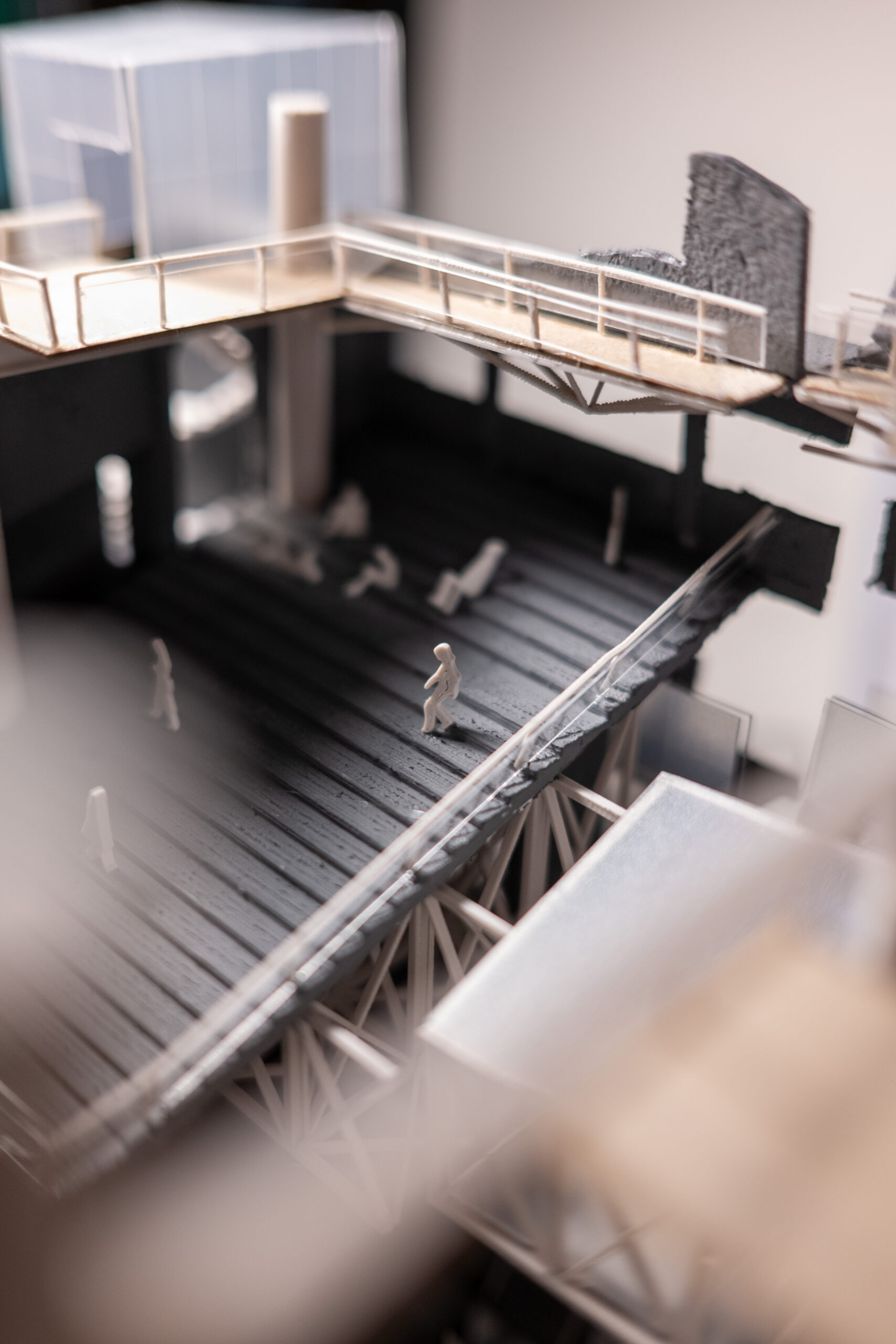
重現街道空間條件;第二階段「帶入街道活動」,將街頭隨機、粗糙的活動順著雙牆垂直拉升,
讓牆內空間轉譯為街角看台與流動延伸;第三階段「繁殖既有街道行為」,人群的穿梭停留與老戲院的歷史殘影在縫隙中重疊,時空疊合。
這是一座「未完成」的建築,創造不確定性與自由性,透過粗糙狀態,人重新奪回屬於自己的城市權利。
–
Modern urban renewal demolishes old buildings in the name of functionality,
creating cold glass boxes and a uniform "Smooth City." Based on the "Right to
the City" theory, this project focuses on the "Rough City"—lively spaces filled
with memories created spontaneously by people, like the continuous rough
states formed by human activities in Ximen.
I chose the Taipei Theater, a building facing demolition, as my site to make it a
breeding ground for the rough city. The design has three phases. Phase 1
(opening and reinforcing) physically opens the theater and works within the
"double-wall interface," blurring inside and outside boundaries to recreate
street conditions. Phase 2 (bringing street activities and users in) pulls
random, rough street activities upward along the double walls, turning the
spaces inside the walls into corner grandstands and extensions of the street
flow. Phase 3 (propagating and living) allows people's movements to overlap
with the movie shadows of the old theater’s past within the gaps. This is an
"unfinished" building that creates uncertainty and freedom. Through this rough
state, people can finally reclaim their own right to the city.